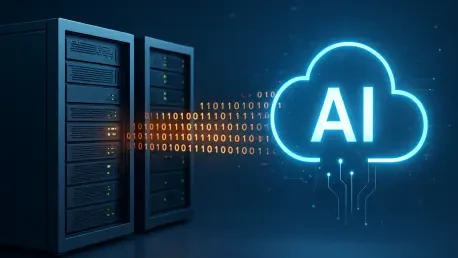

The silent hum of high-density data centers has evolved into a sophisticated cognitive process where storage arrays now possess the inherent ability to analyze, adapt, and govern themselves without human intervention. As the industry moves through 2026, the traditional view of data storage as a passive repository for digital assets has been rendered obsolete by the rise of AI-native architectures. These systems are no longer merely reactive tools that wait for a technician to allocate space or troubleshoot a failing drive; instead, they function as self-aware entities capable of predictive capacity planning and real-time performance optimization. This transition represents a fundamental departure from legacy infrastructure, moving toward an environment where machine learning models are embedded directly into the silicon and software-defined layers of the storage stack. By integrating these intelligent capabilities at the foundational level, organizations have successfully eliminated the latency and bottleneck issues that previously plagued data-intensive applications, ensuring that information is always available at the exact moment it is needed.
The emergence of these autonomous systems marks a pivotal moment in technological history where the boundary between hardware and intelligence has effectively disappeared. Modern storage platforms now utilize continuous telemetry to monitor their own health, automatically rerouting data paths and reallocating resources to prevent downtime before a failure even occurs. This proactive self-healing capability is particularly critical as global data volumes reach unprecedented heights, making manual management physically impossible for even the largest IT departments. Furthermore, the shift to AI-native storage has allowed for a more granular approach to data tiering, where the system intelligently distinguishes between critical real-time information and long-term archival records. Consequently, the storage landscape has become a dynamic ecosystem that not only preserves information but also actively contributes to the operational efficiency of the enterprise by ensuring that the underlying infrastructure is constantly tuned for maximum throughput and minimum energy consumption.
Economic Foundations: The Global Shift in Infrastructure Spending
The financial commitment required to sustain this level of technological sophistication is reflected in the massive surge in global IT spending, which is currently on a trajectory to surpass the $6 trillion mark. This significant capital allocation is driven by the realization that artificial intelligence is no longer a peripheral luxury but the core engine of economic competitiveness. Enterprises are increasingly prioritizing investments in AI-optimized hardware and intelligent data management platforms over traditional commodity storage solutions. This shift has led to a market where software premiums are the new standard, as companies are willing to pay more for applications that feature integrated machine learning capabilities. These intelligent features provide immediate value by reducing the labor costs associated with manual system tuning and by minimizing the risk of expensive data breaches or system outages. The economic narrative of 2026 is defined by this move toward “value-dense” infrastructure, where the return on investment is measured by the speed of data accessibility and the autonomy of the system.
Beyond the immediate costs of hardware and software, a substantial portion of IT budgets is now being directed toward the critical areas of AI governance and regulatory compliance. As storage systems gain the power to make autonomous decisions about data placement and security, the need for transparent and accountable management frameworks has become a top priority for corporate boards. Organizations are investing heavily in specialized auditing tools and compliance-as-code platforms to ensure that their autonomous storage environments adhere to strict privacy laws and ethical guidelines. This investment in governance is not merely a defensive measure; it is a strategic move to build trust with consumers and partners who are increasingly concerned about how their information is handled by automated systems. By dedicating resources to these frameworks, businesses are creating a sustainable foundation for growth, ensuring that their rapid technological advancement does not outpace their ability to remain compliant with evolving international standards.
Scalability and Versatility: Tailoring Intelligence for Every Enterprise
The impact of AI-driven storage technology scales across the entire business spectrum, providing unique advantages to both global conglomerates and small to mid-sized enterprises. For large-scale organizations, the primary challenge involves managing massive, heterogeneous datasets that are scattered across multiple geographic locations and cloud environments. AI-native storage provides the necessary orchestration to unite these disparate data silos, turning “cold” or underutilized information into “hot” actionable intelligence through automated analysis. By leveraging these tools, major corporations can perform complex predictive analytics on petabytes of data without the traditional delays associated with moving information from storage to a separate compute cluster. This ability to analyze data in place has revolutionized decision-making processes, allowing leaders to respond to market shifts with a level of precision and speed that was previously unattainable.
Conversely, small and mid-sized businesses are utilizing AI-driven storage to democratize access to high-end infrastructure, effectively leveling the playing field against much larger competitors. In the past, maintaining a high-performance storage array required a dedicated team of specialized engineers, a cost that was often prohibitive for smaller firms. Today, the autonomous nature of AI-native systems allows these companies to deploy sophisticated storage environments that manage themselves, from performance tuning to automated backups. This shift has enabled smaller organizations to focus their limited human resources on innovation and customer engagement rather than routine maintenance. Additionally, the adoption of “GreenOps” principles within these systems helps smaller firms meet sustainability goals by optimizing power consumption and reducing the physical footprint of their data centers. This versatility ensures that the benefits of the AI storage revolution are not confined to a single sector but are fostering growth and efficiency across the entire global economy.
Orchestrating Complexity: The New Reality of Hybrid Cloud Storage
The global datasphere has expanded to a point where the traditional distinctions between on-premises and cloud storage have largely faded, giving way to a highly integrated hybrid reality. Cloud providers have transitioned from being simple sellers of space to becoming providers of intelligent data management services, utilizing next-generation flash media and ultra-large SSDs to support real-time analytics. These providers are now building their infrastructure around the principles of built-in immutability and Zero Trust, ensuring that data is protected by default from the moment it is ingested. The move toward zettabyte-scale storage has forced a rethink of how information is moved and stored, leading to the development of more efficient protocols that prioritize low latency and high availability. As a result, the cloud is no longer just a place to store backups; it is a high-performance extension of the local data center, capable of handling the most demanding AI training workloads.
The hybrid cloud has become the default operating model because it allows businesses to maintain the control and security of on-premises hardware while taking advantage of the elastic scalability of the public cloud. This approach has moved beyond the “all or nothing” strategy of previous years, focusing instead on centralized orchestration that provides a single, unified view of all data assets. By using AI-based management tools, IT administrators can oversee complex multi-cloud environments through a “single pane of glass,” eliminating the security blind spots and cost inefficiencies that used to plague fragmented systems. This seamless integration ensures that data can flow freely between different environments based on cost, performance requirements, or compliance needs. The current landscape is defined by this level of fluidity, where the intelligent storage layer acts as the connective tissue that holds a modern organization’s digital infrastructure together, regardless of where the physical hardware actually resides.
Defensive Evolution: Guarding Data in an Era of Adaptive Threats
In the current digital environment, the relationship between artificial intelligence and cybersecurity has become a complex arms race where defense must evolve at the speed of the attack. Cybercriminals are now deploying generative AI to create adaptive malware and sophisticated phishing campaigns that can bypass traditional, signature-based security measures. These threats are capable of learning from their environment and mutating their code to avoid detection, making manual intervention by security teams virtually impossible. This escalation has forced a fundamental shift in how data protection is handled, leading to the implementation of automated, behavior-based security protocols that are baked directly into the storage layer. Rather than relying on external firewalls alone, modern storage systems now feature internal monitoring tools that use machine learning to detect anomalous patterns of data access or encryption, often neutralizing a threat within milliseconds of its appearance.
The defense strategy for the mid-2020s focuses on the concept of data resilience and inherent immutability, ensuring that even if a perimeter is breached, the actual information remains unassailable. AI-driven storage arrays now automatically create “air-gapped” snapshots and immutable copies of critical data, providing a guaranteed recovery point in the event of a ransomware attack. This automated response orchestration has become the new standard for enterprise security, as it removes the element of human error and significantly reduces the time required to restore operations after an incident. Furthermore, the integration of Zero Trust principles means that every request for data access is continuously verified based on context and behavior, rather than just credentials. This holistic approach to security treats storage not as a vulnerable target but as the final, most robust line of defense in the corporate infrastructure, creating an environment where data protection is a self-sustaining and ever-evolving function.
Strategic Imperatives: Navigating the Autonomous Data Ecosystem
The transformation of data storage into a self-governing intelligent system provided a blueprint for the next phase of enterprise IT development. Organizations that successfully integrated AI-native architectures found that they were able to pivot their strategies with greater agility, as their infrastructure no longer acted as a constraint on innovation. The transition from passive hardware to active intelligence was characterized by a fundamental shift in mindset, where data was viewed as a dynamic asset that required constant, automated nurturing. This historical move toward autonomy allowed businesses to survive and thrive in an era of exponential data growth, proving that the only way to manage the zettabyte-scale future was to build systems that could think for themselves. The lessons learned during this period emphasized that the integration of intelligence into the storage layer was not a one-time upgrade but a continuous process of evolution that required a commitment to both technological excellence and robust governance.
As the industry moved forward, the focus shifted toward refining these autonomous processes and ensuring that they remained aligned with broader organizational goals. Decision-makers were encouraged to prioritize the development of clear ethical frameworks for AI data management, ensuring that automated systems operated with a high degree of transparency. Building a resilient data strategy required a focus on interoperability, allowing different AI-native systems to communicate and share insights across the entire hybrid cloud ecosystem. The most successful implementations were those that focused on the human-AI partnership, where autonomous systems handled the complexities of infrastructure management while human experts focused on high-level strategy and creative problem-solving. By embracing these strategic imperatives, organizations ensured that their storage infrastructure remained a powerful catalyst for growth, capable of adapting to any future challenge in an increasingly AI-centric world.