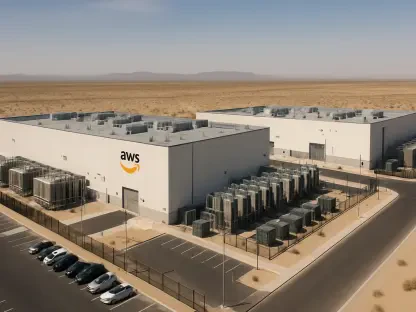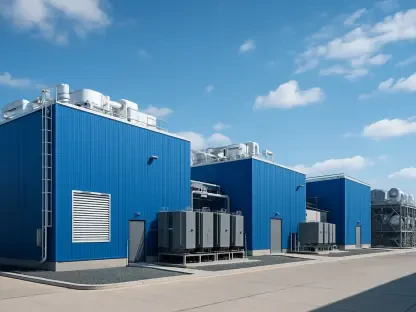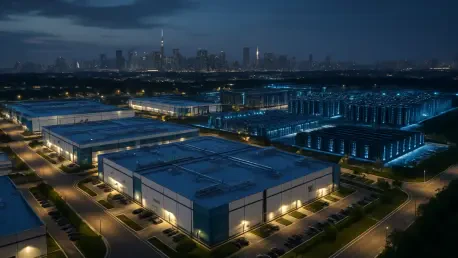

The vast, windswept prairies of Western Canada are currently witnessing a silent but monumental industrial revolution that is fundamentally rewriting the economic DNA of the entire region. This transformation is characterized by a decisive pivot away from a century-long reliance on heavy resource extraction toward a sophisticated, high-growth model centered on the global digital economy. At the forefront of this change is the rapid proliferation of high-density data centers, specifically those designed to support the Industrial Internet of Things and Smart City (IIOSC) technologies. These massive architectural structures are no longer just storage units; they have become the indispensable central nervous system for modern cloud computing, deep learning, and high-performance analytics. By leveraging a unique combination of available land, strategic location, and technical expertise, the province is successfully repositioning itself as a critical pillar in the North American technological landscape, drawing the attention of global tech giants and domestic innovators alike.
The rise of this sector in the province is the result of a “perfect storm” where geographical, economic, and political factors have aligned to create an unparalleled environment for digital infrastructure investment. As the global thirst for Artificial Intelligence (AI) and real-time data processing accelerates at a breakneck pace, the region offers a stable and scalable platform where physical infrastructure meets digital innovation. This evolution is not merely an exercise in housing server racks but represents a comprehensive, strategic move toward a future that integrates regional legacy strengths with the rigorous requirements of international digital services. By analyzing the operational milestones of the latest IIOSC facilities, it becomes evident that a new standard for data management is being established. The convergence of proactive policy, specialized engineering, and a relentless focus on scalability ensures that the region remains a top-tier competitor in the global market. This development carries profound socio-economic implications, signaling an era of renewed prosperity that looks far beyond traditional energy markets.
Strategic Foundations of the Digital Shift
Natural and Economic Advantages for Infrastructure
Alberta’s unique geographical positioning serves as a vital digital gateway, providing high-speed and low-latency fiber-optic links that bridge the gap between major North American markets and the rapidly expanding technology hubs of Asia. This strategic corridor is supported by a robust and redundant telecommunications framework, making the province an ideal transit point for massive volumes of global data that require rapid routing. In the contemporary digital age, where milliseconds of latency can mean the difference between success and failure for high-frequency trading or autonomous systems, such connectivity is the primary currency. Consequently, the province has become a magnet for international firms that prioritize instantaneous data transmission and reliable network uptime. This geographic advantage is further bolstered by the sheer availability of vast, flat tracts of land, which allow for the construction of “hyperscale” facilities that would be physically or financially impossible to build in land-constrained coastal cities.
Energy dynamics play an equally decisive role in attracting sophisticated data center operators who are seeking long-term stability and cost predictability. With some of the continent’s most significant natural gas reserves, the province provides a reliable and highly scalable power source at a cost structure that remains significantly more competitive than many coastal or highly regulated power markets. Given that electricity consumption often constitutes the single largest operational expense for high-performance computing centers, this competitive pricing provides a decisive bottom-law advantage for large-scale institutional investors. Furthermore, the local power grid is increasingly sophisticated, offering the kind of industrial-grade reliability necessary to support the 99.999% uptime requirements of modern digital services. This combination of low cost and high reliability creates a compelling economic narrative for companies looking to relocate their primary processing hubs away from overcrowded and expensive urban centers.
The local climate offers a distinct operational boost through what engineers refer to as “free cooling” opportunities, which significantly enhance the efficiency of thermal management. Because the province experiences cooler average annual temperatures, data center operators can utilize ambient outside air to regulate the internal temperature of server halls for much of the year. This natural cooling effect drastically reduces the reliance on energy-intensive mechanical chilling units and complex HVAC systems, which are often the primary drivers of inefficiency in warmer climates. By integrating these environmental factors into the architectural design of the buildings, operators can achieve much lower Power Usage Effectiveness (PUE) scores. This not only drives down total operational costs but also aligns the region’s industrial growth with global trends toward more efficient and environmentally conscious industrial practices, making it a “green” choice by default for many corporations.
Policy and Growth Frameworks
The provincial government has been a key architect of this transition, actively fostering a business-friendly environment specifically tailored to the needs of the technology and data sectors. By streamlining the often-cumbersome permitting processes and offering targeted tax incentives for capital-intensive digital projects, policy leaders have sent a clear signal to the global market that the region is open for high-tech business. These efforts are part of a broader, deliberate strategy to diversify the economy and reduce its vulnerability to the cyclical volatility of global commodity prices. This proactive regulatory stance ensures that the transition to a data-driven market is not just a temporary trend but is supported by a long-term framework designed to facilitate rapid, sustainable growth. For investors, this policy stability provides the confidence necessary to commit billions of dollars to long-term infrastructure projects that will define the region’s economic output for decades.
Beyond simple financial incentives, the provincial framework also emphasizes the development of specialized “tech zones” where infrastructure is pre-planned to support high-density power and data requirements. This foresight reduces the time-to-market for new facilities, allowing operators to go from groundbreaking to fully operational in record time. Collaborative efforts between municipal planners and utility providers ensure that the necessary high-voltage transmission lines and fiber-optic backbones are in place before a project even begins. This level of institutional coordination is a major differentiator when competing against other jurisdictions where bureaucratic friction can delay projects by years. By treating digital infrastructure as a core public utility—similar to roads or water systems—the province has created a seamless pathway for the expansion of the digital economy, ensuring that it can keep pace with the exponential growth of global data demands.
Architecture and Innovation in IIOSC Facilities
Security, Reliability, and Scalability
The latest generation of IIOSC data centers is defined by a rigorous and uncompromising commitment to both physical and digital security protocols. These facilities utilize sophisticated, multi-layered defense strategies that start at the perimeter with reinforced fencing and 24/7 high-definition video surveillance powered by motion-detection analytics. Inside the facilities, access is strictly controlled through multi-stage biometric authentication, including iris scanners and fingerprint readers, ensuring that only authorized personnel can enter sensitive server environments. This physical hardness is matched by advanced digital protections, such as hardware-based encryption and multi-factor authentication (MFA) for all administrative interfaces. Such comprehensive measures are absolutely vital for meeting the stringent compliance standards and regulatory requirements of the healthcare, finance, and government sectors, where the loss or compromise of data is not an option.
Operational reliability in these facilities is maintained through a complex web of redundant power systems that are designed to guarantee maximum uptime, regardless of external grid conditions. Each data hall is typically supported by an “N+1” or “2N” redundancy configuration, featuring industrial-grade uninterruptible power supplies (UPS) and massive on-site backup generators capable of powering the entire facility for days if necessary. These systems are tested weekly to ensure they can transition seamlessly during a power failure without so much as a millisecond of disruption to the servers. In a world where global commerce and critical infrastructure rely on the constant availability of digital services, this level of dependability is a non-negotiable prerequisite. By providing a “bulletproof” environment for data, these centers have become the trusted home for the mission-critical applications that run modern society, from banking ledgers to emergency response coordination systems.
The core design philosophy of these modern centers emphasizes modularity, which allows for a “future-proof” approach to rapid physical and technical expansion. Rather than building static, inflexible halls, engineers use modular floor plans where server racks and cooling infrastructure can be added incrementally as client needs evolve. This allows the facility to scale its capacity without requiring a total redesign or a shutdown of existing operations, providing a “pay-as-you-grow” model that is highly attractive to rapidly expanding tech firms. This inherent flexibility means that businesses can start with a modest digital footprint and seamlessly expand into multi-megawatt configurations as their data processing requirements increase. This scalability is a key reason why the province has become a preferred destination for hyperscalers—those massive cloud providers who require the ability to double or triple their capacity on short notice to meet surging consumer demand.
Cutting-Edge Technological Upgrades
A significant shift is currently occurring within the provincial data landscape toward high-density computing, facilitated by the adoption of advanced liquid cooling technologies. As modern AI workloads and large language models require increasingly powerful GPUs and specialized processors, the heat generated by these components has far exceeded the capabilities of traditional air-conditioning systems. In response, IIOSC facilities are now integrating “direct-to-chip” or “immersion” cooling systems, where specialized non-conductive fluids are used to whisk away heat far more efficiently than air ever could. This technological leap allows for a much higher concentration of processing power within a smaller physical footprint, enabling the deployment of “supercomputer-class” hardware in standard data center environments. By solving the thermal challenge, these facilities can support the most demanding computational tasks in the world, from climate modeling to complex genomic sequencing.
AI-powered monitoring systems have moved from a novelty to a core operational requirement, as they are now used to optimize every aspect of facility performance in real-time. These sophisticated machine learning algorithms ingest millions of data points from thousands of sensors, monitoring everything from individual server temperatures to the vibration levels of cooling fans. By analyzing this data, the AI can predict hardware failures before they occur, allowing technicians to perform proactive maintenance and avoid costly emergency repairs. Furthermore, these systems can self-regulate power distribution and cooling loads based on the immediate demand of the servers, ensuring that no energy is wasted during periods of low activity. This move toward a fully automated, “lights-out” operating environment reduces the risk of human error and significantly extends the operational lifespan of the expensive hardware housed within the facility.
The rapid integration of edge computing represents another major frontier in the regional technological evolution, moving data processing power much closer to where information is actually generated. This architecture is essential for emerging applications that require near-instantaneous feedback, such as autonomous vehicle navigation, remote robotic surgery, and industrial IoT sensors on factory floors. By processing data at the “edge” of the network rather than sending it back to a distant central hub, latency is virtually eliminated, which is a critical requirement for safety-sensitive technologies. The province’s data centers are increasingly serving as the central nodes for these edge networks, providing the localized processing power needed to support the next generation of smart urban infrastructure. This development ensures that the region is not just a warehouse for old data, but a high-speed engine for the real-time innovations that are defining the modern era.
Sustainability and Economic Integration
The Drive for Green Data Solutions
The future of the high-tech sector in the province is now inextricably linked to the principles of environmental stewardship and the aggressive reduction of carbon intensity. IIOSC facilities are leading this transition by increasingly integrating renewable energy sources, such as wind and solar power, directly into their operational energy mix. Many operators are signing long-term power purchase agreements (PPAs) with local renewable energy developers, which provides the financial backing needed to build new wind farms and solar arrays across the southern plains. This shift is not just about environmental ethics; it is a strategic business move that helps multinational corporations meet their own ambitious environmental, social, and governance (ESG) targets. By processing data in a region that offers a pathway to carbon neutrality, global firms can significantly lower the overall environmental footprint of their digital operations without sacrificing performance.
Energy efficiency is being pursued with a level of technical precision that was previously unimaginable, with a primary focus on improving Power Usage Effectiveness (PUE) through systematic hardware upgrades. This includes the widespread installation of high-efficiency LED lighting systems, variable-speed fans that adjust to real-time cooling needs, and high-efficiency transformers that minimize energy loss during power conversion. Furthermore, the industry has turned its attention to water conservation, implementing closed-loop and recycled water systems for cooling towers to minimize the impact on local watersheds. These “green” initiatives are becoming a major selling point for the region, as they demonstrate that a massive expansion of digital infrastructure does not have to come at the expense of the natural environment. As global regulations on industrial emissions tighten, these sustainable practices ensure that the province’s tech hub remains viable and competitive in a low-carbon global economy.
Broad Economic and Workforce Impact
The rapid growth of the data center market is creating a powerful multiplier effect that is being felt across almost every sector of the provincial economy. While the most visible impact is the creation of thousands of high-paying jobs in specialized construction, electrical engineering, and IT operations, the secondary effects are perhaps even more significant. The presence of these facilities is fostering a robust “knowledge economy,” where a new generation of local workers is gaining world-class expertise in cybersecurity, cloud architecture, and high-tech facility management. This collective skill set is helping the regional workforce transition away from traditional manual labor toward the high-demand technical roles of the 21st-century labor market. Educational institutions are also responding by creating specialized curricula and certification programs that ensure a steady pipeline of talent is ready to support the growing digital ecosystem.
The existence of a world-class digital infrastructure is proving to be a powerful magnet for global “hyperscalers” and is simultaneously providing a massive boost to the local startup ecosystem. By offering affordable, secure, and locally hosted computing power, these data centers have significantly lowered the barriers to entry for young tech ventures that would otherwise struggle with high capital expenditures. Startups can now access the same enterprise-grade processing power as a Fortune 500 company, allowing them to scale their innovations faster and compete on a global stage. The resulting influx of investment and tax revenue is creating a virtuous cycle of growth, providing the funds necessary to reinvest in public services, education, and further digital infrastructure projects. Ultimately, this integration ensures that the province is no longer just a spectator in the global tech race, but a dominant player that is actively shaping the digital future of the continent.
The transition toward a data-centric economy suggests that the most effective path forward for the region involves a continued, aggressive commitment to both technical innovation and environmental sustainability. Stakeholders must recognize that the competitive advantages currently enjoyed—such as low energy costs and a favorable climate—must be protected through ongoing infrastructure investment and forward-thinking policy. For businesses and investors, the immediate next step is to explore deeper integration with local renewable energy projects and to adopt modular, AI-driven operational models that can adapt to the rapid shifts in computational demand. By prioritizing the development of a highly skilled technical workforce and maintaining a transparent, business-friendly regulatory environment, the province can ensure that its position as a global data hub is not only maintained but expanded. The era of digital dominance has arrived, and the successful navigation of this landscape will require a persistent focus on efficiency, security, and the strategic adoption of emerging technologies. This evolution has successfully moved the region beyond its historical constraints, establishing a resilient and diverse economic foundation for the years ahead.