
Navigating the High-Stakes Intersection of AI Innovation and Fiscal Discipline
The tension between breathtaking financial performance and the underlying anxiety of market participants has reached a fever pitch as Alphabet maneuvers through the most expensive technological transition in its history. While the latest quarterly results highlight a massive surge in cloud revenue and widespread enterprise adoption of generative tools, a paradoxical 3% dip in share price suggests that investors remain uneasy. This analysis explores the growing friction between the aggressive pursuit of artificial intelligence supremacy and the staggering capital expenditures required to fuel that ambition. By analyzing the current financial landscape and the strategic hurdles ahead, observers can better understand how one of the world’s most powerful tech giants is balancing a spending war against the demand for immediate profitability.
From Search Dominance to the Generative AI Frontier
For decades, the primary engine of the organization was its dominant Search business, built on a stable infrastructure of data centers designed for traditional indexing. However, the industry shift toward generative AI fundamentally altered the technological landscape, requiring a massive overhaul of hardware and computational power. This transition was not merely an incremental update; it represented a foundational change that forced a pivot from a software-first approach to an infrastructure-heavy model. Understanding this background is vital, as it explains why the company is now committing hundreds of billions of dollars to specialized data centers. The organization is currently operating in the early stages of a secular shift where the cost of entry is significantly higher than any previous technological cycle.
The Financial Paradox: Record Growth Versus Market Skepticism
The Surge in Cloud Revenue and Enterprise Gemini Adoption
Google Cloud achieved its most significant quarterly growth to date, with revenue surging 82% to $24.8 billion. This growth was largely driven by the rapid adoption of Gemini, the flagship AI model currently utilized by nearly 90% of Fortune 100 companies. This suggests that the corporate world is eager to integrate these tools into daily operations. Despite these figures, the negative market reaction indicates that investors are looking past the top-line revenue. They are increasingly concerned that the costs required to generate this revenue may eventually erode high profit margins as the competitive environment intensifies.
The Infrastructure Arms Race and Capital Expenditure Pressures
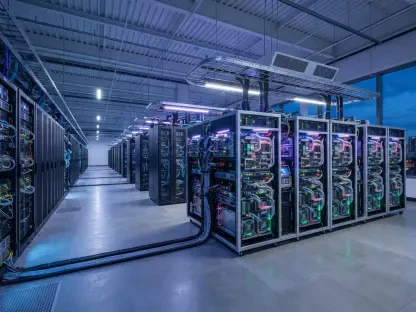
A major source of investor anxiety is the aggressive increase in capital expenditure, with projected spending for the year rising to a range of $195 billion to $205 billion. In the second quarter alone, the company spent $45 billion, primarily on technical infrastructure like specialized chips. This trend has turned into a high-stakes competition among big tech players, with rival platforms projecting expenditures between $145 billion and $200 billion. Management indicated that demand for AI capacity continues to outpace current investments, suggesting that this heavy spending will likely persist through 2027. The challenge remains to prove that this strategy will yield a sustainable return on investment.
Strategic Roadblocks and the Delay of Next-Generation Models
Beyond financial outlays, concerns are mounting over the ability to maintain frontier status in AI development. While the company released Gemini 3.6 Flash, the highly anticipated Gemini 3.5 Pro was noticeably absent from the latest release schedule. Originally slated for a June launch, the model was delayed until it was deemed ready, prompting skepticism regarding the ability to keep pace with rivals. In response, leadership emphasized that pretraining for Gemini 4 was already underway, describing it as the most ambitious project to date. However, the fluidity of these release timelines adds a layer of uncertainty for those waiting for a market-leading consumer product.
The Road Toward 2027: Scaling Infrastructure for a New Era
As the focus shifts toward the future, the primary objective involves closing the gap between infrastructure investment and product delivery. The emerging trend in the industry is a shift toward specialized AI models that handle complex enterprise tasks more efficiently than general-purpose systems. Furthermore, as regulatory frameworks begin to solidify globally, the organization must navigate a complex landscape of compliance that could add further costs to development. Experts predict that the next three years will be a period of intense scaling, where the winners will be those who can optimize data centers to lower the per-query cost of computing.
Balancing Aggressive Investment with Long-Term Profitability
To regain full investor confidence, the organization must demonstrate a clear path to profitability that does not rely solely on cloud growth. Analysts should watch for the conversion rate of free AI users to paid enterprise subscribers and the speed of deployment for the next generation of models. A recommended strategy involves increasing transparency regarding the return on investment for capital expenditures, specifically highlighting how AI improves the efficiency of core Search and video platforms. For investors, the takeaway is that while the current spending levels are high, they represent a defensive necessity in a market where falling behind results in permanent obsolescence.
Reaffirming Leadership in an Age of Transformative Change
The analysis of recent performance indicated that the push for AI supremacy was defined by a difficult balance between revenue growth and soaring costs. While Google Cloud flourished and Gemini reached the majority of the Fortune 100, the rising price tag of technical infrastructure created market friction. This period was marked by a strategic pivot toward a hardware-intensive model that required unprecedented financial commitment. Ultimately, success depended on the ability to turn expensive data centers into efficient, high-margin services. The investigation identified that the organization needed to prioritize proprietary chips to reduce reliance on external vendors and focus on vertical integration. Strategic focus was then shifted toward the monetization of consumer-facing features that provided tangible utility beyond simple queries.