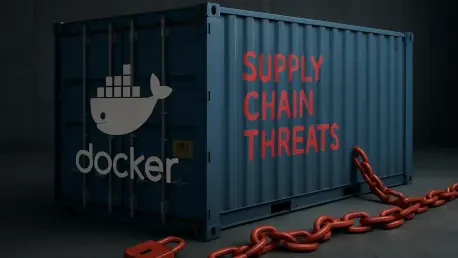

The software supply chain has become a primary battleground for cyber warfare, where a single compromised component can trigger a cascade of devastating security breaches across countless organizations. For years, the industry has grappled with how to secure this sprawling, interconnected ecosystem, often placing the burden of verification on individual developers who must navigate a maze of unvetted open-source repositories. In response to this persistent challenge, Docker has launched a major initiative that aims to fundamentally shift the security paradigm by providing a trusted and fortified foundation for application development, potentially altering the very landscape of cloud-native security. This move signals a deliberate effort to make secure practices not just an option, but the default path for millions of developers worldwide.
A New Foundation for Secure Development
In a landmark effort to fortify the software development lifecycle from its very inception, Docker has released over one thousand free, hardened container images under the permissive Apache 2.0 open-source license. This collection is designed to serve as a secure and reliable starting point for developers building cloud-native applications. Built upon the widely used and non-proprietary Debian and Alpine Linux distributions, these Docker Hardened Images (DHI) are meticulously engineered to be secure by design. Each image comes equipped with a comprehensive software bill of materials (SBOM), offering complete transparency into its components. Furthermore, they include public data on Common Vulnerabilities and Exposures (CVEs), cryptographic proof of authenticity to verify their origin, and SLSA Level 3 provenance to ensure the integrity of the build process. Docker asserts that this rigorous hardening process successfully eliminates over 95% of the vulnerabilities typically found in traditional base images, a significant reduction that could drastically lower the attack surface for new applications.
To overcome the common hurdle of developer inertia and facilitate a seamless transition to these more secure assets, the company has also enhanced its generative AI tool, the Docker AI Assistant. This intelligent assistant now possesses the capability to automatically scan a developer’s existing containers, identifying insecure components and dependencies that pose a risk. Upon completing the scan, the tool recommends the equivalent hardened images from the new DHI collection and can even apply the necessary changes, effectively automating a critical security upgrade. This streamlined workflow is designed to make adopting best practices the path of least resistance. The company is also extending its robust hardening methodology beyond base images to Model Context Protocol (MCP) servers. Initial hardened versions are already available for over ten popular servers from vendors like Grafana, MongoDB, and GitHub, signaling a broader commitment to securing the entire cloud-native toolchain.
Restructuring for Broader Accessibility and Support
To ensure this security initiative reaches the widest possible audience, Docker has strategically reorganized its offerings into a new three-tiered model, making robust security accessible to developers at every level. At the core of this new structure is the free tier, which grants universal access to the entire collection of over one thousand hardened images. This move effectively democratizes a crucial layer of supply chain security, allowing individual developers, open-source projects, and small teams to build on a trusted foundation without any financial barrier. For commercial organizations with more extensive needs, the company now offers Docker Hardened Images Enterprise (DHI Enterprise). This tier provides access to a much wider array of continuously updated and maintained images, ensuring that enterprise-grade applications remain secure against emerging threats. Existing DHI customers have been automatically upgraded to this enhanced enterprise tier at no additional cost, ensuring a smooth transition for the current user base.
Recognizing that many large organizations contend with legacy systems, Docker has introduced a third, specialized tier: Docker Hardened Images Extended Lifecycle Support (DHI ELS). This extension service is specifically tailored to the challenge of maintaining applications that have reached their end-of-life or are dependent on outdated components. DHI ELS provides secure, patched, and updated container images for these legacy applications, closing a critical security gap that is often exploited by attackers. By offering continued support for systems that would otherwise be left vulnerable, this service enables enterprises to manage their technical debt more securely and plan for modernization without exposing themselves to unnecessary risk. This comprehensive, multi-tiered approach addresses the diverse needs of the modern software landscape, from individual hobbyists to multinational corporations managing complex, aging infrastructure.
A Strategic Shift in Supply Chain Defense
The release of these free, hardened images represented more than just a product update; it was a deliberate and strategic intervention aimed at reshaping the defense of the entire software supply chain. By providing a vast library of verified, secure-by-design components at no cost, the initiative directly addressed the root cause of many vulnerabilities: the widespread use of unvetted and insecure base images. This move effectively shifted the security paradigm from a reactive, downstream scanning process to a proactive, foundational approach. It made the secure choice the easiest choice for developers, tackling the persistent issue of developer inertia head-on. The integration with the Docker AI Assistant further streamlined this transition, automating the process of identifying and replacing insecure components. This comprehensive strategy acknowledged that true supply chain security could not be achieved by tools alone but required embedding secure practices into the very fabric of the development workflow. While not a singular solution to all supply chain threats, providing a trusted, transparent, and accessible starting point for millions of developers established a new, higher baseline for security across the industry.