
The specialized cloud infrastructure market is currently witnessing an unprecedented expansion as massive artificial intelligence clusters become the primary engine of modern enterprise computing. As organizations scramble to secure the compute power necessary for increasingly complex large language models, CoreWeave has emerged as a critical vanguard, navigating the delicate balance between record-breaking revenue generation and the staggering capital investment required to sustain such velocity. The company’s recent performance underscores a broader industry reality where the sheer scale of demand for specialized hardware is outstripping traditional supply cycles, forcing providers to make massive bets on future capacity. While the fiscal landscape is defined by massive spending on advanced accelerators and high-speed networking, the underlying momentum suggests that the transition to AI-centric cloud services is accelerating faster than most analysts anticipated just a short time ago.
Revenue Acceleration: Strategic Shifts and Growth
The financial data released for the period ending September 30 reveals a stunning trajectory for CoreWeave, with quarterly revenue climbing to an impressive $3.661 billion. This figure represents a massive leap from the $1.365 billion reported during the same window exactly one year prior, signaling that the appetite for dedicated AI compute remains insatiable across the private sector. Consequently, management has proactively adjusted the full-year revenue guidance for 2026 to a range between $13.0 billion and $13.3 billion, reflecting a significant increase in confidence regarding the delivery of contracted services. This surge in top-line growth is primarily driven by the deployment of top-tier NVIDIA Blackwell systems and sophisticated InfiniBand networking architectures that allow clients to train models at scale. The market now anticipates an annualized run-rate revenue of $20 billion by the end of the current year.
Beneath the surface of this rapid revenue expansion lies a more complex story regarding operational efficiency and the high cost of debt-fueled growth in the high-tech sector. While operating income climbed to a healthy $207 million during the quarter, the bottom line tells a different story as net losses widened to $709 million due to the high cost of capital. A primary driver of this disparity is the $846 million in interest expenses incurred from the heavy borrowing required to procure hardware and build out power-intensive data center facilities. Management maintains that the cash flows from secured, multi-year customer commitments will be sufficient to service these obligations without needing to tap into high-yield unsecured debt markets in the immediate future. By aggressively securing power allocations and advanced cooling technologies now, the firm aims to avoid the bottlenecks that have recently plagued traditional cloud providers.
The broader market context remains one of cautious optimism as stakeholders evaluate the rapid scaling of artificial intelligence against the risks inherent in massive infrastructure spending. CoreWeave’s management continues to assert that the current capital-intensive phase is a necessary precursor to long-term market dominance in the specialized cloud sector. By intentionally avoiding unsecured debt markets at current yields, the company is attempting to maintain a sustainable debt-to-equity ratio while funding its expansive contract backlog. This strategic positioning is designed to outpace traditional competitors who may be slowed by legacy infrastructure and more conservative procurement cycles. The focus is currently on aggressive scaling, betting that the persistent surge in demand for high-performance computing will eventually translate into robust profitability once the massive facility build-outs are finalized.
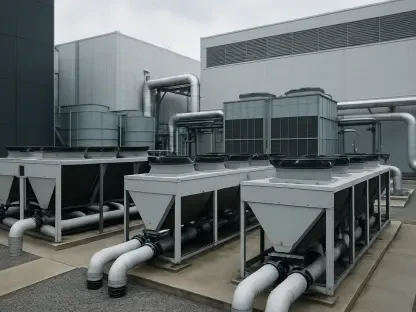
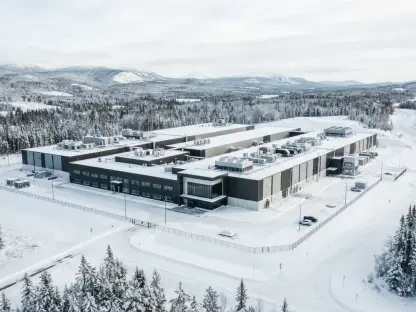
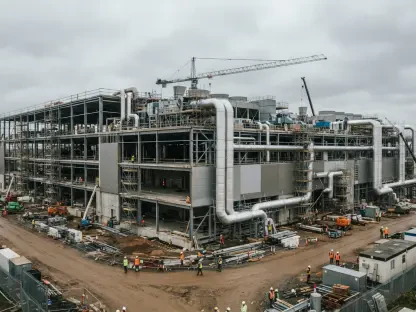
To fulfill pending orders for hyperscale clients, the company raised the lower threshold of its capital expenditure forecast to $37 billion, with an upper limit now set at $39 billion. This massive investment was funneled into the construction of high-density data centers designed specifically for liquid-cooled hardware and high-performance clusters. By the end of the current cycle, the total active power was expected to reach over 1.85 gigawatts, highlighting the immense energy requirements of modern AI accelerators. While adjusted profitability was not anticipated to materialize until the first half of 2028, the immediate focus remained on maximizing delivery speed. Decision-makers monitored the availability of these clusters as lead times for GPU-integrated systems continued to fluctuate. The long-term viability of this model rested on maintaining high utilization rates while refining the cost of capital.