
The explosive growth of artificial intelligence, which now permeates nearly every facet of the digital world, rests upon a massive and rapidly expanding physical foundation of data centers connected by a web of high-capacity fiber optic cables. While AI models and software dominate headlines, the silent, relentless demand for the underlying hardware infrastructure has created a critical bottleneck and a significant opportunity for established technology manufacturers. The insatiable appetite for data processing and connectivity, driven by generative AI, large language models, and cloud computing, is forcing tech titans to invest hundreds ofbillions of dollars not just in silicon chips, but in the sprawling digital real estate and networking gear necessary to power them. This unprecedented build-out has thrust component suppliers into the spotlight, transforming them from background players into essential architects of the next technological revolution. One company, in particular, is now at the epicenter of this surge, scaling its operations to meet a wave of demand unseen since the early days of the internet.
A Strategic Partnership Forged in Silicon
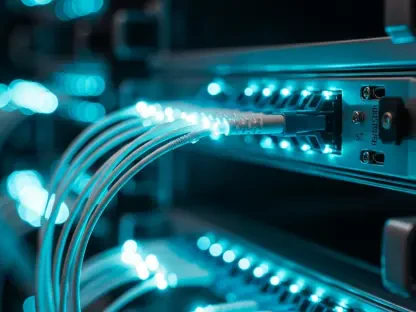
At the heart of this infrastructure boom is a landmark agreement between Corning and Meta Platforms, a partnership that underscores the sheer scale of the industry’s needs. The deal, valued at $6 billion through 2030, tasks Corning with supplying state-of-the-art fiber-optic cables essential for connecting Meta’s next-generation AI data centers. To fulfill this colossal order, Corning has initiated a significant expansion of its primary manufacturing facility in Hickory, North Carolina, with concrete plans for additional sites across the state to further boost production capacity. This move is a direct response not only to Meta’s requirements but to a sector-wide investment frenzy. Meta alone plans to spend between $115 billion and $135 billion on new data centers in 2026, with major projects underway in Ohio and Louisiana. However, this is not an isolated case; industry giants like Google, Amazon, and Microsoft are engaged in a parallel race, pouring billions into their own data center expansions to secure a competitive edge in the AI-dominated landscape. This collective push is creating a sustained, high-volume demand for the physical components that form the nervous system of the modern internet.
Innovating on a Foundation of Experience
Corning’s ability to capitalize on the current AI-driven demand was built on a foundation of resilience and forward-thinking innovation. As a seasoned survivor of the dot-com bust, the company leveraged its deep industry experience to navigate market volatility and position itself for long-term growth. This strategic foresight was reflected in its strong financial performance, which included a 13% increase in sales and a remarkable 103% climb in stock value during 2025. Critically, the company did not simply scale existing production; it innovated to meet the unique challenges posed by AI workloads. In March 2025, it introduced new hardware specifically designed for the high-density environments of modern data centers, a solution capable of handling 36 times more fiber connections within a single rack. This technological leap directly addressed the urgent need for more bandwidth in a smaller physical footprint. These actions—combining financial robustness with targeted technological advancements—solidified Corning’s position as an indispensable partner in the tech sector’s expansion, ensuring its role in building out both the terrestrial and subsea cable systems that powered the global AI infrastructure surge.