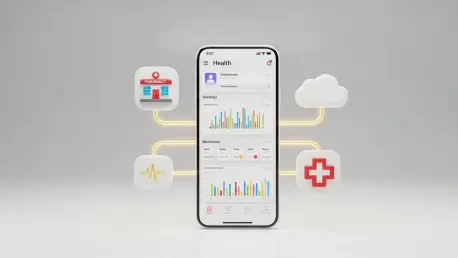

The persistent struggle to consolidate medical records across disparate healthcare providers has long plagued the American medical system, often leaving patients to navigate a labyrinth of disconnected portals and physical paperwork. To combat this systemic inefficiency, CVS Health has entered into a significant strategic partnership with Google Cloud to launch a pioneering consumer health platform known as Healt#00. This initiative aims to serve as a central hub for health management, consolidating data from retail pharmacies, walk-in clinics, and insurance networks into a single, accessible interface. By moving away from the isolated legacy software systems that have defined the industry for decades, the collaboration seeks to create a more integrated digital environment for millions of users. The transition represents a broader trend where major healthcare entities are prioritizing cloud-based infrastructures to improve the continuity of care. As the platform rolls out starting in 2026, it promises to redefine the relationship between patients and their digital medical records.
Overcoming Structural Health Data Silos
The Strategic Integration of Healthcare Networks
The logistical scale of this partnership is anchored in the immense physical and digital footprint of CVS Health, which currently operates over 9,000 retail pharmacies and approximately 1,000 walk-in clinics across the nation. By incorporating the Aetna insurance network into this ecosystem, the Healt#00 platform attempts to bridge the gap between clinical care, pharmaceutical fulfillment, and financial coverage. This integration is designed to be inclusive rather than proprietary, as CVS Health has prioritized interoperability with third-party providers and external pharmacy chains. The goal is to ensure that a patient’s medical history remains coherent and accessible, regardless of whether they receive care within the CVS ecosystem or through an independent specialist. This approach addresses the historical problem of data fragmentation, where vital health information often becomes trapped within specific corporate silos. By creating a unified data layer, the partnership aims to provide a more holistic view of the patient journey.
Facilitating this level of connectivity requires a fundamental shift in how health organizations approach data ownership and sharing protocols. Historically, the healthcare industry has been slow to adopt open standards, leading to a landscape where different software systems cannot communicate effectively with one another. Healt#00 seeks to disrupt this status quo by utilizing standardized data formats that allow for the seamless exchange of information between different clinical environments. This ensures that when a patient visits a new doctor or switches pharmacies, their relevant medical history—including immunizations, active prescriptions, and recent lab results—is immediately available to their care team. Such transparency not only reduces the likelihood of medical errors but also eliminates the need for redundant testing, which often drives up healthcare costs for both providers and consumers. The focus on interoperability underscores a commitment to patient-centric care, where the individual remains the primary owner of their information.
Patient Empowerment and Navigational Ease
At the core of the Healt#00 initiative is a desire to simplify the often-overwhelming process of managing personal health in a complex medical landscape. Most patients currently find themselves responsible for tracking their own appointments, medication refills, and insurance claims across multiple uncoordinated platforms. The new digital environment centralizes these tasks, offering a streamlined interface where users can find care options, schedule visits, and interpret their medical records without specialized knowledge. By providing clear insights into treatment options and costs, the platform empowers individuals to make more informed decisions about their well-being. This shift from a passive role to an active one is essential for improving long-term health outcomes, as engaged patients are more likely to adhere to treatment plans and preventative screenings. The user experience is being built with a focus on accessibility, ensuring that patients of all ages and technological fluencies can benefit from these advanced digital tools.
Beyond simple record-keeping, the platform serves as a navigational guide through the intricacies of the modern healthcare system. Finding the right specialist or understanding the details of an insurance plan often requires hours of research and phone calls; however, Healt#00 aims to automate these processes through intelligent search and matching features. By analyzing a user’s specific health needs and insurance coverage, the system can recommend the most appropriate and cost-effective care pathways. This level of personalization is intended to reduce the administrative burden on patients, allowing them to focus on recovery and health maintenance rather than paperwork. The transition to a unified digital environment also enables more proactive health interventions, such as automated reminders for chronic condition management or notifications about potential drug interactions. These features represent a move toward a more integrated and supportive healthcare experience that prioritizes the convenience and safety of the individual.
Technological Synergies and Data Integrity
Artificial Intelligence as a Synthesis Tool
The technical foundation of Healt#00 rests upon Google Cloud’s specialized healthcare data services and its advanced suite of artificial intelligence tools. These resources are uniquely suited for the task of synthesizing diverse and often incompatible datasets that originate from different medical coding systems. By leveraging machine learning models, the platform can ingest unstructured data—such as handwritten clinical notes or scanned laboratory reports—and convert it into a structured, searchable format. This capability is crucial for creating a truly comprehensive medical record that captures the nuances of a patient’s health history over time. AI also plays a vital role in interpreting complex medical terminology for the layperson, translating jargon into actionable insights that a patient can easily understand. This technological layer acts as a bridge between the technical complexity of medical data and the practical needs of the consumer, making information more useful and less intimidating for the average user.
Furthermore, the application of artificial intelligence extends to the optimization of clinical operations and the identification of broader health trends. By analyzing aggregated, de-identified data across the platform, CVS Health and Google Cloud can gain a deeper understanding of population health patterns and potential gaps in care. This insight allows for the development of more effective public health strategies and the refinement of personalized care recommendations. For the individual patient, AI-driven tools can help predict potential health risks based on historical data, prompting earlier interventions that may prevent the onset of chronic conditions. The development of these applications requires a sophisticated cloud infrastructure capable of processing vast amounts of information in real time while maintaining high levels of performance. The partnership demonstrates how the fusion of retail healthcare expertise and high-performance computing can lead to innovative solutions that were previously unattainable using traditional, on-premise technology stacks.
Security Standards and Regulatory Evolution
The implementation of Healt#00 reflected an evolving industry consensus regarding the safety and efficacy of cloud-based storage for sensitive medical information. While healthcare providers were historically hesitant to move clinical data off-site due to stringent privacy regulations, modern cloud platforms provided the necessary security frameworks to meet federal standards. Google Cloud offered robust tools such as advanced end-to-end encryption, multi-factor authentication, and sophisticated auditing capabilities that allowed for precise tracking of data access. These features ensured that patient privacy remained protected even as the accessibility of the information increased. By adopting these high-level security measures, CVS Health demonstrated that cloud environments could offer a level of protection that often surpassed the capabilities of older, on-premise legacy systems. This shift was instrumental in allowing large-scale digital health initiatives to proceed without compromising the trust of the patients or the requirements of regulatory bodies.
In the final assessment, the collaboration between CVS Health and Google Cloud successfully demonstrated the potential for technology giants to drive meaningful change within the healthcare sector. The industry realized that modernizing clinical operations did not require the complete abandonment of existing systems, but rather the strategic integration of cloud-based layers that could unify disparate data sources. Healthcare executives who aimed to replicate this success were encouraged to prioritize interoperability and user-centric design when developing their own digital roadmaps. Future considerations for the industry included the expansion of cross-platform standards and the continuous refinement of AI models to ensure clinical accuracy and ethical data usage. Organizations were advised to invest in scalable cloud architectures that allowed for rapid adaptation to changing medical needs and regulatory shifts. Ultimately, the lessons learned from the Healt#00 project provided a clear blueprint for using digital connectivity to streamline the patient experience and improve the overall efficiency of the medical landscape.