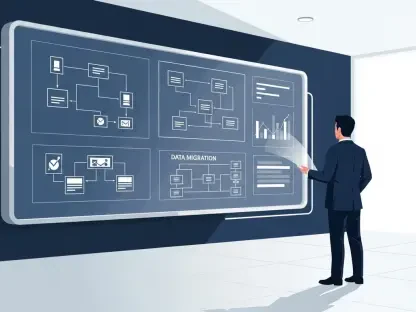

Modern enterprise environments have reached a level of complexity where manual oversight of distributed systems is no longer a viable strategy for maintaining operational uptime. As organizations transition away from legacy architectures, the demand for a unified monitoring solution has intensified, leading to a significant resurgence in cloud migration projects that prioritize visibility across entire technology stacks. Datadog has effectively positioned itself at the center of this shift by offering an integrated observability platform that serves as a single source of truth for engineering teams. By moving beyond basic infrastructure monitoring into advanced logs and application performance monitoring, the company provides the granular data necessary to manage large-scale digital transformations. This healthy buying environment reflects a broader corporate pivot toward application modernization, where efficiency is gained not through more tools, but through better integration. Enterprise clients are increasingly abandoning fragmented point solutions in favor of cohesive platforms that can sustain the rigors of modern software delivery while maintaining high gross retention rates among major global players.
Advanced Integration: The Shift Toward Automated Remediation and AI
The integration of artificial intelligence into the observability workflow represents a fundamental shift from passive data collection to active, automated remediation. Datadog has capitalized on this trend by introducing “Bits AI,” a generative site reliability engineer designed to assist teams in diagnosing and resolving system anomalies with minimal human intervention. This innovation has already attracted over 1,000 paying customers, highlighting the market’s appetite for intelligent automation that reduces the cognitive load on DevOps personnel. Furthermore, the rise of large language models has necessitated specialized tools such as LLM Observability and GPU monitoring. These capabilities allow firms to track the performance of AI-driven infrastructures in real time, ensuring that heavy investments in machine learning yield reliable results. By focusing on these sectors, the platform has become indispensable for companies navigating the dual challenges of cloud complexity and AI implementation. This strategy emphasizes tool consolidation, enabling enterprises to replace niche products with a single, comprehensive suite that covers digital experience and service management.
Navigating the current technological landscape required a deliberate move toward unified visibility and security to ensure long-term scalability and operational resilience. The success of this multi-faceted growth strategy demonstrated that large-scale organizations preferred purchasing established observability solutions over the high cost of building and maintaining complex internal systems. To remain competitive through 2026 and into the next decade, IT leaders should prioritize the consolidation of monitoring tools to reduce operational silos. Implementing automated remediation features like generative AI assistants will be critical for managing the increasing volume of telemetry data generated by modern applications. Organizations must also focus on securing AI pipelines by adopting specialized observability tools that monitor both software performance and hardware efficiency. By aligning technical roadmaps with integrated platforms, companies can achieve a more sustainable growth trajectory. This approach optimized resource allocation and empowered teams to focus on innovation rather than troubleshooting, setting a new standard for excellence.