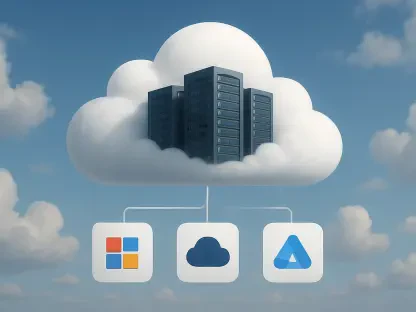
The massive surge in data consumption and the demand for instantaneous response times have pushed traditional telecommunications infrastructures to their breaking point, necessitating a complete overhaul of how networks are constructed and managed. As of 2026, the industry has reached a definitive turning point where the legacy model of vertical integration—where hardware and software were inextricably linked—is no longer viable for supporting advanced machine learning and automated operations. This structural limitation often resulted in data being trapped within proprietary silos, making it nearly impossible to implement a cohesive artificial intelligence strategy across the entire network. Instead, leading operators are now pivoting toward a horizontal cloud architecture, a design that mirrors the scalable platforms utilized by global technology giants. By decoupling the hardware from the software layer, telecommunications providers are finally able to unlock the real-time data streams necessary for the next generation of network intelligence. This transition represents more than a simple technical upgrade; it is a fundamental reimagining of the carrier as a flexible, data-centric platform.
Redefining Network Architecture for Seamless Data Integration
The primary catalyst for this architectural shift is the recognition that artificial intelligence requires a continuous, high-speed pipeline of information that legacy systems simply cannot provide. In traditional vertical setups, data collection was often an intermittent process, with performance metrics gathered in five-minute intervals that left significant gaps in operational visibility. By 2026, the move to a horizontal telco cloud has enabled a transition toward a streaming data model, where information flows constantly from every corner of the network into a centralized automation layer. This structural change divides the network into three distinct tiers: the underlying infrastructure, the functional applications, and the overarching automation logic. Such a clear separation ensures that improvements made to the horizontal platform immediately benefit every application running on top of it, creating a unified ecosystem. This approach effectively replaces the fragmented “local optimums” of the past, where individual departments optimized their own silos, with a “global optimum” that prioritizes the efficiency of the entire network.
Implementing this horizontal strategy allows operators to maintain a consistent operational environment across diverse geographical locations and hardware sets. This consistency is vital for deploying AI-driven tools that can predict network failures or automatically reconfigure traffic patterns to prevent congestion before it impacts the end-user. Without a shared horizontal layer, these AI models would have to be custom-tuned for every different hardware configuration, an endeavor that is both cost-prohibitive and technically exhausting. Furthermore, the horizontal model facilitates a much faster development cycle, as software updates can be rolled out across the entire platform simultaneously rather than being updated piecemeal. This agility is what allows modern carriers to compete with hyper-scalers, providing a level of service reliability and feature innovation that was previously unattainable within the rigid constraints of traditional telecommunications engineering. The focus has shifted from managing boxes to managing a holistic, programmable environment that treats every network component as a cloud-native resource.
Navigating Vendor Partnerships and Organizational Governance
Transitioning to a horizontal cloud environment demands a significant evolution in how telecommunications companies interact with their technology partners and manage their internal teams. Historically, vendors delivered finished, end-to-end stacks that required very little integration effort but offered almost no flexibility for the operator to innovate. In the current landscape of 2026, the paradigm has shifted toward a multi-vendor ecosystem where carriers demand specific, cloud-native components that must adhere to strict architectural standards. This change has placed a new emphasis on rigorous negotiation and a steadfast refusal to accept proprietary extensions that might lead to vendor lock-in. It requires a high degree of technical expertise within the carrier’s organization to ensure that components from different suppliers can interoperate seamlessly on a shared platform. This newfound assertiveness among operators is essential for maintaining the integrity of the horizontal architecture, as any compromise or exception can quickly lead to the re-emergence of unmanaged silos and operational complexity.
Internally, the shift toward a horizontal cloud model necessitates the dismantling of long-standing organizational structures that have historically mirrored the vertical stacks they managed. Employees who were once specialists in a single vendor’s technology are being retrained to operate within a platform-focused governance model that emphasizes cross-functional collaboration. Executive leadership plays a crucial role in this cultural transformation, as maintaining the discipline required for a horizontal architecture is often a matter of organizational willpower. It is frequently easier for a single project team to bypass the shared platform to meet a short-term deadline, but such shortcuts inevitably undermine the long-term return on investment for the entire company. Leaders at companies like Deutsche Telekom have demonstrated that by enforcing strict adherence to the horizontal blueprint, they can achieve greater scalability and lower operational costs. This shift in mindset from “building a network” to “running a platform” is perhaps the most difficult aspect of the transition, yet it remains the most critical factor for success in an AI-driven market.
Strategic Realization of Automated Network Operations
The adoption of a horizontal telco cloud was ultimately recognized as a mandatory step for ensuring business resilience and enhancing network security in an increasingly volatile digital landscape. By standardizing the underlying infrastructure, operators found they could implement more robust security protocols that were automatically applied to every application within the ecosystem. This holistic approach significantly reduced the attack surface and simplified the process of complying with evolving regulatory requirements regarding data privacy and sovereignty. As the industry progressed through 2026, the integration of AI-RAN technologies became the next logical step, allowing for even greater optimizations at the radio edge that were previously impossible under vertical constraints. These advancements were not merely theoretical; they resulted in measurable improvements in energy efficiency and spectral utilization, directly contributing to more sustainable business practices. The focus moved toward creating an agile environment where new revenue streams could be generated through specialized network slicing and localized edge computing services.
Success in this new era required a commitment to moving beyond simple connectivity and embracing the role of a sophisticated, automated service provider. Organizations that successfully navigated this transition focused on building a culture of continuous improvement, where the data gathered from the horizontal platform informed every strategic decision. They prioritized the development of internal talent and invested in the tools necessary to manage a complex, multi-cloud environment. Moving forward, the industry must continue to refine these horizontal models to support even more intensive AI workloads and emerging technologies like quantum-resistant encryption. The goal was to establish a foundation that was not just powerful enough for today’s demands, but flexible enough to adapt to the unforeseen challenges of the next decade. By securing the horizontal architecture, telecommunications providers ensured they remained at the heart of the digital economy, capable of delivering the high-performance, intelligent services that modern society has come to depend upon for every aspect of daily life.