
The current wave of layoffs sweeping through the global technology sector is often characterized by the public as a direct consequence of software-driven automation, yet the underlying financial mechanics tell a much more calculated story about resource allocation. Instead of workers being rendered obsolete by intelligent algorithms in real-time, their positions are being eliminated primarily to free up the liquidity required for massive, unprecedented investments in physical infrastructure. This transformation marks a departure from the traditional lean software model, where human talent was the primary asset, toward a capital-intensive regime dominated by high-end hardware, specialized cooling systems, and massive energy requirements. As profitability remains high across the industry, the narrative of efficiency serves as a strategic shield for a fundamental redistribution of wealth from the payroll ledger to the capital expenditure budget. This transition forces a difficult reality upon the modern workforce: the very companies that once competed for top-tier talent are now prioritizing the acquisition of compute power above all else.
Redirecting Capital: The Pivot From People to Hardware
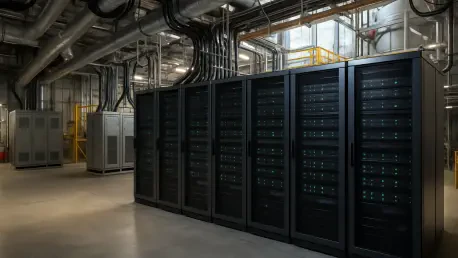
The financial landscape of the technology industry has shifted toward a hardware-first mentality that treats human labor as a primary source of funding for massive technological expansion. While the public often views artificial intelligence as an abstract digital entity, the reality on the ground consists of sprawling data centers and expensive server racks that require billions of dollars in upfront capital. Major corporations are currently diverting these funds from their annual salary budgets, choosing to let go of thousands of experienced professionals to ensure they can afford the specialized chips and power infrastructure necessary to remain competitive in the AI race. This is not a case of machines performing human tasks more cheaply, but rather a strategic decision to prioritize the physical building blocks of the next era over the intellectual capital of the current one. In this environment, the employee has become a variable cost that can be adjusted to maintain the high margins required to service the massive debt associated with these large-scale infrastructure projects.
Specific financial disclosures from industry leaders provide a transparent view of this resource reallocation, as companies like Oracle and Amazon report significant shifts in their spending patterns. Oracle, for instance, has announced plans to raise nearly $50 billion in new debt to expand its cloud infrastructure, even as it continues to streamline its workforce to manage the resulting interest payments and operational overhead. Similarly, Amazon has seen its free cash flow diverted toward a $50 billion increase in property and equipment purchases, explicitly identifying these costs as essential for its artificial intelligence roadmap. When a corporation commits such a vast percentage of its liquidity to physical equipment, the labor force inevitably becomes the most flexible line item on the balance sheet. By reducing headcount, these firms can reassure investors that they remain fiscally responsible while simultaneously placing multibillion-dollar bets on the long-term potential of generative systems and massive computing clusters.
Strategic Narratives: Market Incentives and Corporate Signaling
Corporate leadership frequently utilizes the promise of upcoming technological efficiency to justify workforce reductions to a shareholder class that increasingly prioritizes lean operations. By framing mass layoffs as a necessary step toward an AI-native organizational structure, executives can mitigate the negative social impact of job losses while boosting stock valuations through the promise of future margin expansion. This narrative allows management to navigate the volatile transition from a labor-heavy service model to a highly automated, capital-intensive infrastructure model without losing the confidence of the financial markets. Investors typically reward these cost-cutting measures when they are presented as strategic optimizations rather than signs of distress, creating a powerful incentive for firms to maintain a cycle of continuous restructuring. The result is a corporate culture where the rhetoric of innovation provides a convenient cover for traditional cost-saving measures, shielding the board from criticism while they pivot their entire business models toward hardware-centric goals.
Beyond internal accounting, these layoffs function as a sophisticated marketing tool designed to convince the broader business community of the transformative power of artificial intelligence. When a major tech provider publicly states that it is reducing its own headcount due to the efficiency of its internal AI platforms, it creates a compelling implicit advertisement for its products. This dogfooding narrative suggests to other organizations that they, too, can achieve significant labor savings if they purchase the same high-end computing services and software suites. The specter of a technology powerful enough to replace human roles serves as a persuasive sales pitch, encouraging a circular investment pattern within the tech ecosystem where companies buy AI from each other to justify their own reduced workforces. This strategy transforms the reality of job displacement into a sign of progress, signaling to potential clients that the age of human-centric operations is ending and that the only way to remain competitive is to adopt the very infrastructure that necessitated the cuts.
Implementation Gaps: The Delay Between Investment and Reality
Despite the aggressive corporate rhetoric suggesting that software is already doing the work of thousands, recent economic data reveals a significant discrepancy between public statements and operational reality. Reports from the Federal Reserve indicate that a very small percentage of firms actually cite direct automation as the primary reason for their current workforce reductions. Instead, most of the displacement is occurring through traditional belt-tightening and a deliberate reduction in entry-level hiring rather than the wholesale replacement of human expertise by autonomous systems. This suggests that the term AI is being used as a broad umbrella for various forms of organizational realignment that would likely have occurred even without the recent technological breakthroughs. The focus on future automation allows companies to obscure the fact that they are currently struggling with the high costs of their own ambitions, using the promise of tomorrow’s efficiency to justify the immediate financial pressures of their infrastructure spending.
There is a profound temporal disconnect between the immediate elimination of jobs and the actual physical completion of the infrastructure intended to replace or augment those roles. While tens of thousands of workers have already been removed from the payroll to balance current budgets, the massive data centers and specialized power grids required to run advanced AI systems are still years away from being fully operational. Current estimates suggest that only a third of the planned data center capacity in the United States is currently under construction, hampered by labor shortages, specialized equipment delays, and significant logistical challenges. This creates a period of intense structural tension where the human cost of the transition has already been paid, yet the technological benefits remain a distant and largely unproven bet. Companies are effectively operating in a hollowed-out state, having cut the human capital they currently need to finance the hardware they cannot yet fully utilize, leading to a precarious gap in both productivity and institutional knowledge.
Long-Term Impact: Evaluative Analysis and Strategic Transitions
The long-term viability of this financial strategy depends heavily on whether the massive returns promised by the AI infrastructure can eventually outweigh the loss of human ingenuity and institutional expertise. By centralizing such a high degree of capital into specialized hardware, tech giants have increased their vulnerability to supply chain disruptions and technological obsolescence, creating a risk profile that was largely absent in the previous software-dominated era. The focus on scaling physical compute power has often come at the expense of internal research and development teams that were previously responsible for the creative breakthroughs that fueled industry growth. This concentration of resources into a few specific hardware pathways may lead to a homogenized technological landscape where companies compete solely on the size of their server farms rather than the uniqueness of their solutions. As the industry matures, the true cost of this reallocation will likely be measured not just in dollars, but in the stagnation that occurs when a sector prioritizes the maintenance of machines over the cultivation of people.
Organizations that navigated this transition successfully recognized that the aggressive reallocation of human capital toward hardware required a more balanced approach to long-term stability. Instead of viewing labor as a purely adjustable expense, the most resilient firms focused on upskilling their existing workforces to interface with the new infrastructure as it slowly came online. They avoided the trap of using AI as a marketing veneer for simple cost-cutting and instead developed transparent roadmaps that aligned their hiring practices with the actual pace of their technological deployments. Moving forward, the industry learned that the financial health of a company could not be sustained by hardware alone if the human talent necessary to drive innovation was neglected. The most effective next steps involved establishing flexible labor models that could scale alongside computing power, ensuring that the transition remained a collaborative evolution rather than a destructive displacement. Ultimately, the successful management of this era depended on the realization that infrastructure is merely a tool, and its value was only realized when combined with the creative power of a supported workforce.