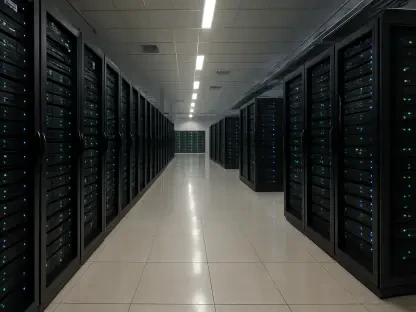
The transition from traditional cloud computing to the resource-intensive era of generative artificial intelligence has fundamentally redefined the primary bottlenecks of global technological advancement. While the previous decade was characterized by the pursuit of more efficient semiconductors and faster data transmission, the current landscape is defined by an insatiable hunger for raw electrical power. As the digital economy pivots toward compute-intensive processing, the industry is encountering a critical obstacle in the limited capacity of national electrical grids. This shift has created a paradigm where the primary constraint on growth is no longer the availability of specialized hardware, but rather the immediate access to massive, reliable, and dedicated streams of electricity. Consequently, the relationship between high-tech development and the energy sector is being rewritten, as data center operators move beyond their role as consumers to become central players in the global energy market.
The Strategic Shift to Baseload Energy
Resource Selection: The Crucial Pivot to Natural Gas
While global policy initiatives frequently emphasize the transition to renewable energy sources, the burgeoning AI sector is increasingly leaning on natural gas to meet its intensive, around-the-clock operational requirements. The International Energy Agency currently projects that data center power consumption will more than double between 2026 and 2030, with natural gas expected to fulfill over a quarter of that total demand. This preference stems from the fundamental need for “baseload” reliability; unlike intermittent solar or wind power, natural gas provides the constant, high-level output necessary to keep AI processors running at maximum capacity without interruption. In an industry where even a momentary dip in power can disrupt complex training models and result in significant financial losses, the stability offered by gas-fired generation has become an indispensable component of infrastructure planning for major technology firms.
The move toward gas-fired power is exemplified by massive industrial partnerships that bypass traditional utility structures entirely. For instance, recent developments in North Dakota involve a multibillion-dollar partnership designed to build a 1.2-gigawatt gas-fired power complex dedicated solely to powering sprawling AI campuses. By developing these dedicated energy sources, tech firms can effectively insulate themselves from the volatility and physical constraints of public infrastructure. This strategy ensures a stable supply that matches the gigawatt-level loads required by modern hardware, marking a departure from the days when data centers could simply plug into the existing regional grid. These “behind-the-meter” projects represent a new era of self-sufficiency, where the ability to generate electricity is considered just as critical to the business model as the proprietary algorithms being processed within the facility.
Regional Market Shifts: The Rise of Energy-Rich Hubs
This unprecedented hunger for energy is redrawing the geographic map of the global technology industry, with development rapidly shifting toward regions that possess abundant natural resources and supportive regulatory frameworks. While Northern Virginia has historically served as the primary global hub for data center activity, Texas is currently on track to surpass it due to its vast natural gas fields and a more flexible environment for independent power generation. This migration is not merely a matter of proximity; it is a calculated effort to secure long-term energy security in a market where grid congestion is becoming a frequent occurrence. Regions that can offer direct access to fuel and the land necessary for large-scale generation are seeing a surge in investment, as tech giants prioritize physical energy assets over traditional proximity to major urban populations.
Furthermore, the integration between energy producers and technology firms is becoming increasingly formalized through direct supply agreements that bypass the standard commercial electricity market. Companies like Comstock Resources have entered into significant contracts with major energy providers to support upcoming AI developments, allowing tech firms to lock in fuel supplies and protect themselves from price spikes. These bilateral agreements create a more predictable cost structure for data center operators while providing energy producers with guaranteed, high-volume customers. Smaller-scale projects are also following this trend, with developers converting former manufacturing sites into high-density computing facilities equipped with their own generation capabilities. This localized approach to energy procurement is fundamentally altering how regional power markets operate, shifting influence away from public utilities toward private partnerships.
Policy Integration and Economic Evolution
Public Infrastructure: Private Funding for Grid Stability
There is a growing consensus among public policy experts and regulators that the massive scale of AI infrastructure should be supported by private capital to protect residential consumers from the rising costs of utility upgrades. Major technology giants such as Amazon, Google, and Microsoft have recently pledged to finance their own generation facilities and high-voltage transmission lines, a move that aligns with federal initiatives aimed at minimizing the burden on existing domestic grids. By internalizing these significant infrastructure costs, the technology sector effectively secures its own operational future while reducing the political friction that often accompanies large-scale industrial energy use. This shift in responsibility ensures that the rapid expansion of AI does not come at the expense of public affordability, creating a more sustainable pathway for long-term industrial growth.
In addition to financing, these firms are entering into long-term corporate power purchase agreements that span decades, providing the financial certainty needed to build new energy projects. For example, extensive 20-year agreements between tech leaders and energy providers in the Southern United States illustrate a commitment to building new capacity rather than simply drawing from the current supply. This proactive approach to energy development is being viewed by policymakers as a necessary evolution of the industry, where the most successful companies are those that contribute to the overall expansion of the energy ecosystem. By taking on the role of infrastructure developers, tech companies are proving that they can navigate complex regulatory environments to build the power systems required for the next generation of digital services, effectively functioning as private utility providers.
Industrial Synthesis: AI as the New Heavy Industry
Ultimately, the evolution of AI infrastructure marks its transition into a specialized form of heavy industry, where energy procurement is now viewed as a decisive capital investment rather than a secondary operational expense. In the current global market, the ability to secure a reliable power supply is just as vital as the ability to acquire advanced semiconductors, creating a high-stakes environment where energy independence provides a structural advantage. As technology firms integrate more deeply with the energy sector, the “dual power” model—controlling both computation and generation—is becoming the new standard for industrial strategy. This integration represents a fundamental shift in the identity of technology companies, which are now forced to manage complex supply chains involving natural gas, transmission hardware, and large-scale thermal management systems.
The economic implications of this transition are profound, as the cumulative costs associated with AI development—including energy, hardware, and personnel—often require massive upfront investments that exceed initial revenue streams. Only those organizations capable of securing their own energy future are likely to hold a sustainable advantage in this competitive landscape. By establishing dedicated, gas-fired generation, these operators escape the capacity constraints that could otherwise throttle their technical growth. This trend suggests that the future of the technology sector will be defined by its ability to reconcile massive power needs with the physical realities of the energy market. As the industry matures, the distinction between a tech company and an energy company will continue to blur, leading to a new era of industrial synergy that prioritizes resource security above all else.
Future Considerations for Industrial Energy Independence
The rapid expansion of the AI sector necessitated a fundamental reconfiguration of how industrial power was managed, shifting the responsibility of generation and infrastructure funding directly onto the technology firms themselves. To maintain a competitive edge, market leaders successfully prioritized the acquisition of long-term energy assets, ensuring that their computational growth was never restricted by the limitations of public utility grids. Moving forward, stakeholders should focus on the continued integration of modular power generation technologies and the exploration of hybrid systems that combine the reliability of natural gas with the sustainability of emerging carbon-capture solutions.
As the industry transitioned into a heavy-industrial model, the importance of geographic diversification became clear, prompting companies to look toward regions with underutilized energy resources and supportive regulatory frameworks. Future strategies must involve deeper collaboration with local governments to create specialized energy zones that allow for the rapid deployment of dedicated transmission lines and independent microgrids. By taking proactive steps to stabilize their own power supply, tech firms not only protected their operational integrity but also contributed to a more resilient global energy landscape. The ultimate takeaway from this shift was that energy security had become the true currency of the digital age, dictating the pace and scale of all subsequent technological innovations.