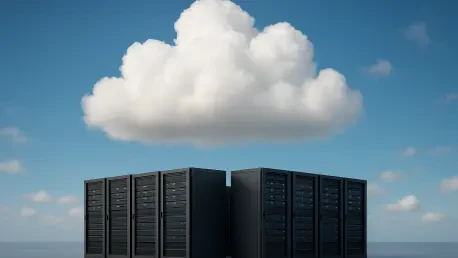

Strategic resource management now requires a shift from pure speed toward power-conscious architecture and resource-frugality across the enterprise. For nearly twenty years, the tech industry operated under the assumption that virtual resources were entirely disconnected from physical scarcity, treating capacity as a utility that would always be available for a price. However, the massive surge in high-density computing required for modern applications has forced a critical reckoning with the limitations of the electrical power grid and the logistics of cooling systems. Today, the ability to scale is no longer just a question of whether an organization has the capital to pay for more instances; it is a question of whether the regional infrastructure can physically deliver the kilowatts to the data center rack. This fundamental transition from an era of perceived abundance to a reality of scarcity means that software architects must now prioritize the conservation of every compute cycle and byte of memory to remain competitive.
Power Scarcity: The Collision of AI and Grid Capacity
Hyperscalers like Amazon Web Services, Microsoft Azure, and Google Cloud are currently dedicating unprecedented capital expenditures toward the construction of specialized AI factories and massive server campuses. While these investments are designed to meet the astronomical demand for generative model training, they are increasingly hitting a wall built of copper and transformers. By 2027, the primary limiting factor for cloud expansion will likely be the pace at which utility companies can upgrade transmission lines and build new substations. The sheer volume of energy required to power next-generation GPU clusters is outstripping the growth of renewable energy sources and traditional power generation alike. This creates a bottleneck where financial power can no longer bypass the physical constraints of the electrical grid, forcing a shift in how providers allocate their finite resources among competing global clients who are all clamoring for more compute power.
Beyond the immediate physical constraints of the grid, the expansion of cloud infrastructure is facing significant localized headwinds from regulatory bodies and community groups. In many jurisdictions, the immense water requirements for cooling and the potential for data centers to strain local power stability have led to stricter zoning laws and increased environmental scrutiny. Municipalities that once welcomed data centers as economic engines are now implementing moratoriums or demanding that providers contribute directly to local energy infrastructure before any new breaking of ground. This friction means that the rollout of new capacity is no longer a streamlined process but a complex negotiation involving multiple social and political layers. As a result, the geographic distribution of cloud resources is becoming more fragmented, and businesses can no longer assume that capacity will be available in their preferred regions just because they are willing to pay the premium.
Architectural Waste: The Hidden Cost of Over-Provisioning
A major contributor to the current capacity shortage is the widespread practice of over-provisioning and hoarding high-performance hardware. Many enterprises, fearing that they will be locked out of the AI revolution, have secured massive GPU reservations without having fully developed the workloads to utilize them. This leads to a situation where expensive, energy-intensive hardware sits idle or runs at a fraction of its potential capacity while other organizations are left on waiting lists. This culture of speculative acquisition creates an artificial scarcity that complicates the entire cloud ecosystem. To combat this, providers are beginning to implement stricter usage requirements and more dynamic pricing models designed to penalize underutilization. The transition toward a pay-for-performance mindset is becoming essential as the industry realizes that wasting a single watt of power or a single clock cycle on an idle machine is no longer just a financial loss, but a strategic failure.
The technical choices made during the development phase often exacerbate the infrastructure crisis, particularly when organizations deploy massive Large Language Models for simple tasks. There is a prevailing trend toward using the most capable, resource-heavy models for basic data classification or sentiment analysis—tasks that could be handled by much smaller, specialized models or even traditional heuristic engines. This sledgehammer approach to software engineering results in an unnecessary drain on global compute capacity and drives up operational costs without a corresponding increase in business value. By failing to right-size their models, companies are inadvertently contributing to the very scarcity that threatens their long-term project viability. The move toward a more discerning application of artificial intelligence requires a deep understanding of model efficiency and a willingness to trade generalized capability for task-specific optimization, ensuring the most powerful resources are reserved.
Efficiency First: The Rise of Frugal Architecture
In response to these growing constraints, the discipline of frugal architecture has emerged as a critical framework for modern digital leadership. This approach moves away from the unlimited mindset of the past and instead focuses on building systems that are intentionally lean and highly efficient. Success is now measured by the ability of an architect to deliver the required business outcomes using the minimum amount of infrastructure possible. This involves a rigorous evaluation of every architectural decision, from the choice of programming language to the frequency of data replication across different geographic zones. By treating cloud resources as a precious and finite commodity, organizations can build more resilient systems that are less vulnerable to price fluctuations and capacity shortages. This mindset shift encourages innovation at the code level, pushing developers to find creative ways to optimize performance rather than simply throwing more hardware at a specific problem.
Minimizing unnecessary data movement is another pillar of this new efficiency-first era, as the energy cost of networking and storage starts to figure more prominently in corporate budgets. Moving petabytes of data between cloud regions or from the edge to the core is becoming increasingly expensive and slow, prompting a return to localized processing and smarter data lifecycle management. Advanced techniques like federated learning and edge-based inference are gaining traction as they allow organizations to derive insights without the massive overhead of centralizing all their information. Furthermore, the adoption of Retrieval-Augmented Generation has provided a pathway to high-quality AI outputs without the need for constant, resource-heavy model retraining. By prioritizing these efficient methods, enterprises can significantly reduce their digital footprint while maintaining a high level of service. This strategic frugality not only preserves available capacity but also aligns with sustainability goals.
Operational Resilience: Navigating Regional Capacity Shortages
The reality of regional capacity shortages is forcing a fundamental rethink of cloud-first strategies, leading to a resurgence of hybrid and multicloud architectures. Relying on a single provider in a single region has become a significant business risk, as a surge in local AI demand could lead to throttling or a lack of expansion room for existing services. To mitigate this, forward-thinking organizations are designing their applications with maximum portability in mind, ensuring they can shift workloads between public clouds, private data centers, and specialized colocation facilities. This placement flexibility allows businesses to chase available capacity wherever it exists, rather than being held hostage by the constraints of a single ecosystem. It also provides a level of leverage during contract negotiations, as the ability to move workloads makes an enterprise less susceptible to the predatory pricing that can occur during times of scarcity. The complexity of managing these diverse environments is a trade-off.
Beyond technical portability, navigating this new landscape requires a move toward rigorous long-term capacity forecasting and procurement. In the past, the cloud allowed for just-in-time scaling that required little forward planning, but the current environment demands a more traditional industrial approach to resource management. Leadership teams must now look ahead, mapping out their projected hardware needs and securing commitments from providers well in advance of actual deployment. This involves building deeper relationships with infrastructure partners and potentially investing in dedicated hardware or long-term lease agreements to ensure that critical projects are not stalled by sudden market shifts. By treating compute capacity as a strategic asset similar to raw materials in manufacturing, companies can insulate themselves from the volatility of the spot market. This transition marks the end of the infinite cloud and the beginning of a more mature, predictable approach to digital infrastructure.
Strategic Recovery: Implementing Resource Conscious Policies
The transition away from a model of infinite cloud growth has fundamentally changed how the technology sector evaluates success and architectural integrity. In previous years, the speed of deployment was the only metric that truly mattered, leading to a culture of waste that was masked by the falling costs of silicon. However, the physical constraints of the electrical grid and the soaring demand for specialized AI hardware have proven that the digital world is inextricably linked to the physical environment. Organizations that recognized these limits early on and adapted their development cycles were able to maintain their momentum while others struggled with rising costs and unavailable instances. The era of the magic kingdom of resources ended when the requirements of the algorithm exceeded the capacity of the substation. This shift necessitated a return to the core principles of computer science, where efficiency was not just a cost-saving measure but a fundamental requirement for systems to operate.
Looking forward, the most effective path for enterprises involves a three-pronged strategy focused on visibility, optimization, and diversification. First, implementing granular monitoring to identify and eliminate zombie resources is an immediate step that can reclaim significant capacity. Second, engineering teams should be incentivized to adopt small-model architectures and efficient data handling practices as a standard part of the development lifecycle. Finally, leadership must maintain a diversified infrastructure portfolio that includes a mix of on-premises and multi-vendor cloud resources to ensure operational continuity. By shifting the focus from how much can we buy to how much can we achieve with what we have, businesses will be better positioned to thrive in an environment of limited resources. The future of digital innovation no longer belongs to those with the largest budgets, but to those who can demonstrate architectural discipline and a sophisticated understanding of the physical world.