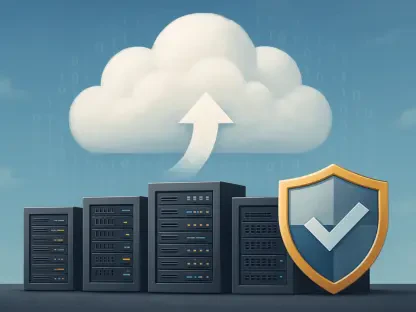

The industrial landscape is currently witnessing a fundamental shift as global manufacturers abandon traditional reactive maintenance models in favor of sophisticated, data-driven proactive strategies. This transition is not merely a matter of convenience but a strategic response to an economic climate that demands maximum production efficiency while aggressively reducing operational costs. By integrating digital twins—virtual replicas of physical machinery—with cloud-based analytics, companies are now capable of monitoring assets in real-time to anticipate failures long before they disrupt the supply chain. Leading enterprises in the food and consumer goods sectors, such as Amcor and Mars, have spearheaded this movement, proving that the convergence of artificial intelligence and the Internet of Things can transform factory floors into intelligent ecosystems. These systems do not just collect data; they translate complex mechanical vibrations and thermal signatures into actionable insights that prevent unplanned downtime while optimizing the overall life cycle of every critical component.
Implementing Digital Twin Technology
Real-World Applications in Global Manufacturing
Amcor Flexibles provides a compelling case study for the successful deployment of digital twin technology across a large-scale industrial footprint. Under the leadership of Controls Engineering Manager Carlos Paredes, the company integrated AVEVA’s Manufacturing Execution System and advanced analytics to monitor 200 blow and injection molding assets worldwide. A significant breakthrough occurred at their facility in Ames, Iowa, where the digital twin system served as an early warning mechanism for a critical dryer asset. While traditional sensors might have overlooked a subtle, persistent drop in operating temperature, the virtual model flagged the anomaly as a precursor to mechanical failure. By intervening early, the maintenance team avoided a catastrophic breakdown that would have halted production for days. This proactive approach has already yielded a 2% reduction in unscheduled downtime across the company’s regional operations, translating into millions of dollars in saved productivity and reduced material waste.
The success seen at individual facilities like Ames is part of a broader industry trend toward what Rockwell Automation CEO Blake Moret describes as a necessary evolution for global competitiveness. During the 2025 Automation Fair, leadership emphasized that the integration of AI and automation is no longer an optional luxury but the primary path toward achieving operational excellence in a tightening market. For manufacturers handling high-volume consumer goods, the ability to replicate physical assets in a digital environment allows for stress testing and performance optimization without risking the integrity of the actual machinery. This layer of digital oversight provides a safety net that enables engineers to push equipment to its optimal limits while maintaining a granular view of every component’s health. As these cloud-based monitoring solutions become more accessible, the barrier between high-level data science and the practical realities of the factory floor continues to dissolve, fostering a culture where data is the most valuable tool.
Strategic Pilot Programs and Operational Integration
Mars, Inc. offers a different perspective on how these technologies are refined through rigorous pilot programs and cloud-native architectures. Senior Lead Luiz Fraga spearheaded an 18-month initiative utilizing Datadog’s digital twin solutions, which were hosted on the Microsoft Azure IoT Edge platform to ensure low-latency data processing. The primary focus of this pilot was to move beyond simple failure alerts and instead build comprehensive models of both “normal” and “abnormal” operating conditions across diverse equipment sets. By establishing these baseline behaviors, the system could filter out the “noise” of standard industrial operations and focus exclusively on genuine threats to machine health. This sophisticated filtering process reduced the instances of “alarm fatigue” among maintenance staff, ensuring that when an alert was triggered, it was viewed with immediate priority. The Mars pilot demonstrated that the value of a digital twin lies not just in the software itself, but in how precisely it is tuned to specific variables.
One of the most significant takeaways from the Mars initiative was the realization that technical success is inextricably linked to organizational communication and data integrity. Fraga noted that for a digital twin to be truly effective, the “signal team”—those responsible for managing the flow and accuracy of incoming data—must be involved from the very earliest stages of the project. This highlights a growing realization across the manufacturing sector: high-tech maintenance strategies require a seamless bridge between Information Technology (IT) and Operations Technology (OT). When these two departments operate in silos, the digital twin often lacks the context needed to provide accurate predictions, leading to missed failures or false positives. By fostering a collaborative environment where data engineers and floor technicians work in tandem, manufacturers can ensure that the virtual models are fed high-quality, relevant information. This synergy ensures that the digital transformation is not just a top-down mandate but a practical tool.
Scaling Predictive Maintenance Systems
Best Practices for Technical Adoption
Scaling a predictive maintenance program across a global enterprise requires a disciplined approach that prioritizes high-impact wins over broad, unproven rollouts. Industry experts, including Jim Toman of Grantek, advocate for a “pilot-first” strategy that focuses on one or two critical assets where failure would be most costly to the organization. By starting small, maintenance teams can refine their data collection methods and develop a repeatable “playbook” that can be exported to other facilities with minimal friction. This incremental method allows the organization to build internal confidence in the technology and demonstrate a clear return on investment to stakeholders before committing to a massive capital expenditure. Each successful pilot serves as a proof of concept that identifies specific technical hurdles, such as connectivity issues or sensor calibration requirements, which are much easier to solve on a localized scale. This strategic patience ultimately leads to a more robust and sustainable digital ecosystem.
A common misconception in the industry is that transitioning to predictive maintenance requires a complete overhaul of existing factory hardware and expensive new sensors. However, as David Ariens of IT/OT Insider points out, many modern facilities already possess the foundational infrastructure needed to support digital twin modeling. Most production equipment is already equipped with sensors that track basic metrics like vibration, temperature, and electrical current draw. Because the physics of mechanical failure are well-documented, these existing data streams can often be fed directly into cloud-based analytics platforms to provide immediate insights into machine health. This means that for many manufacturers, the journey toward digital transformation is more about refining data architecture and software integration than it is about purchasing new physical assets. By leveraging the sensors they already have, companies can achieve “quick wins” that significantly improve uptime while keeping implementation costs manageable for all parties.
The Role of Human Expertise and Data Standards
Despite the immense capabilities of artificial intelligence and automated monitoring, the human element remains a critical component of any successful predictive maintenance strategy. Michael DeMaria, a Director of Product Management, warns that manufacturers must avoid falling into the trap of “blind trust” in algorithmic outputs. While an AI can detect a pattern that deviates from the norm, it often lacks the nuanced understanding of the physical environment that a seasoned maintenance technician possesses. For instance, an unusual vibration might be flagged as a bearing failure by the software, while a human operator might recognize it as a loose mounting bolt that requires a simple adjustment. Therefore, the most effective implementations are those where AI-driven insights are used to augment, rather than replace, human expertise. By maintaining a system of “double-checking” automated alerts, companies can prevent unnecessary repairs and ensure that their maintenance resources are being deployed as efficiently as possible.
As manufacturers look toward a future of fully integrated digital ecosystems, the standardization of data collection and organization has become a non-negotiable prerequisite for success. Experts like Toman and Ariens agree that without a unified framework for how asset data is architected, scaling predictive models into a cohesive global network is virtually impossible. When different plants use disparate naming conventions or data formats, the ability to compare performance across the enterprise is lost, and the predictive power of the digital twin is severely diminished. Establishing these rigorous data standards early in the process allows for a seamless flow of information from the edge to the cloud, enabling corporate-level visibility that can influence broader business decisions. Beyond simple equipment health, these standardized models are now being used to optimize energy consumption and manage spare parts inventory more effectively. By building on this foundation of data integrity, manufacturers transformed their operations into proactive powerhouses.