
The relentless advancement of artificial intelligence, which continues to expand at a staggering rate of nearly 36% annually, has fundamentally reshaped the landscape of digital infrastructure, creating an insatiable demand for computational power that traditional cloud environments struggle to meet efficiently. This technological tidal wave has given rise to a new and highly specialized category of cloud provider known as the neocloud, a platform engineered from its very foundation to cater specifically to the demanding and unique requirements of AI workloads. In a stark departure from the general-purpose offerings of established hyperscale giants, neoclouds present a focused, high-performance, and economically viable alternative for any organization looking to deploy sophisticated AI applications at scale. Visionary companies such as CoreWeave, Crusoe, Lambda, and Vultr are at the forefront of this movement, carving out a critical niche by delivering an infrastructure that is not merely AI-capable but AI-native, aligning every aspect of their service with the intricate needs of model training, fine-tuning, and inference.
The Neocloud Advantage Over Hyperscalers
A Singular Focus on AI
The most profound distinction separating neoclouds from their hyperscaler counterparts is an unwavering singularity of purpose. While legacy providers like AWS, Google Cloud, and Microsoft Azure pride themselves on offering a vast, “endless aisle” of services designed to accommodate every conceivable computing need, neoclouds operate with a single, laser-focused mission: to provide the most optimized environment possible for artificial intelligence. This dedication is not an afterthought or an add-on; it is the philosophical and architectural cornerstone of their entire business model. Hyperscalers were early to recognize the potential of AI, but their approach involved retrofitting existing platforms that were originally designed for a completely different computational paradigm. This resulted in a less-than-optimal environment where AI workloads often contend with architectural compromises and inefficiencies. Neoclouds, in contrast, have built their platforms from the ground up, ensuring that every hardware decision, networking protocol, and service offering is deliberately chosen to accelerate and streamline AI development and deployment without the baggage of a generalist infrastructure.
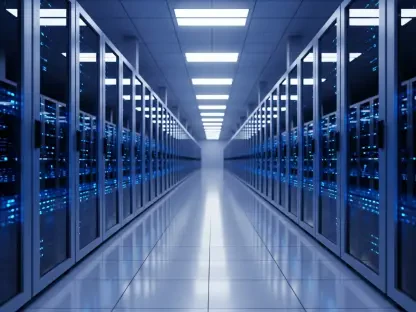
This specialized approach is most tangibly expressed in the neocloud’s GPU-first computing model, an architectural philosophy that places the Graphics Processing Unit at the absolute center of the infrastructure. Recognizing the GPU as the indispensable engine of modern AI, neoclouds have designed their data centers around clusters of these powerful processors, complemented by the critical supporting elements necessary for peak performance. This includes ultra-high-bandwidth networking fabrics that enable rapid communication between GPUs during distributed training tasks and low-latency storage systems capable of feeding massive datasets to the models without creating performance-crippling bottlenecks. This holistic, AI-centric design philosophy ensures that resources are not just available but are interconnected in a way that maximizes throughput and minimizes idle time. It is a purpose-built ecosystem where every component works in concert to serve the specific demands of AI, a stark contrast to the more fragmented and generalized architecture of traditional clouds where performance can often be compromised by underlying systems not designed for such intensive, parallelized tasks.
Superior Economics and Flexibility
A primary driver for the adoption of neoclouds is the compelling economic advantage they offer, which directly addresses one of the most significant barriers to AI innovation: computational cost. By concentrating their investments and operational expertise exclusively on the hardware and software stack required for AI, neoclouds achieve economies of scale and efficiency that translate into substantial savings for their customers. The consensus in the industry is that GPU-centric computing on a neocloud platform is typically available at a price-per-hour that is less than half of what the major hyperscalers charge for comparable instances. This dramatic cost reduction is not merely an incremental improvement; it is a transformative factor for AI-native companies, startups, and research groups whose entire business models and research capabilities are acutely sensitive to the high price of computational resources. For these organizations, the cost efficiency offered by neoclouds can be the deciding factor between a project’s feasibility and its abandonment, making advanced AI accessible to a much broader range of innovators.
Beyond the clear financial benefits, neoclouds differentiate themselves through a “boutique” customer service model that emphasizes flexibility, responsiveness, and deep partnership. This stands in sharp contrast to the standardized, often impersonal “cookie-cutter” options provided by hyperscalers, which can be rigid and slow to adapt to unique customer needs. Neocloud providers work closely with their clients, many of whom are operating at the bleeding edge of AI development, to understand their specific challenges and co-create solutions. This can involve customizing hardware configurations, optimizing software environments, or adapting service level agreements to meet special requirements. This collaborative and agile approach fosters a level of trust and innovation that is difficult to achieve in a mass-market, one-size-fits-all environment. The willingness to be a true infrastructure partner, rather than just a utility vendor, is a key reason why neoclouds are rapidly becoming the preferred platform for the most ambitious and demanding AI projects across both the enterprise and startup ecosystems.
Engineered for Peak AI Performance
Tailored Infrastructure and Services
The most effective neoclouds extend their value proposition far beyond simply providing access to raw hardware; they act as expert consultants, offering critical guidance to help customers navigate the complex landscape of AI infrastructure. Their teams provide tailored advice on selecting the optimal configuration of GPUs, memory, networking, and storage specifically for the client’s intended workload. They possess a deep understanding of the distinct computational hierarchy within AI, recognizing that training massive large language models (LLMs) from scratch—a task undertaken by only a handful of industry giants—requires the absolute highest-end configurations, such as clusters of NVIDIA GB200 Grace Blackwell GPUs. In contrast, they can guide the vast majority of users toward more cost-effective setups for the much more common use cases of fine-tuning existing models or performing post-training modifications, which demand significantly less raw power. This expert-driven approach ensures that customers are not over-provisioning and over-paying for resources they do not need, optimizing both performance and budget.
A primary focus for neocloud managed services is the relentless optimization of inference performance, the critical stage where a trained model is put to work generating real-time responses. In this domain, latency is the enemy, and the key metric is Time to First Token (TTFT), which measures the perceived responsiveness of an LLM to a user’s query. Neocloud providers compete fiercely to minimize TTFT and sustain high throughput, thereby preventing the rate-limiting errors that degrade the user experience and render an application unusable. To achieve this, they employ a battery of sophisticated infrastructure-level techniques. This includes advanced, multi-tiered caching systems that utilize both local and remote nodes to deliver nearly instantaneous results for common queries. They also implement continuous batching, a process that intelligently groups incoming requests to reduce wait times and maximize the utilization of every GPU. Furthermore, neoclouds leverage techniques like quantization, which reduces the numerical precision of a model’s weights post-training to decrease its memory footprint and accelerate processing speed with a negligible impact on output accuracy.
A Financial and Operational Framework for AI
To comprehensively address the financial pressures faced by AI-driven organizations, neoclouds have pioneered a suite of flexible and innovative pricing models tailored specifically to the lifecycle of AI workloads. Moving beyond the standard on-demand model that charges per hour of GPU time, many now offer serverless pricing for inference. In this model, customers pay per token generated rather than for idle compute time, which can dramatically lower costs for applications with variable or unpredictable traffic patterns. Another powerful option is spot pricing, which provides deeply discounted rates for leveraging temporarily idle GPU capacity across the provider’s network. This is an ideal solution for fault-tolerant and non-urgent tasks like batch processing or experimental model training, allowing teams to conduct extensive research at a fraction of the usual cost. For AI-native businesses whose core operations depend on consistent, high-quality inference, neoclouds also provide long-term contracts that guarantee capacity and performance at a predictable cost, often bundled with dedicated support and managed services to ensure operational stability.
The foundation of any mission-critical platform rests on enterprise-grade reliability and security, and leading neoclouds have invested heavily to meet these non-negotiable requirements. They ensure high availability and disaster recovery by operating geographically distributed data centers, allowing workloads to be replicated across regions for maximum redundancy. Within each facility, they implement critical power infrastructure, including uninterruptible power supplies (UPS) and backup generators, to safeguard against outages. Their platforms are engineered to remediate hardware failures transparently, automatically re-routing tasks and re-provisioning resources so that distributed workloads are not affected and performance remains consistent. While the focused, infrastructure-centric nature of a neocloud simplifies its security posture compared to the sprawling complexity of a hyperscaler, foundational security measures remain paramount. These include robust data encryption for information both at rest and in transit, support for modern cryptographic protocols, and adherence to rigorous, internationally recognized compliance certifications such as SOC 2 (Type I and II) and ISO 27001, providing enterprises with the assurance they need to deploy sensitive workloads.