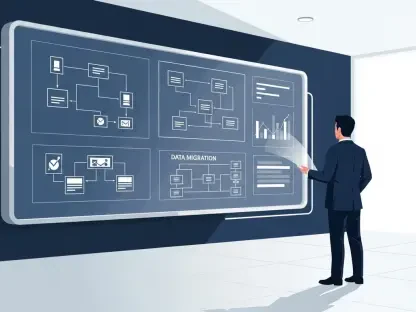

Maryanne Baines is a distinguished authority in cloud technology and enterprise architecture, specializing in the strategic evaluation of tech stacks and their industrial applications. With years of experience navigating the complexities of cloud providers, she has become a leading voice on how businesses integrate emerging technologies into their core operations. In this conversation, we explore the significant transition from AI as a passive advisor to an active operator within enterprise resource planning systems. We delve into the implications of autonomous agents in procurement and HR, the evolving necessity of robust audit trails for machine-led decisions, and the shifting landscape of human accountability in an increasingly automated corporate world.
AI is moving from being a “copilot” that offers advice to an “operator” that executes tasks like transaction reconciliation. How does this shift change the daily responsibilities of finance teams, and what specific steps should managers take to ensure these automated actions remain traceable for auditors?
The daily grind for finance teams is shifting away from manual data entry and toward high-level system orchestration. Instead of spending hours matching line items, professionals are now configuring parameters for agents to handle the heavy lifting of transaction reconciliation and book-closing. To keep auditors satisfied, managers must implement rigorous audit trails that log not just the final action, but the specific conditions and data points the AI used to trigger that decision. It is vital to establish clear “human-in-the-loop” checkpoints where automated actions above a certain risk threshold require a digital signature from a supervisor. This ensures that when a regulator asks why a specific transaction was processed, the firm can point to a transparent, documented logic chain rather than a “black box” output.
Enterprise platforms are now using agents to handle procurement and payroll to address talent shortages. What specific metrics should a company track to measure the success of these autonomous systems, and how can they prevent “surface-level” implementation from creating fragmented, inefficient workflows?
When agents step in to fill talent gaps in payroll or procurement, the first metric to watch is the reduction in operational overhead and the “time-to-completion” for routine workflows. However, success shouldn’t just be measured by speed; companies must track the “exception rate,” which identifies how often a human has to step in to correct an agent’s error. To avoid the trap of surface-level implementation, leaders must ensure these agents are deeply integrated into the existing cloud ERP suite rather than being bolted on as isolated tools. Fragmented workflows occur when AI isn’t synced with the broader data ecosystem, so the goal is a seamless end-to-end process where data flows naturally from procurement to the general ledger without manual intervention.
As ERP systems transition from record-keeping to taking autonomous action, human roles are shifting toward exception handling and policy setting. Can you describe a scenario where an agent might fail a complex task, and how should the supervision framework be structured to manage such operational risks?
A classic failure scenario occurs when an AI agent encounters a “black swan” event, such as a sudden supply chain disruption that causes a vendor to change billing formats or pricing structures overnight. If the agent isn’t programmed to recognize this anomaly, it might continue approving incorrect invoices, leading to significant financial leakage. To manage this, the supervision framework needs to be built on “boundary-based” logic, where any deviation from established norms triggers an automatic halt and a notification to a human expert. This turns the role of the employee into that of a “policy setter” who defines the guardrails, ensuring the system only operates within safe, pre-approved financial and operational limits.
Procurement and expense management are often the first areas to see agentic automation due to their repeatable nature. Why are these specific departments ideal starting points, and what criteria should a business use before expanding these autonomous capabilities into more sensitive core financial processes?
Procurement and expense management are the “low-hanging fruit” of automation because they rely on highly structured, repeatable rules and standardized documentation. These departments allow a company to test agentic workflows in a controlled environment where the stakes, while important, are often less volatile than core treasury or tax functions. Before moving AI into more sensitive territory, a business must demonstrate that the agents can consistently achieve high accuracy over several quarters of data. They should use a “maturity scorecard” that evaluates the AI’s ability to handle edge cases and its integration with existing audit protocols before granting it authority over high-stakes financial forecasting or large-scale capital allocations.
When an AI agent independently adjusts a forecast or approves a transaction, the burden of explainability remains with the human supervisors. How do you design an audit trail that captures the reasoning behind an AI-driven decision, and what limits should be placed on its financial authority?
Designing a robust audit trail requires the system to generate “meta-data” for every autonomous action, detailing the specific internal and external variables—like current inventory levels or market trends—that influenced the change. It isn’t enough to see that a forecast was adjusted; we need to see the “why” in a format that a human auditor can interpret without needing a degree in data science. Financial authority should always be tiered, with agents having the green light for low-value, routine expenses, while larger, strategic transactions are automatically flagged for manual review. By capping the autonomous spending or adjustment limit at a specific dollar amount, companies maintain the efficiency of AI while retaining the ultimate safety net of human oversight.
What is your forecast for agentic cloud apps?
I believe we are entering an era where agentic cloud apps will become the standard operating backbone for any organization aiming to hit aggressive growth targets, such as those targeting $225 billion in sales by the end of the decade. We will see a rapid move away from “record systems” that merely store data toward “action systems” that proactively manage supply chains and customer interactions in real-time. This evolution will likely start in narrow sectors like customer service and expense management, but by 2030, autonomous agents will be the primary drivers of ERP workflows. The focus for the next few years will be less about the technology itself and more about perfecting the governance and accountability frameworks that allow these machines to work safely alongside humans.