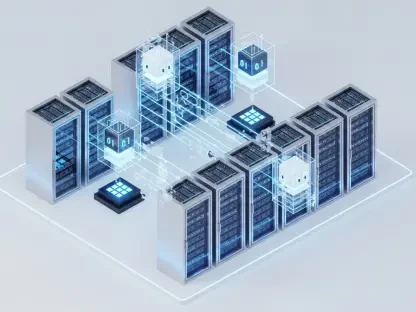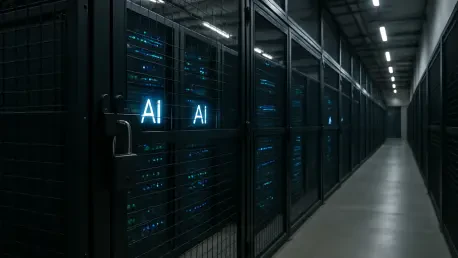

An unprecedented global investment supercycle, fueled by the insatiable demands of artificial intelligence, is channeling trillions of dollars into constructing the next generation of data centers, with projections suggesting spending will surpass $3 trillion over the next five years. This monumental infrastructure boom, driven by hyperscalers like Microsoft, Amazon, and Alphabet, is not merely expanding capacity but fundamentally redefining the role of these facilities in our society. They are rapidly evolving from passive real estate assets into the central nervous system of the global economy and critical, interconnected nodes of national infrastructure. This transformation introduces systemic risks of a scale and complexity previously unseen, particularly at the volatile intersection of digital systems, the public power grid, and intricate global supply chains. In this high-stakes environment, the traditional approach of applying cybersecurity measures as an afterthought is no longer viable. Security cannot be a feature bolted onto a completed system; it must be the foundational blueprint from which every modern data center is built.
The Evolving Threat Landscape in a Connected World
The most significant shift in data center risk management lies in the tightening convergence of the digital and physical realms, where a cyber intrusion can result in catastrophic physical consequences. A modern data center’s internal Operational Technology (OT) networks—the industrial control systems managing everything from HVAC and cooling to battery backups and generator controls—represent a dense and high-value cyber-physical target. These systems, once isolated and managed through proprietary protocols, are now increasingly connected to corporate IT networks for remote monitoring and automation, inadvertently creating attack pathways for adversaries. A compromise of these critical controls can lead to far more than data theft; it can trigger equipment failure, overheating, and fire, leading to the complete physical destruction of a multi-billion-dollar facility. The 2021 OVHcloud data center fire serves as a stark reminder of how failures in these core operational systems, whether accidental or malicious, can result in total asset loss and devastating business interruption for thousands of clients, illustrating that the physical integrity of the facility is now directly tied to its cybersecurity posture.
This cyber-physical vulnerability extends far beyond the data center’s perimeter, creating a symbiotic yet fragile relationship with public utilities. AI-optimized facilities are voracious energy consumers, functioning less like traditional commercial buildings and more like critical nodes on the national power grid. Their constant and massive demand for high-quality electricity directly influences regional grid planning, stability, and resilience. This deep integration means a cyberattack targeting a data center’s energy management systems could be weaponized to manipulate power consumption, creating destabilizing fluctuations that propagate into the regional grid and potentially cause widespread blackouts. Furthermore, the specialized hardware essential for AI—including advanced GPUs, high-density servers, and networking appliances—introduces a profound geopolitical threat. With many of these critical components sourced from jurisdictions at the center of global strategic competition, the risk of state-aligned actors embedding backdoors, malicious firmware, or weaponizing supply chain logistics to create strategic outages is exceptionally high. The bill of materials for every new data center must therefore be treated as a living threat surface requiring constant vigilance and validation.
Foundational Security in Procurement and Architecture
A truly secure-by-design philosophy is a holistic strategy that must be embedded into the data center lifecycle long before the first shovel breaks ground. The initial line of defense is established through a security-conscious procurement and supply-chain integrity program that prioritizes resilience and trustworthiness over cost alone. This requires moving beyond basic performance metrics to conduct stringent due diligence on all vendors, rigorously vetting their security practices, software development lifecycles, and geopolitical alignment. To mitigate risks from sanctions or strategic disruptions, asset owners must actively pursue supplier diversification to avoid single-country dependencies for critical components. This proactive stance must be codified in contractual obligations, embedding requirements for hardware provenance, vulnerability disclosure policies, and firmware update hygiene directly into master service agreements. By demanding complete traceability from chip manufacture to final installation, including tamper-evident logistics and mandatory firmware attestation, the supply chain is transformed from a primary vulnerability into a well-defended and transparent asset.
Once a secure supply chain is established, the focus shifts to engineering a defensible physical and network architecture built on the principle of “assumed breach.” The most critical and immediate step is implementing disciplined OT network segmentation, treating the industrial control environment as a distinct, high-consequence domain completely separate from the corporate IT network. This involves carving the OT environment into smaller, isolated functional and geographic zones—for instance, separating cooling systems from generator controls—and enforcing strict, policy-driven communication conduits between them using OT-aware firewalls. This segmentation ensures that even if an adversary gains an initial foothold, the intrusion can be contained and prevented from escalating into a facility-wide catastrophic failure. Parallels from recent state-sponsored attacks on European energy infrastructure underscore the fragility of edge devices and demonstrate that robust segmentation is not an optional enhancement but an essential pillar of any credible defense strategy for critical infrastructure.
Enforcing Resilience Through Advanced Controls
The architectural principles of a secure-by-design data center must be enforced with advanced technical controls that create physically insurmountable barriers for attackers. To protect the most critical network boundaries, such as the demarcation point between the OT and IT networks, the deployment of hardware-enforced unidirectional gateways is paramount. These devices, commonly known as data diodes, use a physical break in the circuit to enforce a one-way flow of information. They allow telemetry and monitoring data to travel safely out from the secure OT environment for analysis while making it physically impossible for any malicious commands, malware, or attack traffic to travel back in. This provides an absolute guarantee of protection for the most sensitive control systems. This robust defense must be complemented by a foundational security practice: maintaining a complete and continuously updated inventory of every device on the OT network. This includes every PLC, sensor, and engineering workstation, cataloged with its firmware version, network location, and criticality, which is essential for effective vulnerability management and prioritizing hardening efforts.
Finally, this hardened architecture must be supported by equally robust operational security practices, particularly around remote access and monitoring. As remote access gateways are a prime target for attackers seeking to pivot from IT to OT networks, all access must be consolidated through hardened “jump hosts” that enforce multi-factor authentication and just-in-time privileges, ensuring that technicians have access only to the systems they need, for the time they need it. This must be coupled with the deployment of OT-aware visibility and monitoring solutions specifically designed to understand industrial protocols and baseline normal operational behaviors. Unlike traditional IT security tools, these solutions can detect anomalous activity on the control network—such as an unauthorized command sent to a cooling unit—and correlate alerts with asset context. This enables security teams to execute pre-planned response playbooks to rapidly isolate a compromised device before a digital intrusion can manifest as a physical disaster, ensuring the operational resilience of the facility.
A New Definition of Financial Viability
The adoption of a secure-by-design framework was no longer merely a technical best practice; it became a fundamental pillar of financial viability and long-term asset valuation. In an environment where institutional investors, banks, and insurers were deploying trillions of dollars, the expectation was for durable, high-availability cash flows from these critical data center assets. Any underinvestment in cybersecurity directly threatened this core investment thesis by elevating the risk of costly outages, safety incidents, and severe regulatory penalties. Facilities that could not demonstrate a robust, defensible architecture and comprehensive OT governance faced tangible financial consequences, including jeopardized loan covenants, unfavorable refinancing options, and difficulties securing adequate insurance coverage. Consequently, data center developers and operators who proactively integrated these security principles into their core strategy were the ones who ultimately secured the most favorable financing, achieved the highest valuations, and built a sustainable foundation for the future.