
The persistent hum of a developer’s workflow, once characterized by the rhythmic tapping of keys, is now punctuated by a dialogue with artificial intelligence, yet this partnership is on the brink of a profound evolution beyond simple question-and-answer. The emergence of customizable AI capabilities is poised to transform coding assistants from helpful navigators into autonomous collaborators, fundamentally altering the landscape of software engineering. This transition from generic suggestion engines to specialized, task-oriented agents marks a pivotal moment, suggesting that the true measure of an AI’s value will soon be its capacity for tailored, repeatable action.
Beyond Glorified Autocomplete
For several years, AI coding assistants have served as powerful aids, adept at generating boilerplate code, suggesting function completions, and answering isolated technical queries. While undeniably useful, their utility has often been constrained by a lack of persistent context. These tools operate primarily in a reactive mode, responding to immediate prompts without retaining a deep understanding of a project’s architecture, a team’s specific coding standards, or the nuances of a recurring, multi-step workflow.
This limitation forces developers into a repetitive cycle of prompt engineering, where they must carefully re-articulate context and instructions for every common task, such as running a specific suite of tests, refactoring code according to a team’s style guide, or preparing a feature branch for a pull request. Consequently, the AI remains a helpful but passive tool rather than an integrated, proactive member of the development team, capping its potential as a true force multiplier.
The Dawn of the Bespoke AI Teammate
In response to these limitations, a new paradigm is emerging, centered on customization and agentic behavior. OpenAI’s recent introduction of “Skills in Codex” exemplifies this shift, providing a framework for developers to teach their AI agents specific, repeatable workflows. This initiative moves beyond the one-size-fits-all model by empowering engineers to fine-tune their AI assistants for the unique demands of their projects and teams, transforming the agent into a bespoke digital teammate.
The core objective is to enable the AI agent to operate with greater autonomy and reliability, executing complex, multi-step tasks in the background. By packaging a sequence of instructions into a single “skill,” developers are freed from the drudgery of composing detailed prompts for routine actions. Instead, they can invoke a custom skill to handle a workflow, allowing them to focus on more complex problem-solving while the AI manages the predictable, methodical work.
Deconstructing the AI Skill as a Building Block
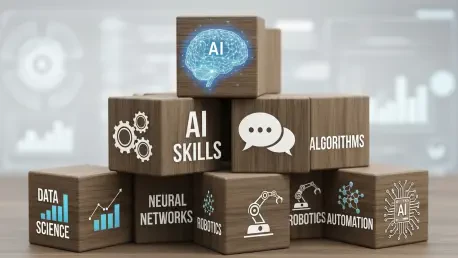
At its heart, an “AI skill” is a self-contained, modular package that encapsulates a specific workflow. These packages are composed of instructions, necessary resources like API documentation or file templates, and optional scripts that guide the AI agent’s execution. This structure ensures that a task is performed consistently and reliably every time it is invoked, removing the variability that can arise from purely natural language prompting.
This modularity is the key to building truly agentic systems. By breaking down complex development processes into a library of discrete, shareable skills, teams can construct sophisticated automations. The creation process is designed to be flexible, supporting both the intuitive crafting of instructions through natural language and the precise, manual building of scripts for more technical control. This dual approach makes the technology accessible to a wider range of developers and use cases.
An Ecosystem Forged Through Open Standards
OpenAI’s initiative is not an isolated event but part of a broader industry-wide movement toward creating more capable and interoperable AI agents. This trend is visible across the tech landscape, with competitors launching comparable features to enhance their own coding assistants. For instance, AWS has introduced “powers” for its Kiro agent, and Anthropic has launched its “Agent Skills” service, both aiming to equip AI with specialized, repeatable capabilities.
Significantly, this competitive drive is fostering a collaborative push toward standardization. Anthropic has taken a pioneering step by releasing its Agent Skills framework as an independent open standard, complete with a formal specification and a software development kit. This move has already gained considerable traction, with major players like Microsoft adopting the standard for VS Code and GitHub. Such collaboration signals a collective recognition that a common foundation for AI skills will accelerate innovation and benefit the entire developer ecosystem.
From Raw Power to Refined Action
The emergence of these sophisticated agentic frameworks is directly enabled by the rapid advancement of the underlying foundational models. The launch of “Skills in Codex” arrived shortly after OpenAI unveiled GPT-5.2-Codex, which the company described as its most advanced agentic coding model to date. These new, specialized capabilities are not simply a software update; they are a direct expression of the model’s enhanced power.
This latest generation of AI models features significant improvements in performance, logical reasoning, accuracy, and cybersecurity awareness. It is this raw computational power and refined understanding that provides the necessary foundation for the AI to reliably interpret and execute the complex instructions embedded within a “skill.” The relationship is symbiotic: the model provides the intelligence, and the skills framework channels that intelligence into precise, actionable, and repeatable work.
Implementing and Sharing Agentic Capabilities
For development teams, this new paradigm offers a tangible path toward enhanced productivity. The ecosystem is designed for immediate application, allowing developers to leverage a growing repository of pre-made skills available on platforms like GitHub. These skills can even be recommended by the service based on an analysis of a team’s active projects, lowering the barrier to entry and providing value from day one.
Beyond simply consuming pre-existing skills, developers are positioned as active creators and contributors. The ability to build custom skills from scratch and share them across an organization or with the public community fosters a collaborative environment. This dynamic transforms the development of AI capabilities from a top-down process, dictated by platform providers, into a community-driven effort that continually expands what is possible, all built upon the shared foundation of an open standard. The result was a system where the AI’s capabilities grew organically, driven by the real-world needs of the developers who used it every day.