
The historic dominance of Northern Virginia as the undisputed center of the digital world is currently facing a formidable challenge from the massive industrial expansion happening across the Texas plains. For more than fifteen years, the Ashburn area served as the primary heartbeat of the internet, but the sudden and explosive rise of generative artificial intelligence has fundamentally altered the requirements for modern digital infrastructure. As of 2026, tech giants including Amazon, Microsoft, Google, and Meta have committed to spending over $600 billion on AI-related hardware and facilities, a staggering sum that is fueling a construction boom of unprecedented proportions. This massive influx of capital is directed toward regions that can accommodate the intense power and space requirements of high-density computing clusters. Texas has positioned itself at the forefront of this shift, capturing nearly twenty percent of the total American development pipeline.
The Energy Revolution: Scaling Beyond the Traditional Grid
The primary motivation behind this geographic pivot lies in the unique energy landscape that defines the Lone State State, where traditional utility constraints are being bypassed in favor of innovation. Artificial intelligence workloads consume significantly more electricity than standard cloud storage, often requiring specialized cooling systems and power densities that legacy grids in older hubs simply cannot support. Developers in Texas are increasingly utilizing on-site power generation, including natural gas turbines and renewable microgrids, to circumvent the lengthy interconnection delays that have plagued markets like Northern Virginia and Silicon Valley. This autonomy allows hyperscalers to bring massive amounts of capacity online much faster, meeting the urgent demands of 2026 and beyond. By prioritizing energy independence, these firms are effectively insulating their operations from the regional grid bottlenecks that would otherwise stifle the growth of next-generation AI models.
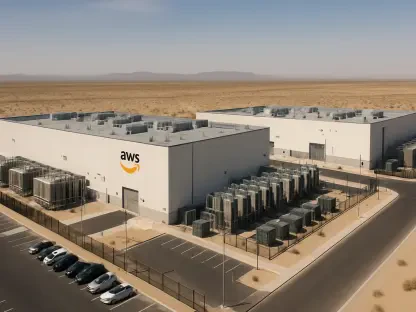
Beyond mere energy availability, the sheer physical scale of upcoming projects in regions like West Texas and Abilene illustrates a level of ambition that was previously unimaginable in the sector. High-profile initiatives, such as the Oracle and OpenAI collaboration known as the Stargate facility, represent a transition toward integrated “super-campuses” that function as self-sustaining industrial cities. Google has likewise expanded its footprint with a multi-billion dollar investment strategy that spans across the central and western corridors of the state, taking advantage of aggressive tax incentives and a business-friendly regulatory environment. These massive deployments are not merely additions to existing infrastructure; they are the architectural blueprints for the future of global computing. The availability of vast, affordable land allows for the horizontal expansion necessary to house thousands of liquid-cooled server racks, a feat that is physically impossible in crowded coastal hubs.
Regional Diversification: Redrawing the Map of Global Connectivity
As the center of gravity for digital infrastructure moves southward, the traditional concentration of data centers in a few specific zip codes is giving way to a more decentralized and resilient global network. While states like Ohio, Wisconsin, and Tennessee are seeing significant increases in construction activity, the sheer volume of the Texas pipeline, currently estimated at over six gigawatts of capacity, remains unmatched. This diversification is a strategic response to the risks associated with overcrowding, where land scarcity and soaring utility costs have made traditional markets less competitive for the newest wave of hyperscale development. The shift reflects a broader industry recognition that geographic variety is essential for maintaining service reliability and reducing latency for a global user base. By the end of this decade, the physical infrastructure of the internet will look remarkably different, with the Texas corridor serving as the primary hub for data processing and storage.
The evolution of the American data landscape demonstrated that the requirements for digital leadership shifted from proximity to fiber-optic backbones to the guaranteed availability of massive power resources. Stakeholders who recognized this transition early moved to secure large tracts of land and establish independent energy solutions, effectively future-proofing their investments against the grid stability issues that emerged in 2026. This period of rapid transformation underscored the importance of regulatory flexibility and local government cooperation in facilitating the large-scale deployments required by modern AI. Moving forward, developers should prioritize the integration of advanced cooling technologies and modular power units to maintain efficiency as rack densities continue to climb. The lessons learned during this geographic realignment provided a clear roadmap for balancing environmental sustainability with the relentless demand for computational power in a data-driven world.