
The deluge of digital data created by modern photography has become the single greatest operational challenge for professionals, eclipsing even the choice of camera or lens. With sensors pushing resolutions ever higher and workflows demanding uncompressed RAW files combined with HDR techniques, the sheer volume of assets is forcing a critical reevaluation of storage infrastructure. This data explosion has revealed deep cracks in traditional, on-premises storage solutions, signaling a fundamental industry shift toward a more durable, scalable, and flexible cloud-native architecture. The long-standing practice of relying on local hardware as the primary bastion for a lifetime of work is no longer a tenable strategy, pushing photographers toward a crucial inflection point where they must adapt or risk falling behind.
Rethinking the Role of Local Storage
The Breaking Point of Traditional NAS Systems
Network-Attached Storage (NAS) systems have long been an indispensable tool in the creative professional’s arsenal, but they are increasingly showing their limitations as “transitional tech.” The practical realities of maintaining a NAS have become a significant operational burden, diverting valuable time and resources away from the creative process itself. This involves the constant management of RAID arrays, a perpetual cycle of monitoring for and replacing failed disks, and the logistical challenges of housing and powering the hardware. Beyond the hands-on maintenance, these systems present a performance bottleneck that has not kept pace with the intense input/output (I/O) demands of modern editing applications. Attempting to use a NAS as a scratch disk for resource-intensive Adobe programs like Premiere Pro or After Effects often results in frustrating lag and decreased productivity, as its capabilities have plateaued against the exponential growth in software requirements.
The most critical failing of a local NAS, however, is its inability to provide true, long-term data durability. While RAID configurations offer redundancy against the failure of a single disk, they provide no inherent protection against site-wide disasters such as fire, flood, or theft. This vulnerability transforms the NAS from a secure archive into a single point of failure. To mitigate this risk, photographers are forced into cumbersome and costly off-site replication strategies, such as maintaining a second NAS at another physical location and managing the complex process of keeping the two in sync. For an individual or a small studio, implementing and sustaining such a multi-location backup strategy is often prohibitively expensive and logistically complex, leaving their most valuable assets—their digital archives—exposed to unacceptable levels of risk in an era where data resilience is paramount.
The New Paradigm Local Cache Cloud Primary
The future of digital storage for photographers involves a fundamental redefinition of the roles assigned to different types of hardware, shifting from a local-first to a cloud-centric architecture. In this new paradigm, local storage, including ultra-fast NVMe SSDs and even large-capacity NAS arrays, is relegated to the role of a temporary performance tier or a sophisticated cache. This local cache is dedicated to holding active project files, providing the sub-millisecond latency and high throughput required for smooth, real-time editing of massive images or high-bitrate video. Once a project is completed or assets become less frequently accessed, they are moved to their permanent home in the cloud. This architectural model effectively decouples the need for high-speed performance from the requirement for long-term archival durability, allowing creatives to optimize their workflows for both speed and safety without the compromises inherent in a purely local system.
This cloud-primary model offers transformative benefits, anchored by the unparalleled resilience of major cloud storage platforms. The concept of “eleven-nines” (99.999999999%) durability, a standard offering from providers, translates to a statistical probability of data loss that is infinitesimally small, far surpassing what any on-premises hardware can guarantee. Furthermore, built-in geo-redundancy automatically replicates data across multiple, geographically distant data centers, providing seamless protection against regional disasters. This inherent resilience fundamentally alters the approach to data protection, effectively making complex and often imperfectly executed backup strategies obsolete. Instead of manually managing off-site copies, the photographer’s archive is perpetually protected by a robust, enterprise-grade infrastructure, simplifying data management and providing a level of security that was previously accessible only to large corporations.
Navigating Today’s Cloud Landscape
Hybrid Solutions The Good and The Not So Fast
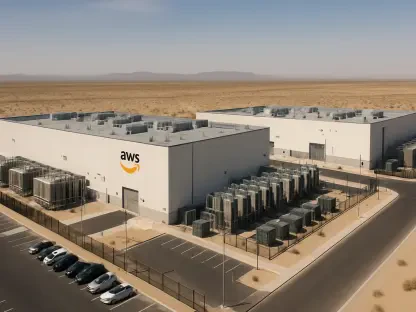
As photographers explore the transition to the cloud, hybrid solutions from major providers serve as an important bridge, though they come with significant performance caveats. Amazon’s AWS Storage Gateway, specifically its File Gateway configuration, is a prime example of this model. It cleverly makes a cloud-based Amazon S3 bucket appear as a standard on-premises SMB or NFS network share, allowing creative applications to recognize and interact with it as if it were a local device. This makes it an excellent solution for archival purposes, providing a seamless way to store RAW files, Lightroom catalogs, and exported final assets in a highly durable environment. However, its suitability for primary creative work is severely limited by the inherent latency of the system. With a baseline latency of approximately 20–40 milliseconds, compounded by cloud round-trip times, the performance is inadequate for high-demand, random-access applications that require near-instantaneous I/O for smooth operation.
Microsoft’s offering, Azure Files with Azure File Sync, represents a more mature and performance-oriented “NAS in the Cloud” solution among first-party providers. While it also functions as a standard network drive compatible with Adobe’s I/O requirements, its key advantage lies in the Azure File Sync component. This feature creates an intelligent local cache on a Windows Server, dramatically improving performance for frequently accessed files by serving them directly from the local machine rather than pulling them from the cloud on every request. This setup works well for managing Lightroom catalogs and large Photoshop documents and can adequately serve media to Premiere Pro, but its effectiveness is entirely dependent on the specific media files being locally cached. Smooth scrubbing and real-time playback of video, for example, are only possible if the content is already present in the local cache, highlighting that even this advanced hybrid solution falls short of enabling true, direct-from-cloud editing for the most demanding creative tasks.
Finding the Best Cloud Native Fit
Google has also made significant advancements with its Cloud Storage FUSE driver, which mounts GCS buckets as local POSIX file systems. The improvements introduced in versions from 2024 onward have delivered substantially faster metadata performance and more intelligent caching mechanisms, making operations like browsing large directories of images feel much more responsive. Despite these positive developments, the technology remains a step behind for active, high-intensity editing workflows. Random access on large project files continues to be a bottleneck, which can manifest as dropped frames during video playback or slow seek times when navigating complex timelines. Consequently, its ideal role within a creative workflow is currently as a “cold-tier” file system. It excels in workflows centered around ingest, archiving, and backup, and serves as a highly durable repository for finished assets, but it is not yet optimized to function as a primary, high-performance workspace for active projects.
Synthesizing the offerings from the major public cloud providers reveals a common theme: while the foundational elements of immense scale and unparalleled durability are firmly in place, the native tools designed to bridge the gap to creative desktops are still a work in progress. These first-party file gateways and drivers represent a powerful but incomplete piece of the modern photographer’s storage puzzle. They provide robust solutions for archival and backup but have not yet fully solved the latency and random I/O challenges inherent in high-performance creative work. As a result, adopting these technologies often necessitates a conscious shift in workflow, such as pre-emptively syncing project files to a local cache before beginning an editing session, rather than offering a truly seamless and transparent replacement for the raw speed of local storage. They are a step in the right direction but not the final destination.
Specialized Tools for Creative Workflows
Recognizing the performance gap left by first-party cloud tools, a vibrant ecosystem of third-party technologies is emerging to provide the missing link between creative applications and cloud object storage. These specialized solutions are engineered from the ground up to address the unique demands of media and entertainment workflows. Some integrations, like the collaboration between Wasabi and Adobe, offer production-ready solutions that simplify cloud adoption by working at the application level. They optimize data transfer protocols and access patterns specifically for creative tools, effectively bypassing many of the generic limitations of standard file gateways. This approach provides a more streamlined and efficient experience for tasks like uploading, downloading, and managing assets directly within the familiar environment of creative software, making the cloud a more integrated part of the daily workflow for many photographers and small studios.
For more complex, collaborative, or large-media workflows, highly advanced third-party platforms such as LucidLink and CentreStack present the most promising options available today. These technologies are not merely file sync utilities; they employ sophisticated file-streaming and caching algorithms to make cloud object storage feel as fast and responsive as a local drive. They are specifically designed to overcome the challenges of latency and random I/O that typically hinder direct-from-cloud editing. By enabling teams to work directly on massive media files stored in the cloud in real-time, regardless of their physical location, these solutions unlock unprecedented opportunities for collaboration. They effectively bridge the final performance gap, making the cloud a viable primary workspace for even the most intensive projects, from high-resolution photo retouching to 8K video editing, and represent the current state-of-the-art in cloud-native creative workflows.
The Next Wave of Cloud Innovation
The major cloud platforms are actively racing to close the performance gap with local storage through continuous innovation in their core services. Amazon is signaling a significant shift for its S3 platform with the introduction of S3 Express One Zone, which, when paired with Amazon S3 Mountpoint, enables a bucket to be used for more than just cold storage. This combination can achieve surprisingly low latency for sequential read operations, making it well-suited for tasks like opening large batches of RAW files directly from the cloud. However, it is not yet optimized for the heavy, unpredictable random I/O patterns generated by massive Photoshop files or video editing scratch disks. In parallel, Google’s rewritten GCS FUSE v2 driver has dramatically cut metadata lag, making operations like browsing immense directories of images feel nearly instantaneous and significantly improving the efficiency of partial-file reads, which is critical for many creative applications.
Microsoft, meanwhile, is aggressively pursuing true cloud-native NAS performance through advanced offerings like Azure Elastic SAN and Premium File Shares. These services leverage cutting-edge technologies such as SMB Direct and RDMA (Remote Direct Memory Access) to minimize latency and maximize throughput between the cloud and the end user’s machine. This offering is widely regarded as the closest a major cloud provider has come to delivering a file system that Adobe applications can directly and effectively edit from, though it still falls just short of matching the raw speed of a dedicated local NVMe SSD for the most intensive tasks. The rapid and relentless pace of these technological advancements across all major platforms sends a clear message: the remaining performance bottlenecks are viewed as temporary challenges, not permanent limitations. The trajectory is clear, pointing toward a future of deep, native integration between software vendors and cloud providers that will eventually eliminate these final barriers.
A Clear Trajectory for Creative Assets
The evidence from the evolving technological landscape made it clear that the trajectory of storage for creative professionals was set on an irreversible course. The discussion demonstrated that the future for photographers was not found in the Sisyphean task of building ever-larger and more complex local RAID arrays, but rather in a strategic embrace of a cloud-native model. The inherent benefits of the cloud, particularly its near-perfect “eleven-nines” durability and built-in geo-redundancy, had already established a new baseline for data security that was practically impossible for an individual or small studio to replicate with on-premises hardware. This resilience effectively obviated the need for elaborate and often fallible disaster recovery plans that had long been a source of anxiety for the industry.
While the technology had not yet achieved perfect parity for every high-intensity creative task, the progress observed from both first-party cloud providers and specialized third-party innovators was both rapid and undeniable. The central message that emerged from this analysis was a definitive call to action for photographers. It challenged them to critically assess their current storage strategies and question whether continuing to invest capital and time into a local-centric model represented a sustainable long-term plan or was simply a force of habit resisting an inevitable technological evolution. The era of local storage serving as the primary, permanent archive for a photographer’s life’s work had drawn to a close, giving way to a new paradigm where the cloud stood as the true and permanent home for creative assets.