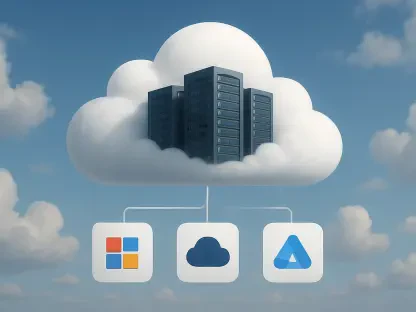

In an era where digital transformation is reshaping every facet of business, the Storage as a Service (StaaS) market emerges as a critical solution to one of the most pressing challenges of the modern age: managing an unprecedented deluge of data. As companies across industries—from tech giants to small enterprises—grapple with the complexities of storing, securing, and scaling their digital assets, StaaS offers a cloud-based lifeline that is both cost-effective and adaptable. This innovative model eliminates the burden of hefty upfront investments in physical infrastructure, providing scalable storage solutions that grow with organizational needs. With the global data sphere expanding at a staggering rate, driven by technologies like the Internet of Things (IoT), artificial intelligence (AI), and social media, the demand for flexible and secure storage has never been more urgent. This article explores the dynamic forces propelling the StaaS market forward, examines the technological advancements fueling its evolution, and addresses the hurdles that could temper its growth through 2032. By delving into industry adoption patterns, regional trends, and competitive strategies, a comprehensive picture of this transformative market comes into focus, highlighting its pivotal role in the future of data management.
Unleashing Growth with Data Explosion and Cloud Solutions
The sheer volume of data generated daily is a primary catalyst for the rapid expansion of the StaaS market, pushing businesses to rethink traditional storage approaches. Reports indicate that individuals contribute approximately 2.5 quintillion bytes of data every day, equating to about 1.7 MB per second per person. This torrent of information, fueled by IoT devices, AI applications, social media platforms, and widespread cloud service usage, creates an insatiable need for storage systems that can scale effortlessly. Unlike conventional on-premise setups, which often struggle with capacity limits and accessibility, StaaS delivers a dynamic alternative through cloud-based platforms. This model allows organizations to access storage resources on demand, ensuring they can handle sudden spikes in data without overcommitting to fixed infrastructure. The shift to cloud solutions also aligns with broader digital transformation goals, as businesses prioritize agility and efficiency in managing their ever-growing datasets. As a result, StaaS has become an indispensable tool for industries navigating the complexities of a data-driven landscape, setting the stage for sustained market growth over the coming years through 2032.
Beyond the data explosion, the inherent benefits of cloud-based StaaS are driving its widespread adoption across diverse sectors. The pay-as-you-go pricing structure stands out as a major advantage, enabling companies to avoid the high initial costs associated with purchasing and maintaining physical storage hardware. This financial flexibility is particularly appealing to small and medium-sized enterprises that may lack the capital for large-scale investments. Additionally, StaaS supports integration with multi-cloud environments, allowing seamless data management across different platforms while adhering to stringent regulatory requirements. The ability to automate data oversight and ensure disaster recovery further enhances its value proposition, as businesses can safeguard critical information without dedicating extensive in-house resources. With cloud storage dominating over traditional models due to its scalability and accessibility, the market is witnessing a fundamental shift in how organizations approach data storage. This trend underscores the transformative potential of StaaS, positioning it as a cornerstone of modern IT strategies focused on cost optimization and operational resilience.
Technological Innovations Fueling Market Evolution
Technological advancements are at the core of the StaaS market’s evolution, with cutting-edge tools like generative AI (GenAI), artificial intelligence (AI), and machine learning (ML) redefining storage capabilities. GenAI, for instance, introduces automation that streamlines data management by predicting storage needs and identifying potential risks before they escalate into major issues. A notable development in this space occurred in 2024 when Pure Storage unveiled a generative AI copilot designed to assist storage teams in troubleshooting performance bottlenecks and enhancing security through data-driven insights. Such innovations not only improve operational efficiency but also bolster trust in cloud storage by addressing vulnerabilities proactively. As businesses increasingly rely on real-time data for decision-making, these AI-driven solutions ensure that storage systems can handle high-capacity workloads with minimal latency. The integration of such technologies marks a significant leap forward, transforming StaaS from a mere storage option into a strategic asset that empowers organizations to harness their data effectively.
In addition to GenAI, the broader application of AI and ML within StaaS platforms optimizes resource allocation and supports advanced analytics critical for modern applications. These technologies enable storage systems to adapt dynamically to workload demands, ensuring that resources are utilized efficiently without over-provisioning. For industries leveraging AI for predictive modeling or real-time analytics, low-latency storage is non-negotiable, and StaaS providers are rising to the challenge by embedding intelligent algorithms into their offerings. Furthermore, the focus on security enhancements through ML-driven anomaly detection helps mitigate risks in an environment where cyber threats are ever-present. The synergy of these technologies not only addresses current storage needs but also anticipates future challenges, making StaaS a forward-thinking solution. As providers continue to innovate, the market is poised to benefit from increasingly sophisticated tools that enhance both functionality and reliability, solidifying StaaS as a pivotal element in the digital infrastructure of tomorrow.
Navigating Security Challenges and Market Restraints
While the StaaS market brims with potential, significant challenges loom large, with data security topping the list of concerns for prospective adopters. High-profile breaches, such as the 2024 Snowflake incident that exposed sensitive customer and employee information, serve as stark reminders of the vulnerabilities inherent in cloud storage systems. These incidents often lead to substantial financial losses and irreparable damage to organizational reputation, fostering hesitation among businesses considering a shift to StaaS. Despite the numerous advantages of scalability and cost savings, the fear of data exposure remains a critical barrier, particularly for industries handling sensitive information like healthcare and finance. Addressing these risks requires robust encryption protocols, stringent access controls, and continuous monitoring—measures that providers must prioritize to rebuild trust. Without decisive action to fortify security frameworks, the market’s growth could be stifled as potential users weigh the benefits against the very real threat of cyber incidents.
Beyond security breaches, other restraints such as integration complexities and regulatory compliance add layers of difficulty to StaaS adoption. For organizations with legacy systems, transitioning to cloud-based storage often involves navigating compatibility issues and retraining staff, which can delay implementation and increase costs. Additionally, varying data protection laws across regions create a patchwork of compliance requirements that businesses must meticulously follow to avoid penalties. In highly regulated markets, such as Europe with its GDPR framework, the pressure to ensure data sovereignty and privacy is immense, sometimes deterring smaller firms from fully embracing StaaS. Providers must therefore offer tailored solutions that address these unique challenges, ensuring seamless integration and adherence to local regulations. While these hurdles are formidable, they also present opportunities for innovation, as companies that can deliver secure and compliant storage solutions stand to gain a competitive edge in a cautious yet evolving market.
Industry Adoption and Regional Market Dynamics
The adoption of StaaS varies widely across industries, with IT and telecommunications leading the charge due to their inherent need for high availability and rapid data processing. These sectors rely heavily on scalable storage to manage vast amounts of user data and support real-time services, making cloud-based solutions a natural fit. Other industries, such as banking, financial services, insurance (BFSI), healthcare, and retail, are also increasingly turning to StaaS to meet demands for secure data storage and compliance with regulatory standards. Large enterprises dominate this space, driven by their complex IT infrastructures and significant investments in storage hardware—a trend evidenced by the USD 6.40 billion spent on compute and storage infrastructure in 2023. However, the affordability and flexibility of StaaS are also attracting small and medium-sized enterprises, which seek to leverage cloud storage without the burden of maintaining physical systems. This broad-based adoption across enterprise sizes and sectors highlights the versatility of StaaS in addressing diverse storage needs.
Regionally, the StaaS market exhibits distinct dynamics, with North America holding the largest share thanks to robust cloud adoption facilitated by major providers like AWS, Microsoft Azure, and Google Cloud. The region’s aggressive push toward digital transformation, coupled with substantial investments in AI and IoT, further cements its leadership position. Europe follows as the second-largest market, propelled by stringent regulations like GDPR that necessitate secure and compliant storage solutions. Partnerships and innovations tailored to these regulatory demands are driving growth in the region. Meanwhile, Asia Pacific stands out as a rapidly emerging hub, fueled by accelerating digitalization in countries such as China, India, and Japan. Government initiatives and private sector investments in cloud infrastructure are transforming the region into a key growth area for StaaS. These regional variations underscore the importance of localized strategies for providers aiming to capture market share in diverse global landscapes.
Competitive Strategies and Future Outlook
The competitive landscape of the StaaS market is characterized by consolidation among major players like Amazon Web Services (AWS), Microsoft, Google LLC, IBM, and Pure Storage, all of whom are driving innovation through strategic partnerships and technological advancements. A significant example is Google Cloud’s 2024 collaboration with NetApp, which focused on offering flexible storage volume management to meet evolving customer needs. Such alliances reflect an industry-wide emphasis on adaptability, speed, and efficiency, ensuring that solutions remain relevant in a fast-changing digital environment. By investing in cutting-edge technologies and expanding service offerings, these companies aim to address the growing demand for secure and scalable storage while maintaining a competitive edge. This focus on innovation not only benefits end-users but also sets a high standard for new entrants looking to carve out a niche in this dynamic market.
Looking ahead, the StaaS market is set to experience substantial growth through 2032, propelled by the unrelenting increase in data generation and the continued shift toward cloud-based models. The integration of AI and ML into storage solutions promises to enhance efficiency and security, addressing some of the critical challenges that have historically hindered adoption. As businesses across industries recognize the value of StaaS in managing complex data environments, providers must prioritize robust security measures and compliance with global standards to sustain trust and momentum. Opportunities for growth are particularly pronounced in emerging regions like Asia Pacific, where digital transformation is accelerating. For stakeholders, the path forward involves leveraging technological advancements and fostering strategic collaborations to deliver tailored solutions that meet the unique needs of a diverse customer base, ensuring that StaaS remains a linchpin of enterprise data strategies in the years to come.
Shaping Tomorrow’s Data Landscape
Reflecting on the trajectory of the StaaS market, it becomes evident that the industry has navigated a transformative period, balancing explosive growth with persistent security challenges. The staggering volume of data generated daily has reshaped storage demands, compelling businesses to adopt scalable, cloud-based solutions over rigid traditional systems. Technological strides, particularly in AI and ML, have elevated StaaS from a basic utility to a strategic enabler of digital innovation. Looking back, regional leaders like North America and Europe have set benchmarks in adoption, while Asia Pacific has emerged as a powerhouse of potential through rapid digitalization. For the future, businesses are encouraged to prioritize partnerships with providers that emphasize security and compliance, ensuring protection against breaches that have once threatened trust. Investing in AI-driven storage tools is also seen as a critical step to optimize resources and anticipate needs. As the data landscape continues to evolve, StaaS has proven itself a vital asset, and stakeholders are advised to stay agile, embracing innovations that will further redefine how data is managed and leveraged in an increasingly connected world.