
A concerted legislative push in California during 2023, designed to shield ordinary citizens from shouldering the enormous energy costs of the artificial intelligence revolution, was systematically dismantled by a formidable coalition of Big Tech corporations, influential business groups, and the governor’s office. What began as an ambitious effort to impose robust regulations on the state’s rapidly expanding data center industry concluded not with meaningful consumer protection, but with the passage of a single, severely diluted law. This piece of legislation merely mandates that state regulators conduct a study on the issue, with the final report not expected until 2027. This outcome effectively postpones any substantive regulatory action for years, leaving a critical question unanswered: who will ultimately bear the financial burden of powering the future of AI in the Golden State? The battle highlighted the immense political power wielded by the tech sector and raised fundamental concerns about the equitable distribution of infrastructure costs in an era of explosive technological growth.
The Staggering Energy Demands of AI
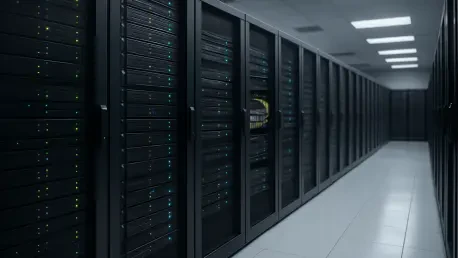
The central conflict stems from the staggering energy consumption of data centers, which serve as the operational core for artificial intelligence and modern digital infrastructure. The sheer scale of this demand has propelled the industry to the forefront of California’s complex energy debate. According to data from the California Energy Commission, developers of these facilities have submitted formal requests for a colossal 18.7 gigawatts of service capacity directly from the state’s utilities. To place this figure in proper context, this requested power allocation is greater than the total amount required to serve every single household across the entire state of California. This unprecedented surge in demand is compelling difficult and urgent conversations about the necessity of undertaking expensive and extensive upgrades to the public energy grid. Complicating matters further is the speculative nature of some proposed projects and the rapidly shifting power loads characteristic of AI technologies, making accurate, long-term planning an exceptionally challenging task for both utility providers and state-level planners.
In an effort to address this looming crisis, state lawmakers introduced several pieces of legislation aimed at managing the industry’s profound impact on the state’s resources. The primary legislative vehicle, authored by State Senator Steve Padilla, a Democrat from Chula Vista, initially proposed a comprehensive framework for direct oversight. Earlier, more aggressive versions of his bill sought to establish a distinct and separate electricity rate category specifically for data centers. This strategic move was designed to insulate residential customers and small businesses from the inevitable rate hikes that would result from the industry’s massive energy consumption and the associated costs of grid infrastructure upgrades. Furthermore, the original bill contained stringent environmental and grid-support mandates, including a requirement for data centers to install large-scale batteries on-site. These batteries would provide power back to the grid during periods of peak demand, enhancing grid stability. It also pushed for an accelerated clean energy transition, mandating that these facilities be supplied with 100% carbon-free electricity by 2030, a timeline significantly more aggressive than California’s existing statewide mandate.
An Unraveling of Regulatory Efforts
The systematic unraveling of California’s first major attempt to regulate its burgeoning data center industry was a direct consequence of intense and well-coordinated industry pressure and lobbying. The opposition’s central argument, which was notably echoed by Governor Gavin Newsom, was that imposing such stringent requirements would significantly damage the state’s economic competitiveness. Industry leaders issued stark warnings that developers would simply bypass California, taking with them valuable property-tax revenue, high-paying union construction jobs, and essential AI talent to other states with more lenient regulations and lower operational costs. At a CalMatters event, Silicon Valley Leadership Group CEO Ahmad Thomas underscored this concern by pointing to Texas’s recent success in securing a $40 billion data center project from Google, framing it as a major competitive loss for California. This narrative proved particularly potent given California’s increasing financial dependence on Big Tech, with a small number of tech giants contributing upwards of $5 billion annually in state income tax withholding alone.
This powerful narrative of economic flight ultimately led to the collapse of the broad legislative effort to rein in the industry. An Assembly bill authored by Assemblymember Rebecca Bauer-Kahan, which would have mandated that data centers publicly disclose their electricity and water usage, was quietly shelved in the Senate’s suspense file—a common legislative maneuver used to halt bills that carry significant fiscal implications without a formal vote. With other related proposals stalled or vetoed by the governor, who explicitly cited competitiveness concerns in his veto message for a separate water-use reporting bill, Senator Padilla’s energy-cost bill emerged as the lone survivor. However, its survival came at a steep price, as it was progressively stripped of all its meaningful enforcement mechanisms and regulatory teeth throughout the legislative process, rendering the final version a shadow of its original intent. The end result was a testament to the effectiveness of the industry’s campaign to reframe the debate from consumer protection to economic preservation.
A Hollow Victory and the Path Forward
The final version of the law that ultimately passed is widely regarded by consumer advocates as a hollow victory at best. Matthew Freedman, a staff attorney with the ratepayer advocacy group The Utility Reform Network (TURN), starkly described the measure as “toothless.” He pointed out that the law simply directs the California Public Utilities Commission (CPUC) to study an issue that the regulatory body already possesses the full authority to investigate entirely on its own initiative. A critical and perhaps intentional flaw embedded in the law is its timeline; the 2027 deadline for the mandated report ensures that its findings and any subsequent recommendations will not be available for lawmakers to consider or act upon during the 2026 legislative session. This built-in delay effectively creates a multi-year pause on any potential regulatory action, allowing the data center industry to continue its rapid expansion under the existing, less stringent regulatory framework while the foundational questions of cost allocation remain unanswered.
The legislative defeat did not extinguish the debate. Critics of the industry’s position argued that fears of widespread job and investment loss were significantly overblown, characterizing the threat as a decades-old tactic that often failed to materialize, as evidenced by California’s persistent status as a global economic powerhouse despite its robust regulatory environment. AI researchers further dismantled the argument, explaining that the factors driving the location of massive data centers—cheap land and energy—were largely “decoupled” from the factors that attracted top-tier research talent. Looking ahead, both Senator Padilla and Assemblymember Bauer-Kahan announced their intentions to revisit the issue with new legislation. Padilla planned to introduce a bill focused on the equitable allocation of grid upgrade costs, while Bauer-Kahan intended to revive her electricity-disclosure bill. Moreover, Freedman of TURN suggested that lawmakers held a powerful bargaining chip. The very fact that developers proposed new facilities in a high-cost state like California indicated their primary motivation may have been the speed and certainty of the approval process, creating an opening for a legislative compromise where a streamlined permitting process was offered in exchange for developers covering a larger share of grid costs.