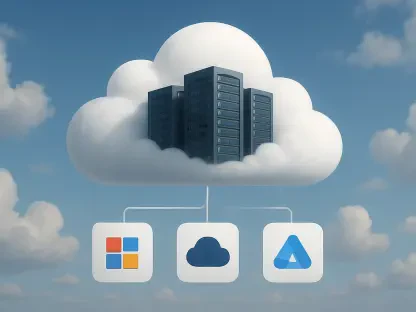

A fundamental re-evaluation of IT strategy is currently unfolding across the corporate landscape, as the once-inevitable march toward public cloud adoption has not only slowed but has begun to reverse course. For years, a “public cloud-first” mentality dominated boardrooms and IT departments, but this dogma is now being challenged by a pragmatic reassessment driven by a confluence of disruptive factors. A series of high-profile service outages, a sobering look at the true economic costs, and a renewed, urgent focus on data security, control, and sovereignty are compelling organizations to reconsider their dependencies. This shift does not signify an end to the cloud but rather the dawn of a more mature, strategic era. Enterprises are moving toward a nuanced, “best-fit” approach, where private cloud environments are increasingly being recognized as the optimal home for a growing number of mission-critical workloads, heralding a significant repatriation movement.
The Catalysts for Change
The High Cost of Unreliability
The most immediate and powerful driver behind this strategic reconsideration has been the escalating frequency and devastating impact of major public cloud outages. Throughout 2025, a string of significant and costly technological disruptions originating from dominant hyperscalers like AWS and Azure served as a stark wake-up call, exposing the profound systemic risks tied to an over-reliance on a handful of providers. These incidents were far from minor inconveniences; they triggered widespread, cascading failures that rippled across the global economy. The paralysis of essential services became a tangible reality, with reports detailing how such outages prevented individuals from ordering food, accessing mobile banking applications, communicating with critical hospital networks, and even operating their home security systems. For major global corporations such as Netflix, Starbucks, and United Airlines, the disruptions translated into immense financial losses and operational chaos, underscoring the deep economic consequences of placing core functions within these vulnerable, monolithic infrastructures.
The interconnected architecture of these massive public cloud platforms means that even seemingly small technical glitches can propagate outward with alarming speed, leading to widespread and unpredictable disruptions. This inherent vulnerability is a core design characteristic, not a bug, and its implications are now being fully understood by enterprise leaders. Compounding this risk is the vastly expanded digital attack surface that public cloud environments present, making them high-value targets for malicious actors seeking to cause maximum chaos. The consensus view among security experts and IT strategists has shifted; such outages are no longer seen as freak accidents but as an inevitable and increasingly common feature of the modern technological landscape. Consequently, organizations are engaged in a fundamental and urgent re-evaluation, questioning whether the perceived benefits of convenience and scalability offered by public cloud platforms can possibly outweigh the significant and demonstrable risks of costly business interruptions, customer attrition, and lasting reputational damage.
The Fading Economic Advantage
Further fueling the movement away from a public-cloud-only strategy is the steady erosion of its once-unassailable economic proposition. For more than a decade, the migration to the cloud was framed as a one-way journey toward financial efficiency, with the primary motivation being a significant reduction in both capital expenditures on hardware and the operational expenditures associated with managing physical data centers. However, a growing body of evidence suggests that these anticipated cost benefits have largely failed to materialize for many organizations. In numerous instances, the long-term total cost of ownership in the public cloud has not only met but exceeded that of on-premises alternatives, as unpredictable operational costs for data egress, API calls, and premium services continue to climb. The initial migration process itself represents a substantial, and often underestimated, investment. Cited figures place this upfront cost anywhere from $40,000 for startups to well over $600,000 for established enterprises with mission-critical legacy applications, a far cry from a simple lift-and-shift operation.
This challenging financial reality, when combined with the security and reliability trade-offs, has effectively dismantled the long-held belief that the public cloud is the default, economically superior option for every type of workload. The initial drivers that made the cloud so attractive—unmatched agility, near-infinite scalability, and the desire to offload the burdensome management of physical infrastructure—remain valid and compelling for specific use cases. However, these advantages are now being weighed against a more complex and sobering reality of escalating bills and vendor lock-in. The economic calculus is no longer a simple comparison of on-premise hardware costs versus a cloud subscription. Instead, it has evolved into a sophisticated analysis that must account for migration expenses, ongoing operational fees, the potential costs of service disruptions, and the strategic financial implications of ceding control over core infrastructure. This nuanced perspective is leading many to conclude that for predictable, stable workloads, the economic balance is tipping back in favor of private, controlled environments.
The New Strategic Imperatives
Prioritizing Security Control and Sovereignty
The strategic equation for IT infrastructure has shifted dramatically over the past decade. Previously, organizations, including security-conscious government agencies, were often more willing to accept the inherent security risks of moving data to the public cloud, believing the operational benefits and perceived cost savings were a paramount concern. That calculus has now been completely inverted. The contemporary threat landscape is defined by cyberattacks and data breaches that have grown exponentially in frequency, sophistication, and potential for damage. In this new reality, businesses are being forced to prioritize security and direct control above all other considerations. This has ignited a clear and growing trend of organizations actively seeking to bring their most sensitive assets and critical applications back to on-premises data centers or dedicated private cloud environments. The rationale is straightforward: these environments can be directly controlled, meticulously configured to specific security standards, and are significantly less exposed to the public internet, thereby reducing the attack surface.
This intensifying desire for greater control is being further amplified by the emergence of two powerful technological and regulatory imperatives: the rise of Artificial Intelligence and the increasing importance of data sovereignty. As enterprises invest heavily in developing proprietary AI models, their underlying data sets become invaluable strategic assets and a core source of competitive advantage. The ability to secure, govern, and manage this data in a private, controlled environment is no longer just a security preference but a critical business necessity. Public cloud platforms, with their multi-tenant architectures and complex data handling policies, introduce an unacceptable level of risk for these crown-jewel assets. Furthermore, navigating the complex and ever-changing web of international data privacy regulations becomes a far more manageable task within a private cloud. This ensures that an organization can maintain compliance and prove data residency, thereby avoiding crippling fines and retaining the trust of its customers in an era where data privacy is a top public concern.
The Data Driven Move to Repatriation
The overarching trend identified by this confluence of factors was a decisive and data-supported move toward workload repatriation from public back to private infrastructures. This movement was not merely anecdotal but was backed by rigorous expert analysis from leading industry observers. Forrester Research Principal Analyst Lee Sustar, for example, had predicted that the continuation of high-profile outages from major providers would inevitably force enterprises to rethink their cloud strategies. This reassessment, Sustar noted, would not just be for the sake of resilience, but more specifically for maintaining direct control over their key strategic investments in Artificial Intelligence. This expert perspective underscored a critical point: repatriation was increasingly viewed as a strategic maneuver to protect and leverage high-value assets, rather than simply a reaction to poor service. It represented a proactive step to align infrastructure with core business objectives in a world where data and AI were the primary engines of growth. The control offered by a private cloud had become a non-negotiable requirement.
This expert view was substantiated by compelling industry data from the “Private Cloud Outlook 2025” report commissioned by Broadcom. The report’s findings were unambiguous, revealing that an overwhelming 69% of enterprises were actively considering repatriating workloads from public to private cloud infrastructures, with more than a third having already begun this process. The primary driver for this mass movement was security. The report noted that a staggering 92% of IT leaders expressed significantly greater trust in private cloud environments for ensuring robust security and maintaining compliance, a stark contrast to the widespread concerns about safeguarding sensitive data in the public cloud. This data reflected a broader maturation of cloud strategy, where the ultimate goal was no longer a blind migration to a single platform. Instead, organizations thoughtfully placed each workload in the environment—be it public, private, or a hybrid combination—that best optimized for security, cost-efficiency, and performance. In essence, the era of unquestioning public cloud adoption had definitively ended, replaced by a strategic, risk-aware approach that increasingly favored the security and control that only the private cloud could offer.