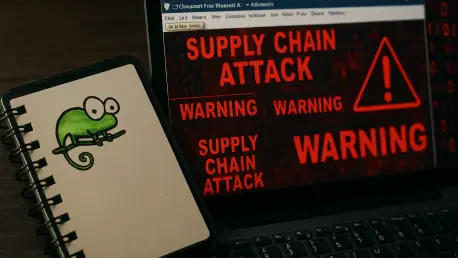

The automated update notification, a feature designed for convenience and security, was quietly turned into a weapon against millions of users when state-sponsored actors compromised the infrastructure of the widely used open-source text editor, Notepad++. For approximately six months, this trusted update mechanism was subverted to distribute a malicious installer, a sophisticated supply-chain attack that went unnoticed by the vast majority of its victims. The incident serves as a stark reminder of the fragile trust that underpins the software ecosystem and the critical vulnerabilities that can exist within the distribution pipelines of even the most popular applications. The breach, which began in early 2025, specifically targeted a fundamental weakness in older versions of the software: a failure to enforce mandatory validation of digital signatures and their corresponding certificate chains. This oversight created the perfect opportunity for attackers to replace the legitimate software package with a tampered version, which was then seamlessly delivered to users who believed they were simply installing the latest official patch or feature update, illustrating a profound risk in modern software delivery.
The Anatomy of the Breach
Exploiting a Foundational Weakness
The success of the Notepad++ supply-chain attack hinged on a critical, yet common, security oversight in the application’s older update process, allowing for a prolonged and clandestine operation. Attackers exploited the absence of a mandatory cryptographic verification check on downloaded installers. In secure software distribution, an application should verify that any update package is digitally signed with the developer’s private key and that the certificate associated with that key is valid and has not been revoked. Older versions of Notepad++ lacked this enforcement, creating a window of opportunity. State-sponsored actors, having gained control of the update server, were able to substitute the legitimate installer with their own malicious payload. When users initiated the update, their client application would download the compromised file without performing the necessary signature and certificate chain validation. Consequently, the operating system would not flag the installer as untrustworthy, and the malicious software could be installed with the user’s unwitting consent. This method allowed the attackers to operate for roughly six months, from early 2025 until the issue was remediated late in the year, ensuring a wide distribution of their malware.
The Perils of Centralized Updates
This incident casts a harsh spotlight on the inherent risks associated with centralized software update models, particularly for ubiquitous open-source projects. By design, a centralized update server acts as a single point of failure; its compromise provides attackers with an exceptionally efficient and scalable method for distributing malicious code. Once control of the server was established, the threat actors could push their payload to the entire user base that relied on the auto-update feature. This high-impact attack vector is especially attractive when targeting tools like Notepad++, which are installed on millions of machines across personal, corporate, and government environments. The reliance on a single distribution point, especially when hosted on shared infrastructure rather than a dedicated, hardened environment, amplifies the potential for a breach. The event underscores a systemic vulnerability in the broader software supply chain, demonstrating that even without compromising the source code repository itself, attackers can intercept the delivery pipeline to devastating effect. It highlights the urgent need for a defense-in-depth strategy that does not solely rely on the security of the server but also incorporates robust client-side verification to ensure the integrity of received updates.
Response and Industry Implications
Remediation and Public Disclosure
The response from the Notepad++ development team, once the breach was contained, involved both a technical overhaul and a strategic public disclosure. The compromise was formally announced to the public in February 2026, a decision timed to coincide with the release of a security-hardened version of the software, 8.8.9. This crucial update permanently closed the exploited vulnerability by integrating a mandatory cryptographic verification process. Under the new system, the application refuses to execute any downloaded installer unless it first confirms that the file is signed with the official Notepad++ developer key and that the entire certificate chain is valid and unrevoked. This ensures that even if the update server were to be compromised again in the future, a tampered installer would be rejected by the client application. The internal remediation efforts, including securing the compromised server infrastructure and developing the new validation logic, were completed by December 2025. The period between the internal fix and the public announcement allowed for thorough testing and preparation, aiming to provide users with an immediate and effective solution while minimizing panic and giving the team time to coordinate a clear message.
A Call for Heightened Security Standards
The attack on Notepad++ served as a powerful testament to the escalating threat posed by state-sponsored actors targeting essential software infrastructure and reinforced the need for systemic security improvements across the development landscape. The incident provided clear, actionable insights for developers and organizations, emphasizing that vigilance and cryptographic best practices are no longer optional but vital for safeguarding the entire software ecosystem. Key recommendations that emerged from post-incident analyses included the universal implementation of mandatory end-to-end signing for all distributed binaries, ensuring that integrity can be verified at every stage. Furthermore, the event highlighted the risks of using shared hosting environments for critical infrastructure, advocating for the use of secure, dedicated servers for software distribution. Another critical lesson was the value of publishing reproducible builds, which allows independent security researchers and the community at large to verify that the distributed binaries correspond exactly to the publicly available source code by matching their cryptographic hashes. Ultimately, this breach was a catalyst, prompting a wider conversation about the shared responsibility of maintaining the security of the digital supply chain.