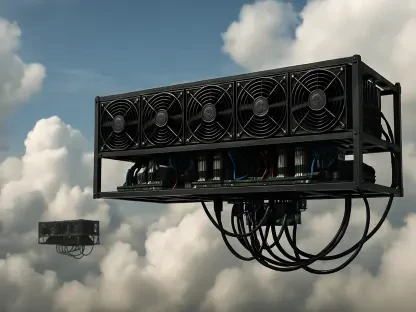

The rapid maturation of the enterprise cloud market has led to a critical realization that the convenience offered by public hyperscalers often comes at the steep price of performance degradation and unpredictable operational expenses. As organizations transition away from the rigid frameworks of traditional shared environments, the demand for high-performance, dedicated infrastructure has reached a fever pitch. OpenMetal is responding to this tectonic shift by launching its v4 server lineup, a strategic move designed to provide companies with the autonomy they need to manage complex workloads without the interference of multi-tenant architectures. This initiative marks a significant departure from the standard virtualized model, offering a physical foundation where hardware-level control is the primary objective. By focusing on bare metal solutions, the provider is enabling a more direct relationship between software and the underlying silicon, effectively removing the performance bottlenecks that have historically plagued large-scale deployments in the public cloud space.
Architecture and Performance Optimization: The Bare Metal Advantage
High-Performance Hardware Specifications: Empowering Enterprise Workloads
The integration of 5th Gen Intel Xeon Gold processors within the v4 server lineup represents a substantial leap in computational efficiency for data-intensive operations. These processors, paired with up to 2TB of DDR5 RAM and high-density NVMe storage, allow for a level of throughput that is rarely achievable in shared virtualized environments. In a traditional public cloud setup, the “noisy neighbor” effect frequently results in erratic latency and diminished processing power as multiple users compete for the same physical resources. However, by utilizing dedicated bare metal, enterprises can ensure that every cycle of the CPU and every byte of memory is exclusively allocated to their specific applications. This predictability is essential for industries such as high-frequency trading, real-time analytics, and large-scale machine learning, where even a millisecond of delay can have significant financial or operational consequences for the business.
Building on the strength of the underlying hardware, the move toward bare metal allows for a more streamlined software stack that bypasses the overhead associated with the hypervisor layer. In a typical virtual machine environment, the hypervisor consumes a portion of the system’s resources to manage the abstraction between the hardware and the guest operating systems. By eliminating this intermediary, OpenMetal v4 servers provide direct access to the hardware, resulting in a more efficient execution of instructions and improved input/output operations. This architectural choice is particularly beneficial for modern containerized applications and microservices architectures that are designed to scale horizontally across physical nodes. As companies look to optimize their infrastructure from 2026 to 2028, the ability to fine-tune the operating system and kernel parameters to match the specific requirements of the workload provides a competitive edge that is simply unavailable in the standardized, one-size-fits-all offerings of the major hyperscalers.
Specialized Infrastructure for Data-Intensive Applications: Beyond Standard Compute
The transition to v4 servers is not merely about raw speed; it is also about providing the specialized infrastructure required for the next generation of data-intensive applications. As enterprises grapple with massive datasets generated by various sources, the need for high-density NVMe storage becomes paramount to maintain high data transfer rates. These drives provide significantly lower latency and higher IOPS compared to traditional SATA or SAS SSDs, making them ideal for database management systems and large-scale data lakes. When combined with the high-bandwidth networking capabilities of the v4 platform, organizations can build resilient clusters that handle massive volumes of traffic with minimal congestion. This focus on physical isolation and high-performance components ensures that mission-critical applications remain stable and responsive even during peak usage periods, providing a level of reliability that matches or exceeds the capabilities of the most prominent public cloud providers in the current market.
Security and Financial Predictability: Establishing a Resilient Foundation
Hardware-Enforced Security: The Rise of Confidential Computing
In an era where data privacy is a primary concern, the inclusion of hardware-enforced security features like Intel Software Guard Extensions and Trust Domain Extensions provides a critical layer of protection. These technologies, collectively known as Confidential Computing, allow sensitive data to be isolated within encrypted enclaves at the hardware level, ensuring that it remains protected even from the host operating system or a potential hypervisor. This is a significant advancement over software-based security measures, which can be vulnerable to sophisticated attacks that target the lower levels of the system stack. For enterprises handling regulated data, such as protected health information or sensitive financial records, the ability to prove that data is processed in a secure and isolated environment is essential for compliance. By baking security into the physical infrastructure, the v4 servers offer a robust defense-outward strategy that minimizes the attack surface and provides peace of mind for security-conscious organizations.
The shift toward physical isolation also addresses the inherent risks associated with multi-tenant environments where vulnerabilities in the virtualization layer could potentially lead to data leakage between users. By providing dedicated physical servers, OpenMetal eliminates the risk of side-channel attacks that exploit shared hardware resources to extract sensitive information. This model of physical separation is becoming the preferred standard for organizations that prioritize sovereignty over their data and infrastructure. As security threats become more complex, the reliance on hardware-level isolation will likely increase, positioning bare metal as the foundational tier for any comprehensive security architecture. This approach allows IT departments to implement customized security protocols and monitoring tools that are tailored to their specific risk profile, rather than relying on the generic security policies enforced by a public cloud vendor. This level of granularity is a major factor in the decision to move away from the public cloud.
Transparent Financial Models: Eliminating Cloud Bill Shock
One of the most persistent challenges faced by organizations using public hyperscalers is the lack of transparency in pricing, particularly regarding data egress and bandwidth usage. OpenMetal addresses this issue by implementing a billing model based on the 95th percentile of usage, which provides a more accurate and predictable reflection of actual consumption. By offering generous egress allotments and transparent bandwidth pricing, the provider helps enterprises avoid the “bill shock” that often occurs when unexpected spikes in traffic lead to exorbitant costs. This financial predictability is crucial for long-term budget planning and allows companies to scale their infrastructure without the fear of hidden fees. In a landscape where cloud costs are under constant scrutiny, the ability to forecast expenditures with a high degree of accuracy is a major advantage for CTOs and CFOs who are looking to optimize their digital transformation strategies from 2026 onward.
The transition toward bare metal infrastructure reflected a sophisticated maturation of the enterprise market, where the demand for performance and control outweighed the perceived convenience of shared public clouds. By adopting the v4 server lineup, organizations gained the ability to reclaim their computational resources and secure their data at the hardware level. To maximize the benefits of this shift, IT leaders should have prioritized the migration of their most resource-intensive and security-sensitive workloads to dedicated environments first. This phased approach allowed for a more controlled transition while immediately addressing the performance bottlenecks and cost inconsistencies found in traditional virtualized settings. Future considerations involved the integration of automated orchestration tools to manage bare metal fleets with the same agility as virtual machines, ensuring that the infrastructure remained flexible enough to adapt to evolving business needs. Ultimately, the move to bare metal provided a more stable and cost-effective foundation for mission-critical applications.