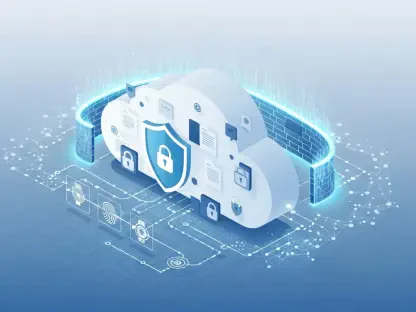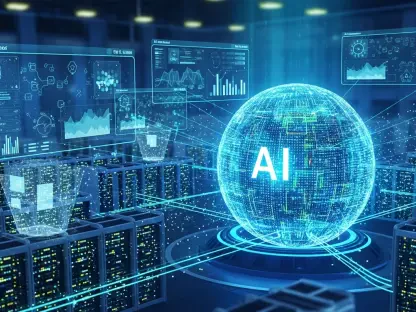

The digital services that underpin modern commerce and daily life often operate on a knife’s edge, where a single misconfiguration or unexpected surge in demand can trigger a cascade of failures with far-reaching consequences. For years, the responsibility for maintaining stability has fallen to teams of highly skilled engineers engaged in a perpetual cycle of reactive troubleshooting—a high-stakes game of whack-a-mole played against the relentless complexity of distributed systems. This paradigm, however, is beginning to crumble under the weight of its own inefficiency. A new architectural philosophy is emerging, one that seeks to imbue cloud infrastructure with a form of cognition. This transformative vision is being realized through the pioneering work of innovators like Balaji Salem Balasundram, who are developing generative AI frameworks that allow systems not merely to execute commands but to anticipate needs, learn from experience, and self-heal. By fusing the immense computational power of the cloud with the pattern-recognition capabilities of advanced AI, these frameworks are converting passive digital assets into dynamic, self-optimizing partners, heralding a future where infrastructure is no longer a liability to be managed but an intelligent force that actively drives business resilience and innovation.
The Dawn of an Anticipatory Infrastructure
A Paradigm Shift From Reactive to Proactive Operations
The traditional approach to IT operations has long been defined by its reactive nature; systems are monitored for signs of failure, and when an alarm is triggered, human teams are dispatched to diagnose and resolve the issue. This model, while functional, is inherently limited by human speed and the sheer volume of data modern enterprises generate. The new paradigm represents a fundamental shift in this philosophy, moving away from the “break-fix” cycle toward an anticipatory model where the primary goal is not to fix problems faster but to prevent them from occurring in the first place. This represents a quantum leap in infrastructure intelligence, where the system itself becomes the first line of defense. At its core, this approach involves designing frameworks that proactively monitor for subtle anomalies, predict potential failures based on historical patterns, and automatically initiate remediation actions before any service impact is felt by end-users. This isn’t just an incremental improvement in automation; it is a complete reimagining of the relationship between engineers and the systems they manage, transforming IT operations from a cost center focused on firefighting to a strategic enabler of business continuity.
The mechanics of this transformation are rooted in the powerful synergy between generative artificial intelligence and the vast streams of real-time telemetry data flowing from live enterprise environments. Sophisticated generative models, including those from the Claude Sonnet family, are being integrated directly into the operational fabric of the cloud. Unlike static automation scripts that follow a predefined set of rules, these AI-driven frameworks function as adaptive learning systems. They continuously ingest and analyze immense datasets—encompassing performance metrics, configuration logs, past incident reports, and even vendor documentation—to build a deep, contextual understanding of what constitutes a healthy operational state. By identifying faint signals and complex correlations that would be invisible to human observers, these systems can forecast impending issues with remarkable accuracy. They then leverage their generative capabilities to formulate and propose precise, context-aware solutions, effectively turning the cloud infrastructure into an intelligent, self-aware entity that learns, adapts, and evolves over time to become more resilient and efficient.
The Tangible Impact on Enterprise Workflows
The practical applications of this intelligent infrastructure are already yielding profound and measurable results for businesses that have embraced it. These AI-driven frameworks are capable of far more than just raising alerts; they can automatically draft highly detailed remediation plans for complex system failures, generate comprehensive support runbooks that guide engineering teams through manual interventions when necessary, and dynamically optimize intricate data workflows to enhance performance and reduce costs. The impact on operational efficiency is dramatic. Large enterprises deploying these systems have reported saving over 8,000 operational hours annually, a direct result of automating routine monitoring, diagnostics, and recovery tasks. Furthermore, the accuracy of these AI-generated solutions has been shown to exceed 90% for specific support functions, significantly reducing the likelihood of human error. This level of performance and reliability is moving the industry closer to a long-held vision: making digital infrastructure as dependable, transparent, and effortlessly available as essential public utilities like water and electricity.
Beyond the immediate efficiency gains, the adoption of anticipatory infrastructure is fundamentally altering the role of technology professionals. By offloading the burden of repetitive, low-value tasks, these intelligent systems are liberating highly skilled engineers from the relentless grind of operational maintenance. This allows them to redirect their expertise toward more strategic initiatives, such as designing next-generation architectures, developing new product features, and driving business innovation. The result is a significant reduction in Mean Time to Resolution (MTTR) for incidents that do require human attention, as the AI often provides a preliminary diagnosis and suggested course of action. This not only improves system stability but also boosts team morale and productivity by allowing engineers to focus on creative problem-solving rather than rote procedural work. Consequently, the technology organization evolves from a reactive support function into a proactive engine of growth, better equipped to meet the dynamic demands of the digital economy.
The Business Case for Intelligent Cloud Systems
Driving Economic Value Through Uptime and Risk Mitigation
The relentless pursuit of the “five nines”—99.999% system availability—has long been a central goal for enterprise technology leaders, but it has traditionally been locked in a zero-sum game with the imperative to control and reduce operational expenditures. Achieving near-perfect uptime often required massive investments in redundant hardware, oversized capacity, and large teams of engineers dedicated to round-the-clock monitoring. Generative AI is now rewriting this economic equation, making it possible for organizations to achieve unprecedented levels of reliability while simultaneously lowering their operational costs. By automating routine health checks, accurately forecasting future resource needs, and intelligently managing configuration changes, AI-driven systems proactively mitigate the myriad risks that can lead to service disruptions. This proactive stance prevents minor issues from escalating into major outages, thereby safeguarding revenue streams, protecting brand reputation, and avoiding the significant financial penalties often associated with downtime.
The economic argument for adopting intelligent infrastructure is compelling and quantifiable. In a world where digital services are the primary interface between a company and its customers, even marginal gains in incident prevention can translate into millions of dollars in saved revenue and preserved operational budgets annually. The true power of these AI systems lies in their ability to process and analyze vast repositories of historical data, including records of past incidents, configuration baselines, and security policies. This allows them to identify subtle anomalies and emergent patterns that might otherwise go unnoticed by human teams until it is too late. By flagging these potential threats and proposing pre-emptive countermeasures, the AI acts as a powerful risk mitigation engine. This capability is so transformative that industry projections indicate that by 2030, a majority of large enterprises will depend on AI-driven operations to manage their most mission-critical workloads, cementing intelligent automation as a cornerstone of modern business strategy.
The Underlying Technical Sophistication and Its Application
What distinguishes these advanced frameworks from conventional automation is their inherent capacity for adaptation and nuanced decision-making. They are not built on static, brittle rule sets but instead incorporate sophisticated methodologies like adaptive learning loops. This allows the AI models to continuously retrain themselves on new incident patterns and operational data, steadily improving their predictive accuracy and the effectiveness of their recommendations over time. The system becomes more intelligent with every event it processes, creating a virtuous cycle of ongoing improvement. Furthermore, these frameworks employ techniques such as predictive model-tuning, a process that carefully balances competing priorities like system performance, resource cost, and regulatory compliance. This ensures that the infrastructure is not only intelligent and self-healing but also highly efficient and aligned with the specific business and governance constraints of the organization, moving far beyond the one-size-fits-all approach of earlier automation tools.
The practical value of this deep technical expertise is demonstrated through real-world applications that provide tangible templates for the broader industry. For example, a widely referenced technical article for Amazon Web Services provided detailed, step-by-step guidance on managing users and privileges within complex Amazon RDS Custom for Oracle environments. This work offered a clear blueprint for database engineers seeking to reconcile the need for operational flexibility with the non-negotiable demands of robust security and governance. By breaking down a complex problem and presenting a clear, actionable solution, such contributions bridge the gap between abstract architectural concepts and the day-to-day realities of enterprise IT. They serve as concrete proof that these intelligent frameworks are not just theoretical constructs but practical tools that empower engineers to build more secure, resilient, and manageable systems, thereby accelerating the adoption of these transformative technologies across the industry.
Navigating the Human and Artificial Intelligence Partnership
Addressing the Inherent Risks of Advanced Automation
As organizations increasingly cede operational control to artificial intelligence, they must also confront a new class of risks and ethical dilemmas. Critics and industry analysts rightly raise concerns about the dangers of over-reliance on “opaque AI models” for managing mission-critical infrastructure. When an AI makes a decision to alter a production environment, the lack of clear explainability can create significant challenges. If human engineers cannot understand the logic behind an AI’s action, troubleshooting a subsequent problem can become a costly and time-consuming ordeal. There is also the risk that automation, if improperly configured or supervised, could introduce subtle but catastrophic errors that propagate rapidly across a distributed system. These valid concerns highlight the necessity for a balanced approach, one that harnesses the power of AI without abdicating the crucial role of human judgment and oversight in maintaining system integrity.
The most effective and responsible path forward lies in a hybrid model that embeds strong governance principles directly into the technological framework. This approach reframes generative AI not as a replacement for human experts but as a powerful “force multiplier” that augments their capabilities. The architecture for such systems includes several key components designed to ensure transparency and accountability. Explainability modules are integrated to document the reasoning behind every AI-generated recommendation, providing a clear audit trail. Robust logging captures every action taken by the system, while configurable approval workflows ensure that a qualified human engineer retains final authority over any high-impact changes to production environments. This human-in-the-loop design empowers technical teams by automating repetitive and time-consuming tasks, thereby freeing them to focus their cognitive energy on complex edge cases, strategic planning, and innovation. Progress, in this model, is found at the intersection of technological agility and rigorous governance.
The Architectural Blueprint for an Intelligent Society
Looking toward the end of the decade, the line separating “infrastructure” from “intelligence” is set to become increasingly blurred. Generative AI capabilities will likely be deeply woven into nearly every interface and service layer of modern cloud platforms, evolving from specialized tools into ubiquitous features. This will range from intelligent configuration assistants that guide developers toward best practices to fully autonomous optimization engines that dynamically reallocate resources in real-time to meet shifting demands. As this technology matures and becomes more accessible, the primary challenge for enterprises will evolve. The focus will shift from simply implementing AI tools to orchestrating them into cohesive, end-to-end architectures that are not only high-performing and cost-effective but also inherently resilient, fully auditable, and legible to both internal stakeholders and external regulators. Building these trustworthy, intelligent systems will be the defining architectural task of the next era.
The foundational work in creating intelligent enterprise infrastructure ultimately laid the groundwork for a more adaptive and efficient economic order. The principles of proactive monitoring, predictive analytics, and automated remediation were extended beyond corporate data centers, influencing the design of smart infrastructure as a form of public utility. This broader vision aimed to break down traditional silos between digital and physical systems to deliver universal societal benefits, such as optimizing urban traffic flow to reduce congestion, streamlining healthcare logistics to ensure timely delivery of critical supplies, and securing public utilities against emerging threats. The technical innovations and ethical frameworks developed for the cloud served a greater purpose: they provided a blueprint for responsibly embedding intelligence into the core machinery of modern life. This journey addressed not only complex technical problems but also fundamental questions about control, accountability, and shared benefit, ensuring that each technological advance contributed to building a smarter, safer, and more inclusive digital future.