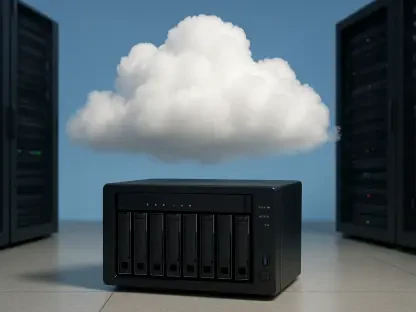

The global demand for high-speed data processing has reached an unprecedented peak, forcing organizations to reconsider the viability of traditional concrete-and-steel facilities that often take years to materialize. As the digital economy accelerates, the shift toward prefabricated, modular units has transformed from a niche architectural choice into a strategic imperative for global technology leaders. Current industry valuations indicate that the market is on a trajectory to expand significantly, reaching an estimated twenty-five billion dollars by the end of the current cycle starting in 2026. This surge is primarily driven by the immediate need for localized processing power, commonly referred to as edge computing, which allows businesses to reduce latency and improve the user experience for real-time applications. Major players such as Huawei and Schneider Electric are currently spearheading this transition by delivering self-contained units that arrive on-site pre-configured and ready for immediate operation. This just-in-time approach to infrastructure ensures that capacity can be added incrementally, preventing the massive upfront capital expenditures that historically burdened large-scale enterprise projects and slowed down the pace of innovation.
The Shift Toward Rapid Deployment and Scalability
The primary advantage of modularity lies in the radical compression of construction timelines, allowing companies to transition from the planning phase to full operational status in a fraction of the time required for traditional builds. While a standard data center might take several years to complete due to complex zoning, specialized labor requirements, and sequential construction phases, a modular unit can be manufactured in a controlled factory setting and deployed within months. This speed is vital for industries like telecommunications and financial services, where the ability to scale capacity in response to sudden market shifts can define a firm’s competitive edge. By utilizing standardized components, companies like Dell and Vertiv provide systems that are virtually plug-and-play, reducing the risks associated with on-site errors and weather-related delays. This modular philosophy enables a pay-as-you-grow model, where additional compute power is simply bolted onto existing structures as demand dictates, rather than overbuilding from the start and leaving expensive hardware underutilized for years.
Building on this foundation of speed, the financial predictability of prefabricated solutions offers a stabilized budgetary framework for chief technology officers managing volatile growth patterns. Unlike custom-built facilities that are prone to budget overruns and fluctuating material costs, modular units are sold as defined products with fixed pricing and clear performance specifications. This shift transforms a significant portion of capital expenditure into manageable, incremental investments that align more closely with actual revenue generation. Furthermore, the portability of these units allows for deployment in non-traditional environments, ranging from industrial manufacturing floors to remote research outposts. This flexibility is essential for supporting the rollout of advanced technologies like localized 5G networks and automated logistics hubs. As organizations move toward a more decentralized model, the ability to place high-density computing resources exactly where they are needed—without the logistical nightmare of a massive construction project—has become the new standard for modern infrastructure development and strategic global expansion.
Sustainability and Operational Precision in Engineering
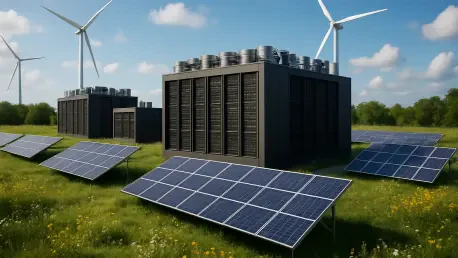
Environmental stewardship and energy efficiency have evolved from secondary considerations into core design principles for the current generation of modular data center solutions. High-profile manufacturers like Eaton are integrating advanced cooling technologies and power management systems directly into the prefabricated frames, resulting in significantly lower power usage effectiveness scores compared to older brick-and-mortar facilities. These units are often designed to leverage liquid cooling or high-efficiency air handling that is specifically tuned to the exact hardware configuration within the module. Because the environment is tightly controlled and the spatial volume is minimized, there is less wasted energy spent on cooling empty space. This precision engineering not only reduces the carbon footprint of the data center but also lowers long-term operational costs, providing a dual benefit of sustainability and fiscal responsibility. Moreover, the factory-controlled assembly process minimizes construction waste and ensures that materials are used with maximum efficiency, further aligning with the global transition toward a circular economy and greener building practices.
The transition toward modularity also addressed the critical need for resilience and standardized quality control across diverse geographical locations. In a traditional build, the quality of the final facility often depends on the skill levels of local contractors and the availability of specific materials, leading to inconsistencies across a global portfolio. Conversely, modular units are built to rigorous international standards within specialized facilities, ensuring that every deployment—whether in a dense urban center or a coastal region—meets the exact same reliability benchmarks. This standardization simplifies maintenance and staff training, as technicians can work with identical systems regardless of where the unit is physically located. Strategic decision-makers have recognized that this level of uniformity is indispensable for maintaining high availability in an era where even a few minutes of downtime can result in millions of dollars in losses. As the industry looked toward the next decade, the integration of smart sensors and automated management software within these modules provided a level of transparency and remote control that was previously impossible to achieve with fragmented, legacy infrastructure.