
Deep within the silicon architecture of the world’s most prominent financial institutions, ancient strings of logic written in the middle of the twentieth century continue to process trillions of dollars in global transactions every single day without fail. While the tech industry frequently obsesses over the latest frameworks and ephemeral trends, the real power often resides in COBOL, a programming language that has outlasted nearly all its contemporaries. Today, a fascinating paradox has emerged: the most vital architects of the cloud era are those who can speak the language of the 1960s while navigating the complexities of modern generative artificial intelligence.
These specialists, often referred to as “unicorn” developers, represent a rare intersection of deep historical knowledge and cutting-edge engineering skill. They act as the indispensable bridges between isolated legacy mainframes and the fluid, scalable environment of Amazon Web Services (AWS). By combining the institutional wisdom of the past with the automated speed of the present, these experts are leading a digital transformation that was once thought impossible, proving that the most direct path to the future often requires a deep understanding of where the technology began.
The “Unicorn” Developer: Why 60-Year-Old Code Still Rules the Cloud
The digital landscape is currently witnessing a significant shift in talent valuation as the demand for developers who understand both legacy systems and modern cloud architecture skyrockets. In an industry that often discards the old in favor of the new, the ability to interpret COBOL logic has become a premier asset. These developers are not merely maintaining outdated systems; they are the strategic planners who translate decades of business rules into a format that modern cloud-native applications can utilize. Without their guidance, the transition to the cloud would be a blind leap into a sea of opaque code.
This unique expertise is necessary because the logic embedded in these systems represents more than just technical instructions; it embodies the core business intelligence of global enterprises. AWS has recognized that the success of cloud migration depends heavily on these specialists who can ensure that no vital logic is lost in translation. As a result, the “unicorn” developer has transitioned from a niche role to a central figure in the cloud modernization narrative, providing the essential context that automated tools alone cannot provide.
The High Stakes of Legacy Infrastructure
For over half a century, the global economy has relied on a foundation of mainframe systems to manage everything from retail banking to complex healthcare records. These systems have endured because of their unmatched reliability and processing power, yet they have gradually become silos of “modernization debt.” This debt manifests as high maintenance costs, a lack of agility, and an increasing difficulty in integrating with modern data analytics tools. Enterprises now face a critical juncture where the risk of maintaining these rigid systems outweighs the daunting challenge of migrating them.
The difficulty lies in the sheer volume and complexity of the codebases, which often contain millions of lines of COBOL, PL/I, and various scripting languages. As the original creators of these systems enter retirement, the risk of “knowledge blackout” becomes a tangible threat to operational stability. Consequently, organizations must now decide whether to remain anchored to expensive, opaque hardware or to invest in a structured transition that unlocks the potential of their data while ensuring long-term technical sustainability.
AWS Transform: Merging Agentic AI with Mainframe Logic
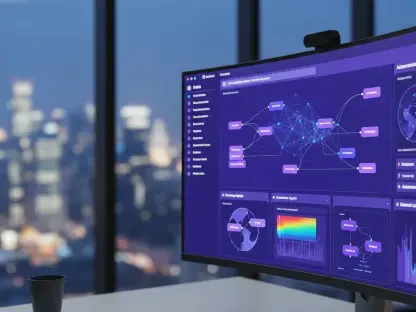
To address the bottleneck of manual code rewriting, AWS has introduced a sophisticated agentic AI platform known as AWS Transform. This system goes beyond basic syntax translation by reimagining legacy infrastructure for a cloud-native future. It automates the conversion of traditional COBOL and Job Control Language (JCL) into high-performance Java, allowing applications to run in a scalable cloud environment. This automation is not just about moving code; it is about restructuring it to meet the demands of modern software development life cycles.
A key feature of this platform is its reliance on System Management Facility (SMF) records from IBM z/OS to ensure absolute system integrity. By analyzing these logs, the AI can capture the exact execution steps of original processes, ensuring that the new cloud-based code perfectly mirrors the functional logic of the legacy system. Furthermore, organizations can utilize performance benchmarking based on historical P90 and P95 records to verify that the migrated workloads perform as well as, or better than, they did on the original mainframe. This data-driven approach removes much of the uncertainty traditionally associated with large-scale digital migrations.
Expert Perspectives: Why AI Cannot Replace the Human “Steering Wheel”
Despite the impressive capabilities of AWS Transform, the consensus among tech leadership is that artificial intelligence is the engine, but human expertise remains the steering wheel. Asa Kalavade, Vice President of AWS Transform, has noted that AI-generated outputs require rigorous human auditing to navigate the nuances of specific COBOL variants and unique business logic. Human specialists provide the critical validation layer that ensures the AI does not misinterpret the intent of the original programmer, particularly in complex financial or logistical calculations.
Success in these projects often stems from combining automated tools with decades of architectural insight, such as the methodologies gained from the acquisition of Blu Age. By using control flow graphs to visualize and maintain structural logic, experts can ensure that the transformation is a “like-for-like” migration that preserves the integrity of the application. High-profile examples like BMW and Itaú bank have demonstrated that while AI can compress a five-year modernization timeline into a significantly shorter period, the strategy must be defined and overseen by people who understand the ultimate business goals.
Strategies for a Seamless Mainframe-to-Cloud Transition
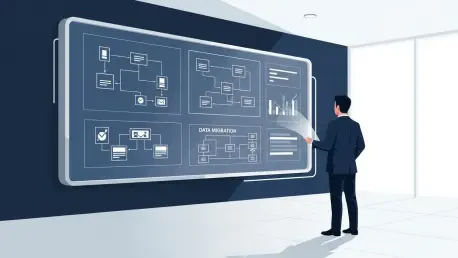
Achieving a successful migration requires a structured framework that responds to both internal needs and external market pressures. For instance, many firms are currently re-evaluating their infrastructure due to changes in VMware licensing, which has prompted a surge in cloud adoption. Instead of a simple “lift and shift” of virtual machines, savvy organizations are using this shift as a catalyst for deeper modernization. This involves moving from the traditional .NET Framework toward .NET Core and transitioning to scalable container environments that offer greater flexibility and lower long-term costs.
Evolution also extends to the data layer, where moving away from restrictive legacy databases is becoming a priority. By migrating to modern alternatives like Amazon Aurora PostgreSQL, enterprises can achieve the agility needed to compete in a data-driven market. Additionally, the adoption of autonomous agents allows IT teams to use natural language interfaces to manage modernization plans and generate test suites. This reduces the manual burden on staff and allows them to focus on high-level strategic tasks, ensuring the organization remains resilient and ready for the technical demands of the future.
The journey toward modernization required a balance between technical innovation and the preservation of institutional knowledge. Organizations that successfully migrated their workloads realized that the process was as much about people as it was about code. By empowering COBOL experts with agentic AI tools, these companies secured their legacy while building a foundation for sustainable growth. The strategy focused on incremental successes, ensuring that every workload moved toward the cloud enhanced the overall agility of the enterprise. This approach turned a looming technical crisis into a significant competitive advantage for the modern era.