
The global financial ecosystem currently rests upon a foundational layer of code that few modern engineers can read, yet it processes the vast majority of the world’s daily commerce and government transactions. While many assumed that these legacy systems would eventually fade into obsolescence, the reality of 2026 reveals that Common Business-Oriented Language, or COBOL, remains the invisible backbone of nearly ninety-five percent of all ATM transactions and critical airline routing systems. This persistent reliance has created a high-stakes standoff between the artificial intelligence pioneer Anthropic and the venerable technology giant IBM. As Anthropic introduces specialized tools designed to automate the dismantling and translation of these ancient scripts, IBM argues that the complexity of these systems is tied more to physical architecture than just lines of text. This clash highlights a fundamental question about whether the intelligence of large language models can truly overcome the physical and historical inertia of mainframe computing.
The Digital Archeology of Legacy Software
Anthropic’s Strategy: Decoding Decades of Institutional Knowledge
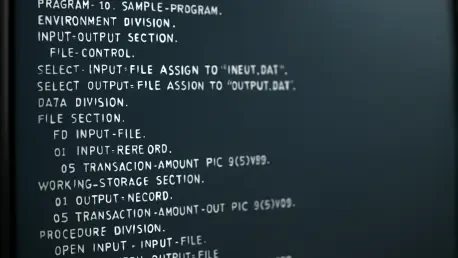
Anthropic has positioned its latest release, Claude Code, as a comprehensive solution to the knowledge gap that has plagued the financial sector for years. The primary challenge is not merely that COBOL is an aging language, but that the original engineers who wrote the mission-critical systems for global banks and federal agencies have long since entered retirement. Consequently, contemporary software developers often view these legacy environments as black boxes where any modification risks catastrophic failure. Anthropic proposes that its AI can act as a digital archeologist, scanning millions of lines of archaic code to reverse-engineer business logic that was documented poorly, if at all, during the initial development phases. By mapping these hidden dependencies, the AI identifies how various subroutines interact with modern databases, effectively turning a static and fragile codebase into a dynamic map that a modern engineering team can navigate without fearing a total system collapse.
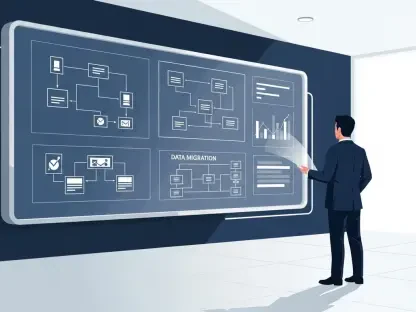
Beyond simple comprehension, the AI-driven approach seeks to resolve the economic barriers that have historically stalled modernization projects. Traditionally, migrating a mainframe system to a cloud-native environment was a grueling, multi-year endeavor that cost hundreds of millions of dollars with a high probability of failure. Anthropic asserts that its tools can compress these timelines significantly, reducing what was once a decade-long roadmap into a project spanning only a few fiscal quarters. The software accomplishes this by automatically generating API wrappers and translating procedural logic into modern languages like Java or Python while maintaining the original intent of the code. This capability allows organizations to gradually peel away layers of legacy infrastructure rather than attempting a big bang migration. By lowering the entry barrier for modernization, AI is essentially challenging the notion that COBOL is a permanent fixture of the financial world, suggesting that even the most stubborn technical debt can be cleared with sufficient compute power.
Market Reactions: Evaluating the Decline of Technical Moats
The announcement of these advanced AI capabilities sent shockwaves through the financial markets, leading to a sudden and dramatic reevaluation of companies that rely on legacy service contracts. Most notably, IBM’s stock experienced a decline of over thirteen percent in a single trading session, marking one of its most significant one-day drops in the current decade. This volatility reflects a growing investor sentiment that traditional technical moats, once protected by the sheer complexity of legacy languages, are no longer impenetrable. When a software tool can perform the work of hundreds of specialized consultants in a fraction of the time, the high-margin maintenance and services business models of established tech giants face an existential threat. This shift suggests that the market is beginning to prioritize agility and AI integration over the historical stability offered by veteran infrastructure providers. As more firms adopt these tools to bypass traditional gatekeepers, the premium previously placed on specialized legacy knowledge is rapidly eroding.
This market reaction is not an isolated incident but part of a broader trend where AI-driven disruptions are devaluing the proprietary complexity that once defined the software industry. Similar downturns have been observed in the cybersecurity and database sectors as automated agents demonstrate an ability to manage and secure systems that previously required massive, manual overhead. The disruption indicates a fundamental shift in how value is perceived in the enterprise technology stack; the ability to maintain a system is becoming less valuable than the ability to rapidly transform and iterate upon it. For years, the difficulty of migrating away from IBM Z mainframes acted as a natural lock-in mechanism that guaranteed recurring revenue for hardware and software support. However, as AI proves it can demystify these systems, the financial incentive to remain within a closed ecosystem is weakening. Organizations are now looking toward a future where their infrastructure is defined by flexibility rather than the constraints of a language developed over sixty years ago.
The Resistance of Integrated Infrastructure
Systemic Integration: Why Hardware Still Matters
IBM has mounted a vigorous defense, arguing that the true value of their legacy systems is not found in the COBOL syntax itself but in the profound integration between the software and the IBM Z hardware. According to the company, simply translating code from one language to another ignores the underlying physical optimizations that allow mainframes to process millions of transactions per second with zero downtime. IBM leadership frequently uses the analogy of an integrated ecosystem to illustrate that software and hardware are inseparable; moving an application to a generic cloud environment is like trying to run a high-performance operating system on incompatible hardware. They contend that AI can certainly help document and understand the code, but it cannot replicate the processor-level acceleration and specialized I/O subsystems that have been refined for decades. For high-volume environments like national stock exchanges, the raw performance gained from this tight coupling remains a critical requirement that modern software-only solutions struggle to match.
Furthermore, the argument for hardware-software synergy centers on the concept of reliability and the cost of unexpected latency. In a mainframe environment, the pathways for data are optimized at the silicon level to ensure that enterprise workloads execute with a predictable and extremely low response time. IBM suggests that when AI translates COBOL into a higher-level language like Java, the resulting code often lacks the efficiency of the original procedural logic when it runs on general-purpose servers. This can lead to a phenomenon known as software bloat, where the modernized system requires significantly more computational resources to achieve the same throughput as the legacy mainframe. Consequently, the perceived cost savings of moving to a cheaper cloud environment can be quickly neutralized by increased operational expenses and decreased performance. IBM continues to emphasize that while AI is a powerful tool for analysis, it is not a magical replacement for the specialized physical infrastructure that currently manages the world’s most demanding data processing tasks.
Strategic Resilience: Navigating the Hybrid Modernization Path
The unfolding debate between these two industry leaders suggests that the most successful modernization strategies will likely involve a hybrid approach rather than a total replacement. Organizations are finding that they can use AI to identify the non-critical portions of their codebase that are suitable for migration to the cloud, while keeping their core high-performance transaction engines on traditional mainframe hardware. This allows companies to gain the agility of modern development cycles without sacrificing the legendary reliability of their existing infrastructure. By using AI as a bridge rather than a wrecking ball, enterprises can mitigate the risks associated with large-scale digital transformation. This middle ground acknowledges the strengths of both parties: the analytical power of Anthropic’s models and the physical performance of IBM’s engineering. As the industry matures, the focus is shifting away from binary choices toward a more nuanced understanding of how different technologies can coexist to support a modern, resilient economy.
To ensure long-term stability, technical leaders began prioritizing the reclamation of institutional knowledge through AI-assisted documentation before committing to any major structural changes. They recognized that the primary risk was not the age of the code, but the lack of understanding surrounding its original intent. By deploying automated tools to map out dependencies and business rules, organizations established a clear baseline that allowed for safer, more incremental updates to their core systems. This process demonstrated that modernization was more about data accessibility and logical transparency than it was about merely changing programming languages. Ultimately, the industry moved toward a model where hardware providers and AI developers found ways to collaborate on integrated solutions that combined speed with intelligence. This shift proved that the most effective way to handle legacy debt was to treat it as a valuable asset that required careful translation into a new era of computing, ensuring that the global financial grid remained secure and efficient.