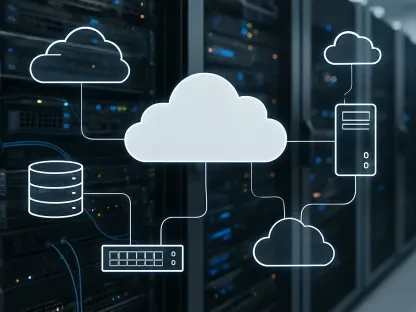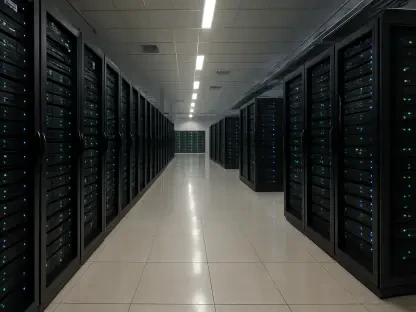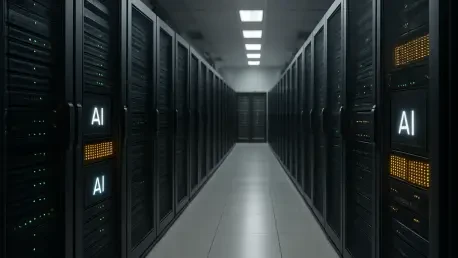

A seismic shift is underway in the technological landscape, where the primary constraint on artificial intelligence development is no longer the availability of silicon chips but the raw power needed to energize them. In this new reality, companies that can secure vast tracts of land with access to massive energy grids are becoming the new kingmakers. Applied Digital’s latest financial report for the second quarter of fiscal 2026 has provided a stunning confirmation of this trend, revealing how its strategic pivot from cryptocurrency mining to developing specialized AI data centers has positioned it as an indispensable utility for the AI revolution. The company’s performance indicates it has successfully transformed the industry’s biggest bottleneck into its most valuable asset.
A Quarter of Financial Breakouts
Explosive Top-Line Growth
Applied Digital delivered a financial performance that decisively surpassed market expectations, solidifying its status as a hyper-growth leader in the AI infrastructure sector. The company announced quarterly revenue of an astounding $126.6 million, representing a 250% increase year-over-year and exceeding analyst consensus estimates by a remarkable margin of more than 40%. This explosive top-line growth was not speculative but was anchored in the successful activation and monetization of its flagship AI facility, the Polaris Forge 1 campus located in Ellendale, North Dakota. The immediate financial impact of this operational milestone was highlighted by the inclusion of $73 million in one-time tenant fit-out fees. This substantial figure underscores the high demand for its specialized infrastructure and the willingness of major clients to make significant upfront investments to secure capacity, providing Applied Digital with immediate, non-dilutive capital to fuel further expansion and validating its business model of building and leasing high-density compute facilities.
The composition of this revenue provides critical insight into the company’s strategic positioning and financial health. While the one-time fees captured headlines, the underlying growth in recurring revenue from leasing agreements signals a stable and predictable long-term income stream. The successful launch of the Ellendale facility for its anchor tenant demonstrates a proven ability to execute complex, large-scale projects on schedule, a crucial factor for hyperscale clients whose AI roadmaps depend on reliable infrastructure delivery. This performance effectively de-risks future projects in the eyes of both clients and investors. By proving it can build and deliver these specialized “AI Factories,” the company has established a powerful competitive moat. It is no longer just selling a vision of future capacity; it is generating substantial, tangible revenue from operational assets, a critical transition that distinguishes it from more nascent players in the burgeoning AI infrastructure market.
Profitability and Market Acclaim
While navigating a phase of aggressive capital-intensive expansion, Applied Digital showcased significant progress toward sustainable profitability. Although the company reported a GAAP net loss of $0.11 per share, a figure that reflects the immense costs associated with constructing its next-generation data centers, it achieved a non-GAAP adjusted break-even of $0.00 per share. This result was a substantial beat compared to the market’s anticipated loss of $0.12 per share and serves as a powerful indicator of the operational leverage inherent in its business model. As its large-scale infrastructure assets transition from construction sites to revenue-generating facilities, the company is beginning to realize significant efficiencies. This ability to control operational costs while rapidly scaling revenue is a key metric for investors, suggesting a clear and viable path to positive net income as its development pipeline matures and more capacity comes online in the coming quarters.
The market’s reaction to the earnings report was immediate and overwhelmingly positive, affirming a strong vote of confidence in the company’s strategic direction and execution. On the day following the announcement, APLD shares surged nearly 12%, a clear signal that investors were digesting the profound implications of the successful pivot to AI infrastructure. This confidence was further amplified by a wave of bullish sentiment from Wall Street analysts. Prominent firms such as Roth MKM and B. Riley Securities promptly upgraded their ratings and raised their price targets on the stock, with some projections reaching as high as $58.00 per share. This enthusiastic response was not merely a reaction to a single quarter of strong results but an acknowledgment of the company’s success in securing the key ingredients for long-term dominance: premier assets, major client contracts, and the capital required to scale.
The Strategic Pillars of Success
Unlocking Value with ChronoScale
A pivotal element of Applied Digital’s strategy revealed during the quarter was the formation of “ChronoScale,” a new, distinct entity established to capitalize directly on the demand for GPU-accelerated computing. This new venture was created by strategically spinning off the company’s existing cloud business and merging it with Ekso Bionics Holdings, thereby launching ChronoScale as a pure-play platform in the GPU-as-a-Service market. The new company is designed to offer cloud-based access to its extensive and growing fleet of high-demand hardware, including NVIDIA’s #00 and next-generation Blackwell GPUs. By giving this business its own dedicated capital structure and public listing, Applied Digital aims to unlock significant shareholder value. This separation allows investors who are specifically interested in the high-growth, asset-light cloud services market to invest directly, potentially commanding a higher valuation multiple than a consolidated infrastructure and services company might.
This strategic de-coupling allows each entity to focus on its core competencies while maintaining a powerful symbiotic relationship. Applied Digital can concentrate on its expertise in developing and operating complex, large-scale physical data center infrastructure—the “AI Factories” themselves. Meanwhile, ChronoScale can operate with greater agility and focus, competing directly with other cloud service providers without being encumbered by the capital-intensive nature of real estate and construction. Critically, Applied Digital will retain a controlling majority ownership stake of up to 97% in the new entity, ensuring that it continues to benefit from ChronoScale’s success. This structure creates a powerful, vertically-aligned ecosystem where the parent company builds the indispensable physical infrastructure, and its subsidiary provides the high-margin cloud services that run within it, capturing value across the entire AI compute stack.
Securing a War Chest for Growth
The remarkable operational execution demonstrated in the second quarter was built upon a foundation of aggressive and highly successful capital-raising activities in the preceding periods. The company fortified its balance sheet with two transformative financial maneuvers that provided the necessary firepower to fund its ambitious expansion plans. It secured a colossal $5 billion preferred equity facility from Macquarie Group, a global titan in infrastructure investment. This partnership is far more than a simple capital injection; it represents a powerful endorsement from one of the world’s most sophisticated infrastructure investors, validating Applied Digital’s assets and long-term strategy. In addition to this facility, the company also successfully completed a $2.35 billion offering of senior secured notes, further diversifying its funding sources and providing substantial liquidity to execute its development pipeline without interruption.
This massive influx of capital was instrumental in bringing the first phase of the Ellendale project to fruition. The funds were directly deployed to complete the construction of the first 100-megawatt building, which was brought to “ready-for-service” status during the quarter for its anchor tenant, the prominent AI hyperscaler CoreWeave. This demonstrates a prudent and effective capital allocation strategy, translating raised funds directly into operational, revenue-generating assets. The scale and nature of this financing, particularly the involvement of an infrastructure-focused partner like Macquarie, signals a crucial maturation of the market’s perception. It indicates that AI data centers are increasingly viewed not as speculative technology ventures but as a stable, long-term infrastructure asset class, akin to utilities or toll roads, which is essential for attracting the patient, large-scale capital needed to build the future of AI.
Validating Key Industry Trends
The Rise of the AI Factory
Applied Digital’s exceptional quarterly performance serves as a powerful real-world validation of the “AI Factory” model, a new paradigm in data center architecture purpose-built for the unique demands of artificial intelligence. Unlike traditional data centers, which are often optimized for low-latency networking and general-purpose computing, AI Factories are engineered from the ground up to support the immense power density and raw computational throughput required for training and operating large-scale AI models. These facilities are designed to handle extreme thermal loads, with Applied Digital’s campuses engineered to support up to 120kW per rack to accommodate NVIDIA’s latest and most powerful chips. This requires sophisticated, specialized liquid cooling systems and power delivery infrastructure that far exceed the capabilities of legacy data centers, creating a high barrier to entry and a significant competitive advantage for companies that have mastered this new engineering standard.
The successful launch of the Ellendale campus proves not only the technical feasibility of this model at scale but also its profound economic viability. The willingness of major AI players to sign large, long-term leases and pay substantial upfront fees for this specialized capacity highlights the critical shortage of such facilities in the market. This trend establishes a new industry standard where access to purpose-built, high-density infrastructure is a prerequisite for competing at the forefront of AI development. As AI models continue to grow in size and complexity, the demand for these AI Factories is expected to accelerate, positioning early movers like Applied Digital, who have already demonstrated their ability to deliver these complex projects, to capture a disproportionate share of the market. The company’s success is a clear indicator that the future of AI will be built within these new, power-intensive computational hubs.
Shifting from Silicon to Power Bottlenecks
The narrative surrounding Applied Digital’s success illuminates a fundamental shift in the primary bottleneck constraining the growth of the artificial intelligence industry. For years, the main limiting factor was the supply of advanced silicon, with GPU availability dictating the pace of development. However, the industry is now confronting a “power wall,” where the critical scarcity has moved from chips to the availability of sufficient energy and the physical land with the necessary permits and grid connections to support massive AI data centers. This concept, often summarized as the need for “power and dirt,” has become the central challenge for hyperscalers and AI companies looking to expand their computational fleets. Applied Digital has built its entire strategy around solving this problem, proactively securing large sites with access to substantial power resources, thereby turning the industry’s biggest hurdle into its core value proposition for clients.
The market’s reaction on January 8 provided a compelling case study of this shifting investor consensus. While Applied Digital’s stock soared on its ability to deliver powered infrastructure, some more traditional hardware providers, such as Vertiv and Arista Networks, saw their shares dip. This divergence suggests a growing recognition among investors that the greatest value in the AI supply chain is migrating from those who make the components to those who can provide the powered, operational environment for those components to run at scale. Companies that have secured the essential resources to build and operate these next-generation facilities are now commanding a premium. This trend underscores a new reality: possessing a fleet of advanced GPUs is of little use without a place to plug them in, making infrastructure providers like Applied Digital the essential gatekeepers of future AI expansion.
AI Infrastructure as a Utility-Grade Asset
The substantial $5 billion preferred equity facility from Macquarie Group is more than just a financial transaction; it marks a watershed moment in the classification of AI data centers as an institutional-grade asset. The involvement of a premier global infrastructure investor signals that sophisticated, long-term capital is beginning to view these facilities not as speculative technology plays but as a stable, essential infrastructure class. This perception aligns AI data centers with other core assets like power plants, toll roads, and airports, which are prized for their long operational lives, predictable cash flows from long-term contracts, and high barriers to entry. This re-categorization is crucial for the sector, as it unlocks access to vast pools of patient capital from pension funds, sovereign wealth funds, and infrastructure funds that are needed to finance the multi-billion-dollar price tags associated with building out AI capacity at a global scale.
Proactively addressing the next frontier of infrastructure challenges, Applied Digital is already working to secure its long-term energy supply, a move that could become a key competitive differentiator. Through a strategic collaboration with Babcock & Wilcox, the company is actively exploring the development of on-site power generation solutions. This forward-thinking initiative moves beyond simply procuring power from the existing grid to creating a degree of energy independence. On-site generation could shield its facilities from grid instability, price volatility, and transmission constraints, offering clients an unparalleled level of reliability. In an industry where the primary bottleneck is power availability, controlling one’s own energy source represents the ultimate competitive advantage, transforming the company from a consumer of power into a vertically integrated infrastructure and energy provider, further solidifying its utility-like status.
Charting the Course for Future Dominance
A De-Risked Development Pipeline
Looking beyond its record-breaking quarter, Applied Digital has laid out a clear and ambitious roadmap for continued growth, anchored by a development pipeline that is substantially de-risked by long-term client commitments. The immediate focus will be on the continued build-out of the Ellendale campus, with an additional 150MW facility scheduled to come online in mid-2026, followed by another 150MW facility in 2027. The company’s long-term vision, however, is centered on its Polaris Forge 2 campus in Harwood, North Dakota. The commercial viability of this massive project is already secured by an unprecedented 15-year, $5 billion lease agreement with an unnamed, investment-grade hyperscaler. This contract represents a massive, predictable revenue backlog that provides exceptional visibility into future earnings and dramatically reduces the project’s financial risk, making it highly attractive for further investment and financing.
This secured backlog is just one component of a much larger expansion strategy. The company is currently in advanced negotiations to secure an additional 900MW of capacity spread across three new sites. If successful, this move would effectively triple its development pipeline, cementing its position as a dominant, utility-scale provider in the North American AI infrastructure landscape. The successful execution and monetization of the ChronoScale spin-off will also be a critical milestone to watch in the coming months, as it will unlock a new avenue for growth in the cloud services market. This multi-pronged strategy of expanding existing sites, developing new campuses with pre-signed anchor tenants, and launching a dedicated cloud services arm creates a powerful and diversified growth engine, positioning Applied Digital to capitalize on the sustained, long-term demand for high-performance computing infrastructure.
Navigating Challenges to Cement Leadership
The company’s path forward, while promising, acknowledged certain challenges. The widening GAAP losses underscored the immense capital investment required for such rapid expansion, and any unforeseen delays in construction or power procurement could have strained liquidity. Furthermore, as a new entrant in the cloud services market, ChronoScale was set to face intense pricing competition from established cloud giants and a host of emerging startups. However, Applied Digital’s Q2 2026 report ultimately marked a watershed moment that confirmed its successful transformation into a cornerstone of the AI revolution. The company proved its unique ability to deliver large-scale, high-density, “ready-for-service” capacity, effectively solving the industry’s most pressing power bottleneck. The cohesive narrative that emerged was one of a first-mover that had skillfully secured the essential capital, land, power, and partnerships necessary to build the foundational infrastructure of the AI economy. Its success was no longer a speculative bet on a future trend but a reflection of its current ability to generate substantial operational revenue, which solidified its role as a critical utility provider powering the future of artificial intelligence.