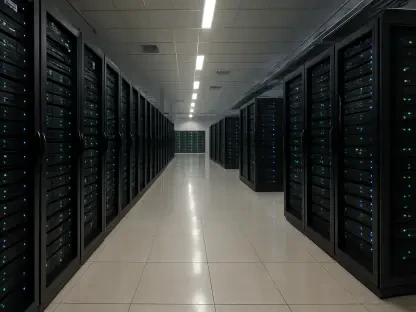

The smoke rising from hyperscale facilities in the Gulf has shattered the long-held illusion that the digital cloud exists in a separate, untouchable vacuum. For years, the general public and many policy experts viewed data centers as nothing more than glorified industrial warehouses, hidden away in nondescript suburban parks or desert outskirts. However, the recent kinetic strikes on major server hubs in the United Arab Emirates and Bahrain have fundamentally shifted the geopolitical calculus, proving that these buildings are now the most critical nodes of national power. As 2026 progresses, the transition from cyberattacks to physical munitions marks a new era where the “brains” of a nation—its identity records, financial ledgers, and military intelligence—are directly in the crosshairs. These sites are no longer secondary concerns but have become the primary targets for adversaries looking to achieve maximum disruption with minimal conventional forces by targeting the physical infrastructure of the digital age.
Strategic Resilience and Tactical Signaling
Engineering Survival: The Logic of Distributed Systems
The survival of critical services following the recent strikes in the Gulf reveals a profound shift in how digital resilience is conceptualized by modern engineers. While a traditional military bunker relies on reinforced concrete and deep subterranean construction to withstand an impact, hyperscale data centers utilize a method known as intelligent distribution. This architectural philosophy assumes that any single facility is inherently vulnerable and can be taken offline at any moment. By spreading computational workloads across multiple availability zones and ensuring that data is replicated in real-time across geographically diverse regions, cloud providers have created a system that can reroute traffic almost instantaneously. In the aftermath of the March strikes, although the physical structures suffered significant damage to cooling systems and power feeds, the majority of the digital services remained functional. This demonstrates that in a modern kinetic environment, the ability to absorb a blow and continue operating is a far more effective defense.
Furthermore, the engineering complexity of these facilities creates a unique challenge for attackers who are accustomed to destroying fixed assets. A data center is not merely a box of servers but a living ecosystem of power substations, fiber-optic runs, and sophisticated water-suppression systems that are all potential points of failure. However, the modular nature of contemporary hyperscale design allows for rapid isolation of damaged sectors without compromising the integrity of the entire network. This inherent flexibility means that while an adversary might successfully strike a physical building, the actual data and the processing power it represents simply migrate to another node in the network. For defense planners, this shift highlights that the future of infrastructure security lies not in building thicker walls, but in developing more sophisticated software-defined networking that can sense a physical breach and automate a global failover. This resilience is the byproduct of commercial necessity that has now become a military asset.
The Power of Strategic Degradation and Signaling
Modern conflict is increasingly defined by the concept of strategic degradation, where the objective is not to totally erase a system but to temporarily paralyze it to send a political message. Adversaries have recognized that they do not need to drop a massive ordnance to achieve a victory; a small, cheap drone strike on a cooling tower can cause a cascade of thermal shutdowns that takes a national logistics hub offline for forty-eight hours. This type of disruption carries immense signaling value, demonstrating that the enemy has the reach to touch the most sensitive parts of a nation’s digital backbone. Such strikes create a sense of vulnerability that ripples through the civilian population and the financial markets, causing economic dislocation that is wildly out of proportion to the physical cost of the attack. By focusing on these high-value targets, state actors can exert pressure on an opponent’s decision-making process without necessarily escalating to a state of total, conventional war.
The attractiveness of these sites as targets is further magnified as high-level artificial intelligence and large-language models become more integrated into military intelligence. When firms like Palantir or Anthropic deploy their reasoning engines for defense applications, the physical locations where those computations happen become magnets for kinetic attacks. An adversary understands that by damaging the local server farm, they are not just destroying hardware, but are effectively blinding the “eyes” and “ears” of the opposing military’s automated targeting systems. This creates a psychological theater of war where the reliability of a nation’s intelligence is directly tied to the physical security of its power cables and fiber-optic runs. As these computational facilities become more essential to daily survival, the incentive to target them only increases. This reality forces governments to reconsider the risk profile of their cloud migrations, as the very technology that provides a tactical edge also creates a visible and vulnerable target for a precise physical strike.
Redefining Security and Sovereignty
Operational Sovereignty: A New Benchmark for Stability
The traditional definition of cloud sovereignty has long centered on legal jurisdictions and the question of which court has the right to subpoena data. However, the current landscape of kinetic warfare has shifted the focus toward operational sovereignty, which is the actual ability of a nation to keep its digital systems running during a physical siege. National self-reliance is a hollow concept if a country’s only domestic data center is a single point of failure that can be disabled by a single explosive. True sovereignty in 2026 is defined by a hybrid approach that combines domestic infrastructure with deeply integrated allied networks. By ensuring that critical workloads can fail over to a trusted partner’s region across a border, a nation maintains its operational continuity even when its own soil is under attack. This shift requires a diplomatic and technical framework where nations share the burden of digital defense, recognizing that a strike on one node is a strike on the collective stability of the entire digital alliance.
This new benchmark for stability necessitates a move away from isolated, “air-gapped” national clouds toward a more interconnected and resilient model. While the desire to keep data within one’s own borders is understandable from a privacy perspective, it creates a dangerous vulnerability in the face of modern drone and missile technology. Governments are beginning to realize that the billions of dollars spent by commercial tech giants on global redundancy were intended to protect profit margins, but they have inadvertently built the most survivable military-grade networks in existence. To achieve true operational sovereignty, states must leverage these commercial footprints while simultaneously developing the local expertise to manage their own critical nodes. The goal is to create a digital environment where the loss of any single physical site is an inconvenience rather than a catastrophe. This requires a rethink of procurement strategies, moving from a focus on cost-efficiency to a focus on geographic diversity and rapid service reconstitution.
Advancing Resilient Infrastructure for a Volatile Future
The global pattern of conflict, most notably the persistent physical targeting of digital infrastructure seen in the conflict in Ukraine, has established a clear precedent for the future of warfare. Targeting folders for modern militaries and non-state actors now include detailed maps of data center campuses alongside traditional objectives like power plants and command centers. This evolution means that the cloud must no longer be treated as a simple IT procurement issue by defense ministries; it must be elevated to a core strategic priority. Moving forward, the most successful nations will be those that integrate their civilian and military infrastructure defenses into a single, cohesive strategy. This involves not only the hardening of physical perimeters but also the implementation of advanced sensory networks that can detect and respond to kinetic threats in real-time. The era of treating the data center as a passive warehouse ended when the first drone impacted a server hub, and the lessons learned from these strikes are already shaping the next decade.
In the final analysis, the defense community successfully pivoted toward a model where resilience was prioritized over static fortification. Planners recognized that while they could not prevent every strike, they could ensure that no single strike would lead to a systemic collapse. This transition required a fundamental cultural shift, moving away from the idea of the “invincible” bunker toward the reality of the “survivable” network. By embracing geographic distribution and fostering deep technical alliances with both commercial providers and international partners, governments established a more robust digital backbone. The focus shifted to developing rapid repair capabilities and automated failover protocols that minimized the signaling value of an adversary’s attack. Ultimately, the survival of modern states in the digital age was determined not by how well they hid their servers, but by how effectively they designed their systems to absorb and recover from the inevitable disruptions of physical warfare. This proactive stance ensured that the digital foundations of society remained firm despite the changing nature of kinetic threats.