
From Afterthought to Asset: The Dawn of a New Energy Paradigm
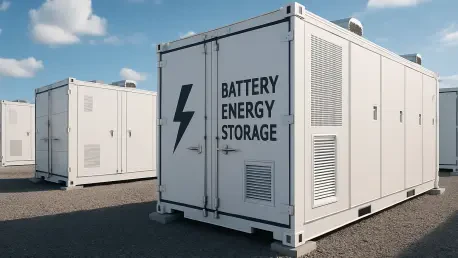
The digital backbone of the global economy, the data center, is undergoing a profound energy transformation. Once considered a peripheral component for emergency backup, the Battery Energy Storage System (BESS) is rapidly ascending to become a core, indispensable asset for modern data center operations. This shift is not a gradual evolution but a strategic pivot, driven by a perfect storm of grid limitations, extreme power densities from AI, escalating sustainability mandates, and compelling economic incentives. This article explores the multifaceted role of BESS, analyzing how it has transitioned from a passive safety net into an active, multi-functional pillar of any future-ready energy strategy, essential for securing a data center’s very license to operate.
The Evolution from Legacy Backup to Intelligent Energy Hubs
For decades, the data center industry’s energy strategy was defined by a simple, binary goal: uninterrupted uptime. This was overwhelmingly achieved with diesel generators and Uninterruptible Power Supply (UPS) systems, a reliable but carbon-intensive and operationally limited combination. Their primary function was to bridge the gap during a power outage, ensuring the coveted “five 9s” of availability. However, the landscape was fundamentally reshaped by a staggering reduction in battery costs, which have fallen by over 90% since 2010. This economic shift unlocked new possibilities, transforming the conversation from mere resilience to intelligent energy management, grid interactivity, and deep decarbonization, positioning BESS as the central technology enabling this new era.
The Convergence of Forces Mandating BESS Adoption
The Four Pillars Driving BESS Integration
The case for BESS is no longer theoretical; it is being built on four powerful and interconnected drivers. Industry analysts identify the mitigation of grid limitations as the most critical factor. In many developed regions, utility infrastructure is aging and capacity-constrained, leading to years-long delays in securing the massive power connections required for new data centers. BESS acts as a vital buffer, enabling facilities to operate and expand despite these grid shortfalls. Secondly, BESS offers an enhanced form of resilience, providing instantaneous, clean backup power far more elegantly than diesel generators. This is complemented by significant cost optimization opportunities through “peak shaving,” where facilities store cheaper off-peak energy for use during expensive peak hours. Finally, mounting sustainability pressure makes BESS indispensable for integrating variable renewables like solar and wind, smoothing their intermittency to provide reliable, green power.
Beyond Backup: Unlocking New Operational and Revenue Models
The applications for BESS within a data center have expanded far beyond simple outage protection. A leading trend is the creation of hybrid backup systems that replace or augment traditional diesel generators. Major technology companies are demonstrating this potential, with facilities using large-scale battery systems not only for backup but to operate as carbon-free assets during grid events. Furthermore, modern BESS installations are becoming grid-interactive, generating new revenue streams. By providing ancillary services like frequency response back to the utility, a data center can help stabilize the grid and receive payment for it. This is particularly valuable in regions with high renewable penetration, transforming the data center from a passive energy consumer into a dynamic grid asset.
Navigating the Complexities of AI, Economics, and Technology
The rise of Artificial Intelligence has introduced an unprecedented power challenge: massive, millisecond-level power spikes as AI clusters perform intensive training tasks. Rack densities can now surge past 100kW, creating transients that can destabilize a grid connection. In this context, BESS functions as a critical “shock absorber,” smoothing these volatile loads. However, the technology has its limitations. Most commercially available lithium-ion systems offer two to eight hours of storage, effective for short-term energy shifting but insufficient for prolonged outages. Industry analysis suggests that providing a full 48 hours of backup to meet the “five 9s” guarantee with batteries alone remains prohibitively expensive. For mission-critical applications, traditional backup sources are not yet obsolete, highlighting the need for a hybrid energy strategy.
The Horizon Ahead: Innovations and Market Expansion
The future of BESS in data centers is characterized by rapid technological evolution and global market growth. While the United States, China, and Europe currently lead adoption, experts expect significant future growth in the Middle East, South America, and Asia, with India poised to become a major market. Technologically, the industry is watching the development of alternative chemistries. Sodium-ion batteries are emerging as a challenger to lithium-ion, especially if lithium prices rise, while longer-duration technologies like vanadium flow batteries are being explored for niche applications. The most significant trend, however, is integrating BESS with intelligent simulation and digital twin technologies, allowing operators to model, predict, and optimize their energy usage, grid interaction, and resilience strategies with unprecedented precision.
Strategic Recommendations for the Modern Data Center
The key takeaway for IT and infrastructure leaders is that BESS is no longer an optional “green” initiative but a foundational investment for competitive and operational viability. The analysis points to a non-negotiable need to integrate BESS into all future data center designs and existing facility retrofits. Leaders should evaluate BESS not just as a replacement for diesel generators but as a multi-purpose asset capable of mitigating grid risk, managing volatile AI workloads, reducing operational costs, and generating new revenue. The primary recommendation is to develop a holistic energy strategy that views BESS as the central hub connecting facility loads, on-site renewables, and the wider utility grid. Proactive investment and planning today will be the critical differentiator in a power-constrained future.
Why BESS Is the Bedrock of Future-Ready Infrastructure
In conclusion, the role of the Battery Energy Storage System was irrevocably transformed. It moved from the edge of the data center to its very core, driven by the realities of grid constraints, the voracious power demands of AI, and the global imperative to decarbonize. BESS became the enabling technology that solved for resilience, cost, and sustainability simultaneously. For data center operators, investing in BESS was no longer a question of if, but of how quickly and strategically it could be deployed. It became the key to securing a license to operate and the fundamental building block for a resilient, intelligent, and sustainable digital future.