
The global Data Center Infrastructure Market is poised for a period of unprecedented expansion, with projections showing its value skyrocketing from $76.8 billion in 2020 to an astounding $496.8 billion by 2035, underscoring the critical role this sector plays in the modern world. This monumental growth is not merely a reflection of increased demand but a fundamental indicator of the worldwide digital transformation that is reshaping industries, economies, and daily life. As businesses and consumers generate data at an exponential rate, the need for robust, scalable, and efficient infrastructure to process, store, and manage this information has become the central pillar of the global digital economy. This forecast signals a long-term, sustained investment cycle that will cement data center infrastructure as the indispensable foundation for innovation and societal progress for the next decade and beyond. The intricate web of servers, storage, networking, and power systems forms the bedrock upon which cloud computing, artificial intelligence, and the Internet of Things are built, making its evolution a key barometer of technological advancement.
Unpacking the Near Half-Trillion Dollar Market
What Constitutes Data Center Infrastructure
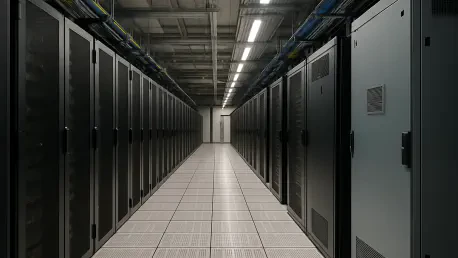
At its core, data center infrastructure represents the complete suite of physical and software-based components that are essential for the operation of any data processing facility, from a small enterprise server room to a sprawling hyperscale campus. This ecosystem is built upon a foundation of IT hardware, including high-performance servers that handle computational tasks, sophisticated storage devices responsible for data retention and retrieval, and the critical networking equipment—such as switches, routers, and firewalls—that facilitates the seamless transmission of data both within the data center and out to the wider world. However, this definition extends far beyond the racks of computer hardware. It also encompasses the vital facility-level components that ensure reliability and efficiency. This includes advanced cooling systems, ranging from traditional air-based solutions to more modern liquid cooling technologies, which are designed to manage the immense heat loads generated by high-density computing. Furthermore, it involves a resilient power architecture, featuring uninterruptible power supplies (UPS) and power distribution units (PDUs), that guarantees a constant and clean supply of electricity. Overseeing this entire complex system is a layer of specialized software, most notably Data Center Infrastructure Management (DCIM) tools, which provide operators with real-time monitoring, analytics, and control over the health, performance, and energy consumption of the entire ecosystem.
The Financial Trajectory
The financial outlook for the data center infrastructure market illustrates a period of sustained and accelerated growth, painting a clear picture of a sector in high demand. The market, valued at a significant $76.8 billion in 2020, experienced a period of rapid expansion, nearly doubling to reach $159.3 billion by 2025. This initial surge was significantly influenced by the global digital acceleration spurred by the COVID-19 pandemic, which forced a massive and rapid shift toward remote work, online commerce, and digital services, placing unprecedented strain on existing digital infrastructure and catalyzing new investments. Looking ahead, this momentum is not expected to wane. The market is forecast to continue its powerful upward climb, expanding at a robust Compound Annual Growth Rate (CAGR) of 11.96% over the entire 2020-2035 forecast period. This steady rate of growth is projected to culminate in a staggering market valuation of $496.8 billion by 2035. This represents a more than six-fold increase in just fifteen years, transforming the sector into a near half-trillion-dollar industry and highlighting its central importance to the continued functioning and growth of the global economy in an increasingly digital-first world.
The Engines of Unprecedented Growth
The Cloud and Edge Revolution
One of the most significant catalysts propelling the data center infrastructure market forward is the ongoing and widespread migration of enterprise workloads to cloud computing environments. Businesses across all sectors are increasingly leveraging the cloud for its inherent benefits, including enhanced scalability, significant cost efficiencies, and greater operational flexibility, which in turn fuels a relentless demand for the advanced hardware and software solutions that power the large, centralized data centers operated by major cloud service providers. This trend is not confined to centralized facilities; it is being complemented by the strategic emergence of edge data centers. These are smaller, decentralized facilities strategically located closer to end-users and data sources. Their primary purpose is to support a new class of latency-sensitive applications that require near-instantaneous processing, such as autonomous vehicles, augmented and virtual reality (AR/VR), and smart city deployments. The rise of the edge effectively expands the footprint of infrastructure demand, creating a distributed network of computing resources that extends far beyond traditional centralized locations.
The development and expansion of hyperscale data centers—massive facilities characterized by their immense server capacity and high degrees of automation—act as a powerful force multiplier within the market. These facilities, primarily built and operated by global technology giants and leading cloud service providers, require extremely sophisticated infrastructure solutions that can guarantee exceptional reliability, scalability, and fault tolerance at an enormous scale. The sheer concentration of computing resources within these hyperscale facilities accelerates the demand for specific types of components and design philosophies, including modular data center designs for rapid deployment, high-density server racks to maximize physical space, and advanced software-defined infrastructure management tools for streamlined operations. This relentless pursuit of scale and efficiency by the hyperscale operators sets the technological pace for the entire industry, driving innovation and creating a significant and concentrated source of demand for cutting-edge data center infrastructure components and solutions.
Data-Intensive Workloads and Sustainability Mandates
The explosive growth of data generated by next-generation applications is placing unprecedented demands on computing infrastructure, forcing a continuous evolution in data center design and capabilities. The proliferation of Artificial Intelligence (AI), big data analytics, and the Internet of Things (IoT) has created immense data streams that require powerful processing capabilities and highly efficient storage solutions. These demanding workloads often necessitate the integration of high-performance computing (HPC) resources, including specialized hardware like Graphics Processing Units (GPUs) and Field-Programmable Gate Arrays (FPGAs), to handle complex calculations and parallel processing tasks. Consequently, this push toward modernization directly propels investment in all facets of cutting-edge infrastructure. This includes the deployment of more robust and optimized cooling systems capable of managing the high-density heat loads of powerful processors and the implementation of more efficient power delivery systems that can support the high-power requirements of these advanced technologies without compromising reliability.
In parallel with the performance demands, a growing focus on sustainability and energy efficiency has emerged as a pivotal factor shaping infrastructure investment decisions. As the collective energy consumption of the world’s data centers continues to escalate, operators are facing increasing pressure from regulators, customers, and stakeholders to reduce their carbon footprints and lower operational expenditures. This has led to the widespread adoption of green technologies and innovative design principles. Key advancements in this area include the shift toward advanced liquid cooling solutions, which are significantly more energy-efficient than traditional air cooling methods, the integration of renewable energy sources such as solar and wind power directly into data center operations, and the deployment of intelligent energy management systems that use AI to optimize power usage in real time. This trend is further incentivized by tightening environmental regulations and corporate sustainability commitments, fostering a new wave of innovation in eco-friendly infrastructure design and operation that prioritizes both performance and environmental responsibility.
A Regional Deep Dive into the Global Market
Established Leaders and Emerging Powerhouses
The global data center infrastructure market exhibits distinct regional dynamics, with North America currently holding a commanding share. Valued at $29.6 billion in 2020, this region is projected to grow to an impressive $185.2 billion by 2035, maintaining a strong CAGR of 11.89%. This leadership position is firmly attributed to the heavy concentration of the world’s leading hyperscale cloud providers, a highly advanced and mature IT infrastructure, and a well-established culture of early adoption for emerging technologies. The market’s strength is further reinforced by stringent regulatory frameworks promoting data security and privacy, which mandate continuous infrastructure upgrades to meet compliance standards. Substantial and ongoing investments in expanding data center capacity, including the strategic rollout of edge facilities across the United States and Canada, coupled with a rising enterprise need for disaster recovery and hybrid cloud solutions, continue to stimulate robust regional demand and solidify North America’s dominance.
The European market is also on a significant growth trajectory, forecast to expand from $21.5 billion in 2020 to $122.2 billion by 2035. This growth is propelled by rapid digitization initiatives spearheaded by the European Union, increasingly stringent data localization requirements such as the General Data Protection Regulation (GDPR), and rising cloud service adoption among both private enterprises and public sector organizations. A defining characteristic of the European market is its profound emphasis on sustainability. Europe stands as a global leader in green data center design and operations, with governments and private stakeholders alike prioritizing the use of renewable energy, high energy efficiency standards, and reduced carbon emissions. This focus necessitates significant and continuous investment in modern, sustainable infrastructure, making it a key differentiator for the region. In contrast, the Asia Pacific (APAC) region has been identified as the fastest-growing market globally. It is expected to surge from $18.3 billion in 2020 to a massive $149.8 billion by 2035, driven by an impressive CAGR of 13.20%. This dynamic growth is fueled by rapid and widespread digital transformation in key economies such as China, India, Japan, and Australia, where the proliferation of cloud services, the expansion of mobile internet access, and the phenomenal growth of e-commerce are primary drivers of infrastructure demand.
The Rise of New Digital Frontiers
Beyond the established markets, a new wave of growth is surging across emerging economies, particularly in Latin America and the Middle East, which are experiencing rapid digitalization and industrialization. This expansion is stimulated by a confluence of factors, including rising internet penetration that is bringing millions of new users online, increased cloud adoption by small and medium enterprises (SMEs) seeking to compete on a global scale, and numerous government-led digital initiatives aimed at modernizing public services and fostering economic growth. These regions are quickly becoming fertile ground for new data center infrastructure investments as local and international players race to build out the capacity needed to support these burgeoning digital economies. The development in these areas is not merely about catching up; it represents the creation of new, vibrant digital hubs that will play an increasingly important role in the global data landscape, driving demand for a full spectrum of infrastructure solutions from core to edge.
A powerful, politically-driven catalyst further accelerating the geographic expansion of data centers is the growing global focus on data sovereignty. This principle, increasingly enshrined in national laws, requires that the data of a country’s citizens be stored and processed within its own borders. This trend is compelling both global cloud providers and local enterprises to construct new, in-country data center facilities to meet stringent compliance requirements and avoid significant legal and financial penalties. The push for data sovereignty is fundamentally reshaping data center deployment strategies, shifting from a model of a few massive, centralized global hubs to a more distributed network of national and regional facilities. This not only supports national economic growth objectives by fostering local tech industries but also directly fuels demand for new infrastructure investments in regions that were previously underserved, creating a more resilient and geographically diverse global network of data centers.
The Indispensable Digital Foundation
The analysis concluded that the Data Center Infrastructure Market was set on a clear and robust long-term growth trajectory, positioned to expand more than six-fold between 2020 and 2035. The investigation found that this sustained demand was not reliant on any single factor but was instead supported by a diverse and powerful set of interconnected drivers. These included the macro-trends of global digital transformation and the data explosion, which were coupled with specific technological advancements in cloud computing, edge networks, artificial intelligence, and the Internet of Things. The regional dynamics revealed North America as a mature and substantial market, Europe as a clear leader in sustainable operational practices, and the Asia Pacific region as the primary engine of future global growth. It became evident that the market’s evolution would be increasingly shaped by the imperatives of high-performance computing to handle complex workloads, the non-negotiable requirement for sustainability to mitigate environmental impact, and the strategic expansion into new geographic frontiers to meet demands for data sovereignty and local processing. Ultimately, the global Data Center Infrastructure Market was projected to become a nearly half-trillion-dollar industry, cementing its role as the indispensable foundation of the worldwide digital economy.