
The intricate process of migrating sensitive government operations to the cloud presents a formidable challenge, demanding a delicate balance between rapid modernization and uncompromising security. To address this complex landscape, the Defense Information Systems Agency (DISA) has introduced Olympus, a sophisticated cloud management platform designed to significantly streamline and secure the cloud adoption journey for Department of War agencies. This new initiative serves as a crucial enabler, offering a standardized and managed pathway for defense entities to leverage the power of commercial cloud environments while maintaining stringent security and compliance postures. By abstracting away much of the underlying infrastructural complexity, Olympus allows agencies to pivot their resources from foundational setup to the development and deployment of mission-critical applications, thereby accelerating the broader digital transformation goals of the department.
A Strategic Approach to Cloud Modernization
Streamlining Adoption for Mission Focus
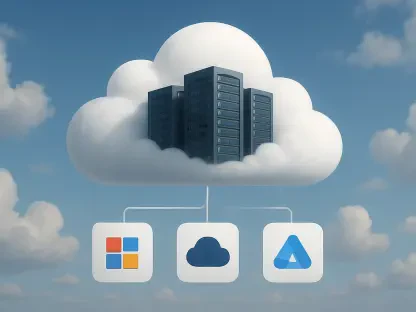
The primary objective of the Olympus platform is to dramatically lower the barrier to entry for defense agencies embarking on their cloud migration journey. Specifically engineered for Joint Warfighting Cloud Capability (JWCC) contract holders operating on Microsoft Azure and Amazon Web Services, Olympus provides a robust, managed hosting foundation. This approach is particularly beneficial for organizations in the early stages of their cloud transition, as it offloads the immense burden of building and maintaining a secure, compliant infrastructure from the ground up. Instead of dedicating extensive time and specialized personnel to configuring networks, access points, and security protocols, agencies can leverage the pre-configured environment provided by Olympus. This allows them to redirect their focus and resources toward what matters most: their core mission applications. By simplifying the operational overhead associated with cloud infrastructure, the platform acts as a catalyst for innovation, enabling faster development cycles and more agile deployment of capabilities essential for modern defense operations. The result is a more efficient and effective adoption of cloud technologies across the Department of War.
Integrating Security and Compliance from the Ground Up
A cornerstone of the Olympus platform is its deeply integrated security and governance framework, which is meticulously designed to meet the rigorous demands of the defense sector. The platform arrives with pre-existing security authorizations, a critical feature that drastically shortens deployment timelines by alleviating much of the compliance burden that typically falls on individual agencies. This “security-by-design” approach ensures that agencies are operating within a compliant environment from day one. Olympus incorporates a suite of built-in security features tailored for government use, including essential cloud access point (CAP) and internet access point (IAP) capabilities. Furthermore, it integrates zero trust principles, a modern security model that assumes no implicit trust and continually validates every stage of digital interaction. By providing these common cloud services and security controls as part of a unified package, Olympus establishes a standardized, defensible architecture that reduces the risk of misconfigurations and enhances the overall security posture of the Department of War’s cloud presence, ensuring data and operations remain protected against sophisticated threats.
Flexible Deployment and Future Prospects
Tailored Models for Diverse Agency Needs
Recognizing that Department of War agencies possess varying levels of technical maturity and unique operational requirements, DISA has structured Olympus with two distinct deployment models to ensure maximum flexibility. The first option is a self-hosted model, which is ideal for agencies that have the internal expertise and desire to manage their own cloud environment. In this scenario, the agency retains control over its infrastructure while still benefiting from Olympus’s foundational connectivity, security services, and streamlined access to the cloud. In contrast, the second option offers a fully managed model. Under this arrangement, the dedicated Olympus team assumes complete responsibility for all infrastructure operations, from provisioning and maintenance to security monitoring and compliance management. This turn-key solution allows agencies with limited cloud expertise or resources to fully leverage the benefits of the cloud without the operational overhead. This dual-model approach ensures that Olympus can accommodate a wide spectrum of needs, empowering every agency to choose the path that best aligns with its mission, budget, and technical capabilities.
An Evolving Ecosystem of Capabilities
The introduction of Olympus signaled a strategic advancement in the Department of War’s cloud integration efforts, providing a standardized and secure platform that simplified the complexities of digital modernization. Its architecture, with built-in security authorizations and flexible deployment models, offered a clear path for agencies to accelerate their transition to the cloud while maintaining rigorous compliance. By providing both self-hosted and fully managed options, DISA ensured that organizations at all stages of technical maturity could benefit from a streamlined and secure cloud foundation. The platform was designed not as an isolated tool but as a foundational component within a larger ecosystem, capable of integrating with other key capabilities like Vulcan DevSecOps to support comprehensive development pipelines. The establishment of the J-9 Customer Success Team as the primary contact for JWCC customers on Azure and AWS further demonstrated a commitment to providing robust support and facilitating a smoother adoption process. This comprehensive approach positioned Olympus as a critical enabler for enhancing operational agility and technological superiority across the department.