The intersection of human productivity and advanced machine intelligence has reached a critical juncture where the traditional boundaries of the workspace are being rewritten by rapid technological acceleration. At the recent Imagine event in New York, the industry witnessed a significant shift as HP outlined a fundamental transformation for the eighty-year-old company, moving away from simple hardware manufacturing toward a comprehensive ecosystem strategy. This evolution is driven by the compounding feedback loop between artificial intelligence and high-performance computing, which is currently altering how professional lives and careers are structured on a global scale. By framing technology as a cultural catalyst rather than a standalone product, the organization is leveraging decades of customer trust to navigate a landscape where digital tools must be as intuitive as they are powerful. This strategic pivot serves as a response to an era where the speed of innovation often outpaces the ability of workers to adapt, necessitating a more integrated approach to design.
Reimagining the Corporate Relationship with Technology
Cultivating Trust: Why Design Philosophy Matters
The core of this transformation lies in the ambition to become a trusted partner for organizations that are currently struggling to manage the complexities of a fragmented hybrid work environment. Rather than focusing solely on specifications, the current strategy emphasizes the emotional and psychological connection between a worker and their equipment. The decision to pivot toward a service-oriented model reflects an understanding that technology should act as a bridge rather than a barrier to productivity. This shift is particularly relevant as society stands at a defining crossroads, where the reliance on digital infrastructure is absolute. By prioritizing the user experience, the company seeks to mitigate the fatigue associated with constant software updates and hardware limitations. The objective is to create a seamless flow where the hardware anticipates the needs of the professional, allowing for deep focus in a world characterized by constant interruption and digital noise.
Building on this foundation of trust requires a deep dive into the empirical data surrounding employee satisfaction and the modern work-life balance. The most recent Work Relationship Index indicates a sobering reality: only twenty percent of employees report having a healthy relationship with their work, a statistic largely attributed to technical disruptions that stifle creative output. These disruptions are not merely minor inconveniences; they represent a significant drain on organizational efficiency and individual fulfillment. When tools fail to perform or require excessive manual configuration, the resulting friction erodes the sense of agency that workers need to thrive. Consequently, the mandate for tech providers has shifted from delivering raw power to ensuring that power is accessible and reliable. Addressing these systemic issues involves a radical redesign of how hardware and software communicate, ensuring that every interaction adds value rather than frustration to the workday.
Empowering Professionals: Moving from Tools to Collaborators
The transition of artificial intelligence from an experimental novelty to a functional collaborator represents the most significant change in professional computing in recent history. Within the enterprise sector, AI is now scaling to move individuals faster from the initial spark of an idea to actionable insights that can be shared across teams. This is not about replacing human creativity but about augmenting it through intelligent layers that handle the repetitive and data-heavy aspects of modern workflows. By integrating these capabilities directly into the local environment, the focus shifts toward localized processing that ensures high-speed responses and enhanced privacy. This collaborative model allows professionals to spend less time on administrative overhead and more time on the strategic thinking that defines their roles. The integration of such technology into daily routines marks the end of the era where AI was a separate entity, signaling its arrival as a core component of work life.
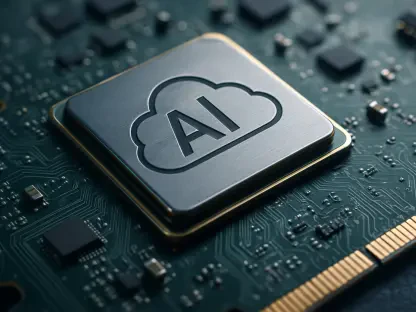
Moreover, the emphasis on AI at the edge is a strategic move to improve device security while simultaneously lowering the operational friction inherent in modern tasks. Local processing reduces the need for constant cloud connectivity, which not only speeds up the user experience but also provides a robust defense against data breaches during transmission. This approach addresses the increasing demand for high-performance computing that does not sacrifice portability or energy efficiency. As organizations look to 2027 and beyond, the ability to process complex algorithms on a laptop without significant battery drain will become a baseline requirement. The current trajectory suggests that the most successful technological implementations will be those that remain invisible to the user, providing a silent layer of support that enhances every keystroke and video call. This seamless integration ensures that the toolset becomes an extension of the professional, enabling a level of productivity that was previously unattainable.
Engineering Next-Generation Infrastructure for the Hybrid Era
Seamless Connectivity: The Role of Intelligent Ecosystems
To address the physical and digital gaps in the hybrid model, the introduction of sophisticated intelligence layers has become necessary to orchestrate tasks across various devices. A standout innovation in this space is HP IQ, a connectivity layer designed to link AI-equipped PCs and meeting spaces through proximity-based sensors. This technology eliminates the traditional setup time associated with modern meetings, allowing devices to recognize one another and synchronize settings automatically as the user enters a room. Such advancements represent a departure from the manual configuration of the past, moving toward an environment where the workspace adapts to the worker. By streamlining these interactions, organizations can recover thousands of lost hours previously spent on troubleshooting audio-visual connections. This level of integration is essential for maintaining the momentum of collaborative projects when team members are moving between home offices and central hubs.
In addition to software integration, the latest mobile workstations, such as the ZBook X and ZBook 8 series, are engineered to meet the demands of professionals who require desktop-level power in a mobile form factor. These devices prioritize extended battery life and thermal management, ensuring that heavy compute tasks do not lead to performance throttling or hardware failure during critical moments. The design philosophy behind these workstations focuses on the reality of the modern professional who may need to render complex 3D models or run large datasets from a remote location. High-resolution displays and ergonomic keyboards are paired with advanced internal architectures to provide a comprehensive solution for the mobile workforce. This commitment to portability without compromise reflects the broader industry trend of decentralizing the office. As professionals continue to demand flexibility, the hardware supporting them must be robust enough to handle any environment while remaining light enough for daily travel.
Advanced Protection: Securing High-Performance Environments
As the sophistication of cyber threats increases, the focus on security has moved from software patches to hardware-level protection that can withstand physical and digital incursions. The launch of HP TPM Guard represents a unique advancement in this field, specifically designed to combat physical bus attacks that target the communication lines between the processor and security chips. This level of protection is vital for industries dealing with sensitive intellectual property or government-level data, where a physical breach could be catastrophic. By building security into the silicon and the physical architecture of the motherboard, the company provides a layer of defense that is virtually impossible to bypass through traditional hacking methods. This hardware-centric approach to safety ensures that even if a device is physically stolen, the data remains encrypted and inaccessible. This peace of mind is a critical component for organizations managing a distributed and mobile fleet of high-end devices.
For those requiring massive computational throughput, the Z8 Fury workstation and the industry-first Max Side Panel chassis expander offer a solution for scaling performance without sacrificing serviceability. This expander allows for the installation of larger, more powerful graphics cards while maintaining optimal thermal performance through enhanced airflow channels. Such innovations are particularly important for data scientists and creative professionals who push their hardware to the limit on a daily basis. Parallel to these high-end workstations, the modernization of office functions continues with the LaserJet Pro and Enterprise series, which are now tailored for the security demands of hybrid work environments. These printers are no longer just peripherals; they are intelligent nodes on the network, equipped with their own security protocols to prevent them from becoming entry points for attackers. Collectively, these innovations demonstrate a unified strategy to streamline the user experience through deep personalization and hardware integrity.
Implementing New Standards for Organizational Productivity
The transition toward an AI-integrated workspace required a fundamental reassessment of how hardware and software interacted within existing corporate infrastructures. Organizations that successfully adopted these new standards focused on the reduction of technical friction as a primary metric for employee satisfaction. Leaders in the technology sector observed that providing localized intelligence reduced the dependency on centralized cloud servers, which in turn decreased latency for time-sensitive projects. This shift encouraged a more decentralized approach to project management, where individual workstations possessed the necessary power to handle complex analytical tasks independently. The deployment of hardware-level security measures also simplified the roles of IT departments, allowing them to focus on strategic growth rather than constant maintenance and threat mitigation. By the end of the implementation phase, the integration of proximity-based connectivity and intelligent layers proved to be a decisive factor in maintaining high levels of engagement.
Future considerations for IT procurement should prioritize the scalability of AI capabilities at the edge to ensure long-term relevance in a rapidly changing market. Organizations were encouraged to evaluate their current fleets not just on raw speed, but on their ability to facilitate seamless collaboration between human operators and machine assistants. The insights gained from the Work Relationship Index highlighted the necessity of choosing tools that actively contribute to worker well-being by removing repetitive burdens. Moving forward, the adoption of modular hardware, such as chassis expanders and high-performance mobile units, will allow companies to upgrade specific components without replacing entire systems. This sustainable approach to infrastructure management will be essential for balancing technological advancement with fiscal responsibility. The focus remained on creating an environment where technology served as an invisible but powerful ally, ensuring that the human element remained at the center of the productive process.