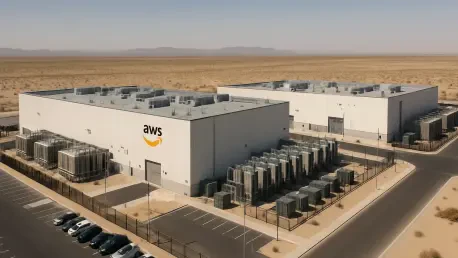

The digital facade of the modern global economy faced a brutal physical reality this week as kinetic military strikes directly impacted the core infrastructure of the world’s largest cloud provider. Missile strikes attributed to the Islamic Revolutionary Guard Corps have successfully targeted and severely damaged Amazon Web Services data centers located in critical hubs across Bahrain and Dubai, creating an unprecedented regional blackout. These strikes have forced multiple availability zones into a technical status known as hard down, a term that signals a complete and total cessation of power, connectivity, and server functionality. While Amazon Web Services has immediately initiated massive efforts to migrate essential customer workloads to alternative global regions, the company has explicitly warned its users that the standard levels of resilience and uptime they expect cannot be guaranteed under these wartime conditions. No definitive timeline for a full recovery has been established as site access remains restricted.
Escalating Risks to Regional Digital Infrastructure
The Physical Vulnerability of Centralized Cloud Networks
This sudden and calculated destruction of high-tier data centers highlights a dangerous trend where physical technology infrastructure is now treated as a primary target in complex geopolitical conflicts. The disruption is not isolated to Amazon Web Services, as the targeted zones in Bahrain and Dubai serve as the backbone for numerous international financial systems and essential enterprise software suites that operate across the entire hemisphere. Reports have indicated that other major providers, including Microsoft and Oracle, are currently identified as potential targets, with at least one Oracle facility reportedly suffering a strike during the initial wave of the offensive. The concentration of such vital digital assets in a geographically sensitive and volatile area creates a single point of failure for the global internet backbone. This centralization has turned what was once considered a safe digital haven into a high-risk liability for multinational corporations that rely on these localized zones for low-latency operations.
Supply Chain Implications and Resilience Strategies
Beyond the immediate loss of connectivity, the ongoing conflict has introduced severe long-term risks to the global technology supply chain and the future of regional infrastructure. The Middle East serves as a vital hub for the production and export of helium, aluminum, and liquefied natural gas, all of which are indispensable for semiconductor manufacturing and the cooling requirements of modern hyper-scale facilities. Persistent instability in these corridors threatened to create hardware shortages and significant delays in infrastructure expansion projects planned for the remainder of the decade. Businesses were forced to realize that localized redundancy was no longer sufficient when faced with regional physical destruction. Consequently, forward-thinking organizations moved toward aggressive multi-region deployment strategies that prioritized physical distance over mere digital failovers. These events ultimately provided a harsh lesson in the necessity of integrating geopolitical risk assessments into every layer of a modern enterprise’s digital architecture.