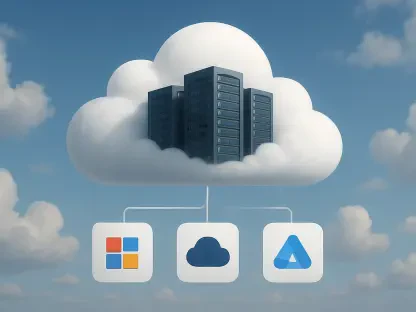

The strategic decision to embrace multi-cloud architectures, once championed as the ultimate path to enterprise agility and vendor independence, has given rise to an unforeseen operational quagmire that now plagues IT departments globally. Organizations that pursued this path to leverage best-in-class services and optimize costs have instead found themselves entangled in a web of disparate tools, conflicting workflows, and fragmented governance. This “multi-cloud sprawl” represents a critical disconnect between strategic intent and the practical realities of day-to-day management, breeding inefficiency and introducing hidden costs that silently undermine the very advantages the strategy was meant to provide. In response to this pervasive industry challenge, a new class of solutions has emerged, exemplified by companies like Zop.dev. These innovators are proposing a radical simplification through a unified management platform, aiming to restore order and deliver on the original promise of multi-cloud. The central question now facing enterprise leaders is whether this approach offers a genuine cure for the chaos or merely introduces another layer of complexity to an already overburdened system.
The High Cost of Multi-Cloud Complexity
The Paradox of Choice
The widespread adoption of multi-cloud environments, now a standard for over 85 percent of large enterprises, stems from a sound strategic rationale: the desire to harness the unique strengths of providers like Amazon Web Services (AWS), Microsoft Azure, and Google Cloud Platform (GCP). This approach promises resilience, prevents vendor lock-in, and allows teams to select the optimal service for each specific workload. However, this pursuit of choice has created a significant paradox. Instead of fostering agility, it has often resulted in a management nightmare characterized by operational friction and siloed expertise. IT departments are now saddled with the immense challenge of managing heterogeneous infrastructures using a patchwork of provider-native and third-party tools. This fragmentation leads to inconsistent security postures, duplicated engineering efforts, and a lack of centralized visibility, making it nearly impossible to maintain cohesive governance or a clear understanding of the overall technology estate.
This operational fragmentation places an immense burden on the very engineering and DevOps teams tasked with driving innovation. The cognitive overhead required to navigate multiple cloud consoles, APIs, and configuration languages is substantial, leading to frequent context-switching that hampers productivity and increases the likelihood of human error. Furthermore, the need for specialized skill sets for each cloud platform creates knowledge silos within the organization, making cross-functional collaboration difficult and increasing dependency on a small number of experts. This talent bottleneck not only inflates personnel costs but also acts as a drag on development velocity, as teams spend more time wrestling with infrastructure complexity and less time delivering business value. The “management nightmare” is not just a technical inconvenience; it is a direct impediment to the speed and agility that multi-cloud was originally intended to unlock, forcing a critical reevaluation of how these complex environments are managed.
The Hidden Financial Drain
The economic implications of multi-cloud complexity extend far beyond the direct costs of infrastructure consumption, creating a significant and often overlooked financial drain on the enterprise. One of the most substantial hidden expenses is the inflated personnel cost associated with maintaining separate, specialized teams for each cloud environment. This requirement for redundant expertise leads to higher recruitment and training budgets and perpetuates operational silos that inhibit efficiency. Moreover, the proliferation of distinct management tools and monitoring platforms for each cloud results in overlapping software licensing fees and duplicated administrative effort. These fragmented toolchains prevent organizations from achieving economies of scale and obscure the true total cost of ownership, making it exceedingly difficult for finance and IT leaders to conduct accurate budget forecasting or identify opportunities for optimization across their entire cloud portfolio.
Beyond the direct operational overhead, the fragmented nature of multi-cloud management significantly amplifies financial risk. Each disparate environment represents a potential point of failure, with the lack of a unified control plane increasing the likelihood of critical security misconfigurations, compliance violations, and performance degradations. A single misconfigured security group or an unpatched vulnerability in one cloud can expose the entire organization to a catastrophic data breach, leading to severe regulatory fines, legal liabilities, and lasting reputational damage. Similarly, failing to consistently apply compliance controls across all providers can jeopardize certifications for standards like GDPR or HIPAA, resulting in costly penalties and loss of customer trust. These risks represent a substantial, unbudgeted financial liability that grows in direct proportion to the complexity of the multi-cloud estate, turning a strategic asset into a potential balance sheet catastrophe.
A Unified Platform to the Rescue?
The “Single Pane of Glass” Philosophy
In direct response to this escalating chaos, Zop.dev has engineered a unified management platform centered on a philosophy of abstraction and consolidation. The core of this approach is the delivery of a “single pane of glass”—a cohesive interface designed to normalize and streamline common operational tasks across disparate cloud providers. By abstracting the underlying complexities of each cloud’s native tooling and APIs, the platform aims to drastically reduce the cognitive load on IT and DevOps teams. This allows them to execute essential functions such as resource provisioning, security policy implementation, and cost analysis using standardized, repeatable workflows, regardless of whether the target environment is AWS, Azure, or GCP. This consolidation is intended to break down the operational silos that plague multi-cloud organizations, fostering a more collaborative and efficient operational model where expertise can be shared rather than hoarded.
A crucial aspect of Zop.dev’s design philosophy is its commitment to striking a delicate balance between simplification and flexibility. While the primary goal is to provide a standardized layer for common management tasks, the platform is engineered to avoid becoming a restrictive “golden cage” that prevents teams from leveraging the unique, high-value services offered by individual cloud providers. It allows engineers to operate efficiently through its unified interface for 80 percent of their daily tasks while still providing a clear path to access provider-specific features and advanced configurations when a particular use case demands it. This hybrid approach recognizes that the value of multi-cloud lies in its diversity. By offering a common ground for governance and operations without sacrificing the power of native services, the platform seeks to provide the best of both worlds: the operational simplicity of a single cloud with the strategic flexibility of a multi-cloud architecture.
Core Technical Capabilities
Central to Zop.dev’s value proposition is its powerful automated policy enforcement mechanism, which serves as a crucial bridge between high-level governance objectives and on-the-ground technical implementation. This system allows security and compliance teams to define universal standards for resource tagging, access control, and network configurations in a platform-agnostic manner. The platform then automatically translates these abstract policies into the native, provider-specific code and configurations required for enforcement within each cloud environment. By automating this traditionally manual and error-prone process, the platform ensures that consistent security and compliance standards are applied uniformly across the entire multi-cloud footprint. This capability not only mitigates the significant risks associated with configuration drift and human error but also provides a verifiable audit trail, dramatically simplifying the process of demonstrating regulatory compliance.
The platform further enhances its operational value by integrating sophisticated cost optimization and observability functions into its unified framework. Its cost management engine continuously analyzes usage data and pricing models across all connected clouds, identifying idle resources, recommending rightsizing opportunities, and suggesting the most economical workload placements based on real-time dynamics. This provides finance and operations teams with actionable intelligence to control spiraling cloud spend. In parallel, its unified observability feature consolidates logs, metrics, and traces from disparate monitoring sources like AWS CloudWatch, Azure Monitor, and Google Cloud Operations into a single, correlated view. This holistic perspective streamlines troubleshooting and incident response, enabling teams to rapidly diagnose and remediate issues without having to manually piece together data from multiple, disconnected systems, thereby reducing mean time to resolution.
Navigating the Path to Adoption
The Competitive Gauntlet
Zop.dev is making its debut in an intensely competitive and mature market, where it must contend with a host of formidable opponents. The major cloud providers themselves offer a range of multi-cloud management tools, such as AWS Systems Manager, Azure Arc, and Google Anthos. While these solutions are powerful, they are often viewed with a degree of skepticism by enterprises wary of deepening their dependency on a single vendor, as these tools can carry an inherent bias toward their native platform. Beyond the hyperscalers, established independent software vendors like HashiCorp, with its widely adopted Terraform and Vault products, and VMware, with its extensive Aria portfolio, have already captured significant market share by providing platform-agnostic infrastructure management solutions. For Zop.dev to succeed, it must carve out a distinct niche and clearly articulate a compelling value proposition that resonates with its target customers.
The company’s go-to-market strategy appears to be focused on mid-market and enterprise customers who have moved beyond the initial cloud migration phase and are now grappling with the painful realities of multi-cloud operational complexity. This segment is actively seeking solutions, but reaching and converting these customers will require navigating long and intricate sales cycles. Enterprise purchasing decisions of this nature invariably involve a wide array of stakeholders, including IT operations, cybersecurity, finance, and application development teams, each with its own set of priorities and concerns. Zop.dev’s success will therefore depend on its ability to demonstrate tangible, quantifiable business outcomes—such as direct cost savings, improved developer productivity, and a reduced security risk profile—that appeal to this diverse group. Building a robust business case backed by strong customer testimonials and clear ROI metrics will be essential to overcoming inertia and winning deals in this crowded field.
The Security and Compliance Imperative
The introduction of any unified management platform inherently creates a new, high-value target for malicious actors. Because such a system requires elevated privileges and programmatic access across multiple cloud environments, it represents a centralized point of control. A compromise of the platform could grant an attacker the “keys to the kingdom,” enabling them to disrupt operations, exfiltrate sensitive data, or deploy malicious workloads across the entire multi-cloud infrastructure. Consequently, prospective customers will subject Zop.dev’s security architecture to intense scrutiny. The platform’s credential management practices, role-based access controls, encryption standards, and threat detection capabilities will be meticulously evaluated. Demonstrating a defense-in-depth security posture and achieving reputable third-party certifications will not be optional but a fundamental prerequisite for earning the trust of enterprise security teams.
While the platform presents a new security consideration, it also offers a compelling value proposition by helping to streamline and strengthen an organization’s overall compliance posture. In a fragmented multi-cloud environment, ensuring and proving that regulatory controls for standards like GDPR, HIPAA, or PCI DSS are consistently applied is a monumental task. Zop.dev’s automated policy enforcement can transform this challenge into a core strength. By providing a centralized mechanism to define, deploy, and continuously verify compliance controls across all clouds, the platform can drastically reduce the manual effort and associated risk of audit preparation. It can generate consolidated reports and provide a unified evidence trail, simplifying interactions with auditors and regulators. In this context, the platform evolved from a potential security risk into a powerful enabler of a robust, verifiable, and efficient enterprise-wide compliance program.
A New Chapter in Cloud Management
The emergence of platforms like Zop.dev signaled a pivotal maturation in the enterprise cloud journey. The initial, often chaotic, rush to adopt cloud services had given way to a more pragmatic and necessary focus on achieving sustainable, long-term operational excellence. The undeniable industry demand for a solution to multi-cloud complexity created a fertile ground for innovation, yet the path forward for any new entrant was fraught with challenges. Success depended on navigating a crowded market, validating robust security credentials, and, most importantly, delivering on the promise of simplification without inadvertently creating new layers of abstraction. The ultimate adoption of these unified platforms served as a bellwether for the future of enterprise IT, indicating whether organizations felt empowered to continue pursuing distributed, best-of-breed architectures or if they would retreat to simpler, single-vendor models to escape the persistent burden of operational overhead.