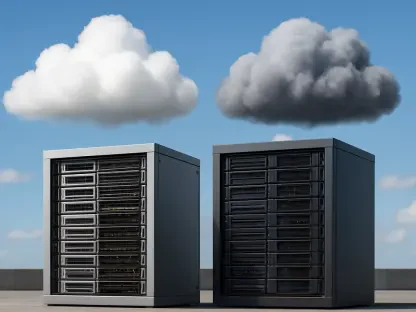

The rapid expansion of high-definition surveillance networks across modern urban and industrial landscapes has created an urgent need for infrastructure that can handle massive data loads without compromising on-site security or operational speed. As organizations grapple with the limitations of traditional hardware and the latency issues inherent in pure cloud environments, a new paradigm known as Managed On Site Servers, or MOSS, is emerging to bridge this critical gap. This model functions as a sophisticated hybrid, placing enterprise-grade hardware directly within a client’s facility while maintaining a service-oriented ownership structure that mirrors the flexibility of the cloud. By decentralizing the processing power and keeping it at the edge of the network, the MOSS framework allows for real-time video analytics and high-resolution recording that would otherwise be throttled by the bandwidth constraints of standard internet connections. This shift represents more than just a change in equipment placement; it is a fundamental redesign of how digital intelligence is integrated into physical security, ensuring that data remains accessible and actionable even in the most demanding environments.
Building on this structural shift, the MOSS model specifically addresses the increasing reliance on artificial intelligence and advanced forensic search tools within the security sector. These high-level applications require significant computational resources that often exceed the capabilities of basic network video recorders or standard cloud-based processing. By deploying dedicated, high-performance servers on-site, businesses can run complex algorithms for facial recognition, object detection, and behavioral analysis without experiencing the lag associated with uploading raw footage to a remote data center. This localized approach ensures that the “brain” of the surveillance system is physically close to the “eyes,” allowing for instantaneous alerts and seamless interaction with other building management systems. Furthermore, because the vendor retains ownership and management of these units, the internal IT staff is relieved of the constant burden of server maintenance, patching, and hardware troubleshooting. This allows security teams to focus exclusively on monitoring and response, while the underlying technical architecture is managed as a high-availability service.
Transitioning From Heavy Capital Debt to Predictable Subscriptions
The financial landscape of corporate security is being fundamentally reshaped as organizations move away from the massive, one-time capital expenditures that once defined hardware procurement. Historically, upgrading a global surveillance network required a multi-million dollar outlay for servers, storage arrays, and networking gear, a process that often involved grueling budget cycles and long-term depreciation schedules. The MOSS model disrupts this cycle by converting these heavy upfront costs into a manageable, monthly operating expenditure that aligns with modern corporate budgeting practices. This subscription-based approach allows companies to preserve their liquid capital for core business initiatives while still accessing the latest technological innovations. By treating video management as an ongoing service rather than a static asset, businesses can avoid the “debt” of aging technology, ensuring that their security posture remains current without the need for periodic, disruptive reinvestments in physical infrastructure.
In addition to the visible savings on hardware, the MOSS framework eliminates several significant “hidden” costs that frequently plague cloud-only deployments. In a pure cloud environment, the continuous streaming of high-resolution video to a remote server consumes massive amounts of bandwidth, often forcing companies to invest in expensive dedicated fiber lines or pay steep data egress and ingress fees. Because MOSS records and processes video locally, it requires only minimal bandwidth for remote viewing or periodic metadata updates, drastically reducing the strain on the primary business network. This efficiency means that high-tier security features, such as 4K recording and high-frame-rate capture, become economically viable for smaller satellite offices or remote facilities that lack robust wide area network connections. The consolidation of installation, hardware costs, maintenance, and comprehensive warranties into a single, transparent fee simplifies the total cost of ownership, making high-performance video management a predictable line item rather than a fluctuating financial burden.
Ensuring Hardware Continuity: The Path to Operational Uptime
The core of the MOSS framework lies in its commitment to operational resilience through a proactive, managed service structure that guarantees system availability. Unlike traditional models where a hardware failure might result in days or even weeks of downtime while waiting for parts or a technician, the MOSS model prioritizes uptime through a dedicated engineer-on-site warranty. This service level agreement typically ensures that critical components are repaired or replaced within a single business day, or even within four hours for high-security environments where any lapse in monitoring is unacceptable. The vendor’s responsibility extends through the entire lifecycle of the server, including health monitoring and performance tuning, which prevents the slow degradation of system stability that often occurs when hardware is neglected. This proactive stance transforms the role of the security integrator from a simple equipment provider into a long-term operational partner, ensuring that the surveillance backbone remains robust regardless of the technical challenges that arise.
Beyond simple repair schedules, this model effectively solves the chronic performance issues that have historically hindered the adoption of pure cloud video management systems. Many cloud providers intentionally throttle the quality of incoming video—reducing frames per second or lowering resolution—to manage their own storage costs and bandwidth usage, which can render footage useless for legal evidence or accurate AI identification. MOSS bypasses these compromises by utilizing local high-speed storage, which allows cameras to record at their native resolution and maximum frame rates, such as 30 or 60 frames per second. This level of detail is critical when analyzing fast-moving scenes or when trying to identify subtle physical characteristics in forensic investigations. By maintaining this evidential quality on-site, organizations can be confident that their recorded data meets the highest standards of clarity, providing a reliable foundation for both automated analysis and manual review without the jitter or artifacts common in compressed cloud streams.
Scaling Growth: Technological and Environmental Standards
The inherent flexibility of the MOSS strategy provides a definitive solution to the problem of hardware obsolescence, which has long been a major hurdle for growing enterprises. Through the “MIGRATE” option, clients can scale their processing and storage capabilities mid-term, allowing the infrastructure to grow in tandem with the physical expansion of the business. For instance, if a facility adds a new wing or requires more advanced AI-driven crowd analytics that demand higher GPU power, the existing servers can be re-specified or replaced without the friction of a completely new procurement cycle. This modular approach ensures that the physical server rack never becomes a bottleneck for technological advancement, allowing businesses to pivot their security strategies as new threats or operational requirements emerge. By decoupling the utility of the hardware from the burden of its ownership, MOSS provides a seamless path for continuous technological evolution that keeps pace with the rapid innovation cycles of the security software industry.
Furthermore, the MOSS model aligns with the modern corporate imperative to meet stringent Environmental, Social, and Governance targets through a commitment to the circular economy. By utilizing renewed and refurbished Information and Communication Technology hardware, the system significantly reduces the carbon footprint associated with manufacturing new electronic components from scratch. High-quality server chassis and motherboards are paired with updated power-efficient supplies and modern, high-capacity drives to create units that are both powerful and ecologically responsible. This approach proves that maintaining top-tier security standards does not have to come at the expense of sustainability goals, providing a compelling narrative for stakeholders and regulatory bodies who prioritize green procurement. By extending the functional life of high-performance components through a managed service model, businesses can demonstrably reduce their e-waste and energy consumption, integrating their security operations into a broader strategy of corporate environmental responsibility and long-term resource efficiency.
Strategic Resilience: Overcoming the Limitations of Cloud-Only Solutions
As the security industry matures, the MOSS model serves as a necessary strategic response to the documented vulnerabilities of centralized cloud-only deployments. The most significant risk in a pure cloud setup is the total dependence on an external internet connection; if the wide area network fails, the ability to record or view live video often vanishes instantly. MOSS mitigates this risk by ensuring that recording and basic analytics functions are hosted on a dedicated, on-site server that operates independently of the external network. This local autonomy ensures that even during a major broadband outage or a targeted cyberattack on external infrastructure, the facility remains protected and the cameras continue to capture critical data. This localized resilience is especially vital for critical infrastructure sites, such as power plants or logistics hubs, where a few minutes of lost visibility could have catastrophic consequences for safety and operational continuity.
Furthermore, the MOSS model enhances data privacy and cybersecurity by keeping sensitive video information within the physical confines of the client’s facility. While cloud providers offer various encryption methods, the act of transmitting high-volumes of private footage over the public internet naturally increases the attack surface for potential interceptors or data breaches. By managing data on dedicated, pre-configured local servers, organizations can implement stricter access controls and reduce the exposure of their internal networks to the outside world. This setup also prevents the “bandwidth choking” that occurs when dozens of high-definition cameras compete for the same internet pipe used by the company’s primary business applications. In essence, MOSS provides the sophisticated remote access and management features of the cloud while anchoring the most critical data and processing tasks in a secure, high-performance local environment that is shielded from the instabilities of the open web.
Implementing the Hybrid Future: Strategic Next Steps
In the final analysis, the transition toward a hybrid infrastructure through the MOSS model was characterized by a move toward greater operational autonomy and financial predictability. Organizations that adopted this framework successfully moved away from the risks of rapid hardware obsolescence and the performance limitations of bandwidth-dependent systems. The primary takeaway from this shift was the realization that physical proximity to data processing remains a non-negotiable requirement for high-accuracy AI and mission-critical reliability. For decision-makers looking to modernize their surveillance capabilities, the focus should now turn toward evaluating their current network capacity against the increasing demands of high-definition video and real-time analytics. The hybrid approach demonstrated that the most effective way to scale security was not by moving everything to a remote data center, but by intelligently managing high-performance assets directly at the edge where they are most needed.
Moving forward, the integration of managed on-site hardware into broader security strategies will likely become the standard for enterprises that prioritize both data integrity and financial efficiency. Companies should consider conducting an audit of their existing capital-heavy systems to identify where a transition to an operating-expenditure model could free up resources for other critical technological investments. Furthermore, the focus on sustainable, refurbished hardware within the MOSS model provides a practical pathway for meeting environmental mandates without sacrificing the processing power required for modern forensic tools. As the technological landscape continues to evolve, the most resilient organizations will be those that embrace this blend of local control and managed service, ensuring that their security infrastructure is as flexible and dynamic as the challenges they face in an increasingly complex world. This evolution effectively ended the era of choosing between the cloud and on-premise, ushering in a more nuanced and capable hybrid reality.