
For a company that once seemed untouchable, OpenAI has had a brutal 2025. To help us understand the cracks forming in its foundation, we’re joined by Maryanne Baines, a leading authority on cloud technology and the competitive dynamics of the AI industry. With her sharp eye for both the tech stacks and the strategic gambles that define this space, Maryanne will guide us through OpenAI’s recent series of crises. We’ll explore how the sudden rise of a powerful new competitor rocked the market, the fallout from a disastrous product launch, the fraying of its crucial partnership with Microsoft, and the existential questions surrounding its staggering financial burn rate and lack of a clear identity.
DeepSeek’s R1 launch reportedly wiped $1 trillion in stock value and quickly overtook ChatGPT on the App Store. What specific market vulnerabilities and model deficiencies did DeepSeek exploit, and what was the immediate, step-by-step reaction inside OpenAI to this unprecedented challenge?
What we saw with the DeepSeek R1 launch was a perfect storm that hit OpenAI right where it was most complacent. It wasn’t just a single vulnerability; it was a cascade. DeepSeek exposed the market’s growing unease with the immense costs of AI training, presenting a model that was both powerful and, implicitly, more efficient. The moment it shot past ChatGPT on the App Store within a week, the psychological blow was immense. Inside OpenAI, I imagine the atmosphere shifted from triumphant to frantic. It triggered an immediate, reactive scramble, moving the company from a position of setting the pace to desperately trying to keep up. This wasn’t just a competitor nipping at their heels; it was a full-blown assault that questioned the very sustainability of their approach, and you could feel the shockwaves ripple through the entire U.S. tech sector.
The GPT-5 launch was slammed for slow responses and errors, prompting Sam Altman to admit it was “bumpy.” Based on your insights, what were the root causes of these performance issues, and how did the internal scramble to release the model contribute to this public failure?
Sam Altman calling the GPT-5 launch “a little more bumpy than we hoped for” was the corporate understatement of the year. The root causes were clear to anyone watching the competitive landscape: they were rushing. The pressure from rivals like Google and Anthropic had become so intense that the internal culture likely shifted from meticulous refinement to a “release at all costs” mentality. This frantic push to stay ahead meant corners were cut, and the usual rigorous testing and optimization cycles were compressed. The result was a model that felt half-baked, plagued by latency and embarrassing errors that eroded user trust. It’s a classic case of a market leader becoming its own worst enemy, making unforced errors because it’s running scared instead of leading with confidence.
With Google’s Gemini 3 and Anthropic’s Claude 4.5 outperforming OpenAI on benchmarks, could you break down the specific capabilities, like coding or multimodal reasoning, where competitors have gained the most ground? Please detail the strategic shifts OpenAI is now desperately making to catch up.
The ground has completely shifted beneath OpenAI’s feet. For a while, they were the undisputed kings, but competitors have been relentlessly chipping away at their lead. Anthropic’s Claude 4.5, for instance, has made astonishing leaps in coding capabilities, becoming a go-to for many developers. But the real existential threat is Google. Their calm, collected “code red” response from a few years ago is now paying massive dividends. Gemini 3, and especially Gemini 3 Flash, are not just catching up—they’re pulling ahead. We saw this with the MMMU-Pro benchmarks, where Gemini 3 Flash edged out GPT-5.2 on multimodal reasoning with a score of 81.2% to 79.5%. In response, OpenAI is now locked in its own “code red,” with reports of Altman halting other projects to pour all resources into a desperate race to close the performance gap. They’re no longer innovating on their own terms; they’re reacting, and that’s a dangerous position to be in.
Microsoft’s integration of Claude signaled a major shift away from its exclusive OpenAI partnership. Can you elaborate on the key events that strained this relationship since late 2023, and what are the precise financial and strategic implications for OpenAI now that its biggest patron is diversifying?
The partnership with Microsoft was the rocket fuel for OpenAI’s ascent, but that rocket is now sputtering. The first major crack appeared with the chaotic ousting and rehiring of Sam Altman in late 2023; that entire episode undoubtedly spooked Microsoft’s leadership. Since then, the relationship has never felt the same. The definitive blow came in September when Microsoft confirmed it was integrating Anthropic’s Claude into its Microsoft 365 Copilot service. This wasn’t just a fling; it was a public declaration that they were no longer in an exclusive relationship. For OpenAI, the implications are devastating. Financially, it jeopardizes future funding and integration deals. Strategically, it’s even worse. It signals to the entire market that their most important backer is hedging its bets, which erodes confidence and leaves OpenAI looking increasingly isolated and vulnerable.
OpenAI has committed to over $1 trillion in spending while relying on just 5% of its users for 70% of its revenue. Using some back-of-the-napkin math, could you illustrate the company’s burn rate and explain the most plausible scenarios for it to achieve sustainable profitability?
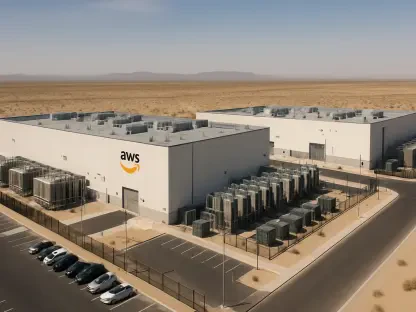
The numbers are simply staggering and paint a picture of a company walking a financial tightrope. You have over a trillion dollars in spending commitments for infrastructure and deals with giants like Oracle, Nvidia, and AWS. On the other side, you have an annual recurring revenue of $13 billion, but the terrifying part is that 70% of that comes from a tiny slice—just 5% of its 800 million users. This creates an incredibly high-stakes gamble. Their primary path to profitability seems to be converting a huge number of free users to paid subscribers, but that feels wildly optimistic. The more plausible, and cynical, scenario is that they’ve made themselves “too big to fail.” By embedding themselves so deeply with major infrastructure players, they’re betting that if they start to go under, these partners will be forced to prop them up to avoid a catastrophic ripple effect on the economy, especially given how much recent GDP growth has been tied to AI data center investment.
Given OpenAI’s acquisition of a hardware firm and its rumored interest in social media, the company seems to lack a clear identity. In your opinion, how does this strategic drift impact its core mission, and what concrete steps must its leadership take to regain a unified focus?
This strategic drift is perhaps the most alarming symptom of OpenAI’s crisis. When they acquired Jony Ive’s hardware firm and rumors of a “palm-sized personal assistant” or even a new social network started swirling, it became clear they don’t know who they are anymore. Are they a foundational model research lab? An enterprise SaaS company? A consumer app developer? A hardware manufacturer? This lack of focus is diluting their resources and brand identity at the worst possible time. It feels like they have too many fingers in too many pies and are simply throwing things at the wall to see what sticks. To regain control, leadership needs to take a hard, honest look at their core competencies and make some ruthless decisions. They need to pick a lane—whether it’s frontier model development or enterprise applications—and channel all their energy into being the undisputed best in that single domain.
What is your forecast for the AI industry’s competitive landscape over the next 18 months?
The next 18 months will be defined by a dramatic rebalancing of power. The era of a single, dominant player like OpenAI is over. We’re entering a multi-polar world where Google, Anthropic, and potentially other dark horses will compete on a much more level playing field, each excelling in different niches. This increased competition will be fantastic for consumers and enterprise customers, driving down prices and accelerating innovation. For OpenAI, however, this period will be a trial by fire. They will be forced to prove their business model is sustainable and not just a cash-burning machine fueled by hype. If they can’t find a clear strategic focus and stabilize their financials, they risk becoming a cautionary tale rather than the industry’s enduring pioneer.