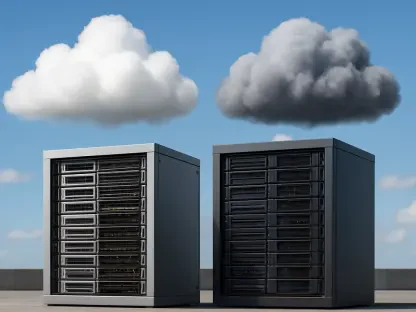

The architectural complexity of migrating a global industrial base from legacy on-premise systems to a modern, cloud-native environment has proven far more resilient than initial corporate forecasts suggested. Five years ago, SAP SE embarked on what was internally framed as a grand cloud escape plan, a strategic maneuver intended to shift its massive install base of Enterprise Resource Planning users to the S/4HANA platform. This transition was not merely a technical upgrade but a fundamental pivot in the company’s business model, aiming to swap traditional perpetual licenses for recurring subscription revenue. However, as we navigate the current landscape of 2026, it has become increasingly evident that a significant disconnect exists between the aggressive roadmaps presented to investors and the operational realities facing global giants like Airbus and BMW. This misalignment has resulted in a staggering €2 billion shortfall in projected cloud-related financial targets, highlighting a period of friction where corporate ambition meets the inertia of deeply embedded legacy infrastructure. The following analysis explores the financial discrepancies, the technical barriers to adoption, and the recent strategic pivot toward artificial intelligence as a necessary means to bridge this expanding revenue gap.
The Financial Reality of Delayed Transitions
The primary metric for evaluating the success of this transition has always been the anticipated decline in on-premise software support revenue, which was expected to vanish as clients embraced cloud subscriptions. In 2022, leadership projected that these revenues would contract to approximately €8.5 billion by 2025 from a baseline of €11.5 billion. Instead, the actual figures for the current period have settled closer to €10.5 billion, representing a figure nearly 24 percent higher than the original strategic target. This discrepancy suggests that the migration is progressing at a much slower pace than anticipated, leaving a multi-billion euro hole in the company’s long-term financial forecast. Despite high-level promises that the organization would be fully established in the cloud by 2025, the persistence of high-margin on-premise revenue indicates that the most valuable segments of the customer base remain firmly tethered to their existing legacy environments. The slow decay of this revenue stream, while providing a temporary cushion, signals a deeper problem regarding the perceived value proposition of the cloud-native S/4HANA platform for large-scale industrial players.
Furthermore, the lack of momentum in the transition from 2021 through 2024 has forced a reevaluation of how the company will satisfy investor expectations in a market that increasingly demands rapid cloud growth. While the overall revenue remains stable due to the stickiness of legacy maintenance fees, the optics of a stalled migration present a challenge for a leadership team that has staked its reputation on a cloud-first future. Investors had been led to believe that the “cloud escape” would be a swift and decisive movement, yet the reality has been characterized by incremental changes rather than a revolutionary shift. This financial lag is not merely a bookkeeping issue; it reflects a broader resistance from the global market to abandon stable, highly customized systems for a standardized cloud model that often requires significant upfront investment and organizational upheaval. As a result, the company finds itself in a precarious position where it must maintain the aging infrastructure of its most loyal clients while simultaneously funding the innovation required to make the cloud transition more attractive to those who are currently holding back.
Structural Challenges within the RISE Initiative
To address the sluggish migration rates, the company launched the RISE with SAP program, which was envisioned as a comprehensive concierge service designed to simplify the technical hurdles of moving to the cloud. By coordinating efforts between major consulting firms like Accenture and Deloitte and partnering with hyperscale providers such as AWS and Microsoft Azure, the initiative sought to offer a one-stop-shop for digital transformation. However, by the end of 2024, only about 39 percent of the estimated 35,000 worldwide legacy customers had actually committed to the licenses required for an S/4HANA transition. This represents only a marginal increase from previous years and underscores a pervasive reluctance among IT leaders to fix what they do not perceive as broken. For many organizations, the ERP system is viewed as a functional commodity—a backbone that needs to be reliable rather than cutting-edge—making the argument for a massive capital expenditure on a new platform difficult to justify to a board of directors focused on immediate profitability.
The lack of a clear return on investment remains the most significant barrier to the widespread adoption of the RISE program and the S/4HANA platform. Recent surveys of global IT executives indicate that nearly 95 percent of legacy users find building a positive business case for migration to be a substantial challenge. The costs associated with re-engineering business processes, retraining staff, and managing the risks of a system-wide overhaul often outweigh the theoretical benefits of cloud-native features. For a large enterprise, the ERP is not just a piece of software; it is a complex web of integrated processes that have been refined over decades. When the alternative is a standardized cloud environment that may lack the specific nuances of their current setup, many companies choose to delay the transition as long as possible. This institutional inertia has turned the “grand escape” into a slow crawl, forcing the software provider to reconsider its tactics and search for new ways to incentivize a move that many of its customers still view as more of a burden than a benefit.
Technical Friction and the Clean Core Strategy
A central conflict in the current migration landscape involves the clean core strategy, which demands that users strip away decades of custom code in favor of a standardized, upgrade-ready architecture. Over the last twenty years, enterprises have heavily customized their legacy environments to accommodate unique business rules and industry-specific workflows. SAP now expects these organizations to abandon those customizations to fully leverage the Business Technology Platform and automated cloud updates. This creates a difficult dilemma for IT departments: they can either perform a “brownfield” migration, which moves existing code to the new system but risks compatibility issues with future updates, or they can adopt the “greenfield” approach, which requires a complete re-engineering of their business habits. For many, the prospect of abandoning a system that works perfectly well for the sake of standardization is a non-starter, especially when the transition involves such high levels of technical risk and organizational disruption.
In an attempt to force the issue, the company has utilized a combination of support deadlines and financial penalties, including a 2027 cutoff for mainstream support on legacy systems. Customers who wish to remain on their old platforms beyond this date will face a 2 percent premium on maintenance fees through 2030, a move often described as the “stick” approach to migration management. However, these tactics have not yielded the urgent response that leadership expected. Market analysts project that more than 10,000 major customers will continue to operate their core business functions on legacy software well into the next decade, regardless of the increased costs. Some organizations have even begun to look elsewhere for help, turning to third-party maintenance providers like Rimini Street to keep their legacy systems operational while they develop their own innovation layers using separate platforms like Google Cloud or Databricks. This trend toward decoupling the innovation layer from the core ERP system represents a significant long-term threat to the company’s revenue model and its control over the enterprise software ecosystem.
Integrating AI as a Financial Bridge
Recognizing that the original ERP migration targets are unlikely to be met through traditional means, the company has strategically shifted its focus toward upselling innovation-led products, specifically in the realm of artificial intelligence. The introduction of Joule, an agentic AI platform, represents a pivot away from the “S/4HANA or bust” narrative toward a model that prioritizes the monetization of advanced capabilities. By offering AI-driven insights and automated workflows, the company hopes to generate new revenue streams from its existing customer base, even those who are not yet ready for a full-scale cloud migration. This strategy aims to bridge the €2 billion gap by selling high-value modules that can be integrated into private cloud environments or the Business Technology Platform. This “bite-sized” approach to innovation allows the company to demonstrate growth to investors while accommodating the slower migration timelines of its most conservative clients who are still operating on older infrastructure.
However, this focus on cloud-exclusive innovation has sparked considerable backlash from user groups, most notably the German-speaking DSAG. The announcement that advanced AI features would only be available to those who migrated to the cloud via the RISE program was seen by many as a breach of trust, particularly for those who had recently invested in on-premise versions of S/4HANA under the impression that it would remain the architecture of the future. This policy has alienated a significant portion of the user base that remains committed to on-premise control for security, regulatory, or operational reasons. By locking the most desirable new technologies behind a cloud-only paywall, the company risks further damaging its relationship with long-term partners who feel they are being coerced into a migration they do not want. As the 2027 deadline approaches, the success of this AI-centric strategy will depend on whether the company can provide enough tangible value to justify the move, or if it will simply drive more customers toward alternative solutions and third-party support.
Navigating the Hybrid Landscape Toward Stability
The challenges faced by the organization throughout this transition period underscored the inherent difficulty of forcing a standardized cloud model onto a diverse and highly customized global customer base. The multibillion-euro shortfall in projected support revenue served as a clear indicator that industrial enterprises prioritized operational stability and cost-efficiency over rapid technical adoption. This realization prompted a significant shift in corporate strategy, leading to a more nuanced approach that balanced aggressive cloud targets with the practical needs of legacy users. By pivoting toward agentic AI and modular innovation, the company sought to provide a bridge for those not yet ready for a full-scale digital overhaul. This transition allowed for a more flexible roadmap where the clean core philosophy coexisted with hybrid environments, acknowledging that the move to a purely cloud-native future was a multi-decade journey rather than a single event.
Ultimately, the path forward required a delicate balancing act between satisfying investor demands for high-growth cloud metrics and maintaining the loyalty of a conservative install base. The strategy evolved to focus on providing immediate, actionable value through the Business Technology Platform, rather than relying solely on the threat of support deadlines. CIOs and IT leaders were encouraged to view the transition as an opportunity to modernize specific high-impact processes rather than as a forced replacement of their entire operational core. As the industry moved beyond the initial friction of the grand cloud escape, the emphasis shifted toward long-term partnership and the integration of advanced technologies like Joule into existing workflows. This approach mitigated the risks of mass migration while ensuring that the organization remained at the center of the enterprise software ecosystem. The lessons learned during this period of financial and strategic adjustment provided a foundation for a more sustainable growth model that respected the complexity of global enterprise infrastructure.