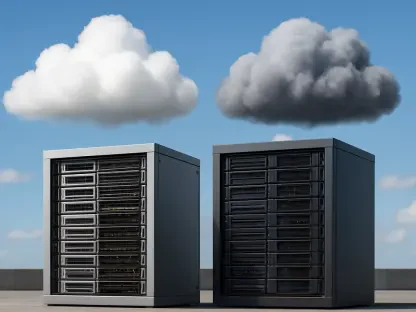

A profound realignment is underway within the IT channel, marking a definitive pivot from the decade-long focus on public cloud resale to a more intricate and valuable role as the architects of enterprise-grade artificial intelligence. This evolution is being driven by a calculated strategic repatriation of data-intensive AI workloads, as organizations move their most critical assets away from public clouds and back into private, on-premises environments. This is not a rejection of cloud principles but rather a sophisticated maneuver to gain the superior control over data, achieve predictable costs, and optimize the high-octane performance that modern AI initiatives demand. This strategic migration has created a new frontier of opportunity, setting the stage for a completely redefined channel partner, one equipped to design, deploy, and manage the powerful engines of the next technological era. The question is no longer if this shift will happen, but who will rise to meet the challenge and build the infrastructure that powers it.
The Anatomy of a New Industrial Revolution
At the very core of this industry-wide transformation is the rise of the “Enterprise AI Factory,” a concept that represents far more than a simple rebranding of a traditional data center or private cloud. This is a purpose-built, dedicated environment engineered from the ground up to support the entire, complex lifecycle of an organization’s AI initiatives, from the raw data processing and model training phases to refinement and operational deployment. Its fundamental anatomy is a carefully integrated system of large-scale GPU clusters, specialized high-throughput storage systems, and an advanced, low-latency networking fabric designed for massive data movement. The critical distinction lies in its architecture; while conventional cloud and virtualization platforms were optimized for general-purpose applications running in isolated virtual machines, an AI Factory is engineered for massive parallel computation across a vast, interconnected network of specialized processors, making it uniquely suited for the demanding nature of AI.
The push toward these specialized environments stems from the inherent limitations of running sophisticated AI models on generic cloud infrastructure, a reality many organizations are now confronting. Such attempts often lead to a cascade of significant challenges, including unpredictable performance bottlenecks that can derail critical training runs, spiraling and opaque costs that defy budget forecasts, and a concerning lack of transparency regarding data locality and security. Consequently, enterprises are actively seeking specialized platforms that fuse the raw computational power of dedicated hardware with the robust governance and airtight control of a private or sovereign infrastructure. This allows them to harness the full potential of AI without compromising on performance, cost-effectiveness, or the security of their most valuable digital assets, creating a distinct and urgent need that generic service providers cannot fulfill.
The Twin Pillars of Sovereignty and Speed
Two primary and non-negotiable drivers are fueling the booming interest in private AI Factories: data sovereignty and the physical constraints of latency. For a rapidly growing number of sectors—including healthcare, finance, national research, and public administration—data sovereignty is an absolute requirement dictated by stringent compliance and regulatory mandates. These rules explicitly prohibit the transfer of sensitive information to global public cloud providers whose data centers may reside outside specific legal jurisdictions. For these organizations, the entire AI model lifecycle, from the raw, proprietary data used for training to the resulting intellectual property encapsulated in the finished model, must remain securely within specific company, national, or sector-controlled boundaries. This necessity for a controlled, sovereign environment effectively disqualifies many standard public cloud offerings and creates a powerful incentive for building dedicated, private AI infrastructure.
The second major driver, latency, is dictated not by regulation but by the unforgiving operational demands of modern, real-time AI applications. A diverse array of critical use cases in industrial automation, predictive maintenance, real-time medical imaging analysis, and cybersecurity threat detection all depend on the ability to generate instantaneous responses. A delay of even a few hundred milliseconds can be the difference between preventing a catastrophic equipment failure and reacting to one. The physical reality is that if an AI inference engine is located in a distant data center hundreds or thousands of miles away, the round-trip time for data transfer makes this kind of immediate processing impossible. This physical limitation is pushing enterprises toward more distributed infrastructure models that blend powerful central data centers with local facilities and emerging edge computing environments, creating a unified platform that delivers local control, scalable performance, and edge readiness.
Translating Computational Power Into Economic Value
The immense demand for AI Factories is directly linked to their role as the engines for tangible business applications that are poised to deliver significant economic value, with some projections estimating that Generative AI alone could contribute trillions to the global economy. These environments are already delivering high-impact results today across various industries. In manufacturing, AI Factories power sophisticated digital twins of entire production lines, enabling teams to simulate scenarios, predict component failures, and prevent costly, unplanned downtime. In the fields of healthcare and life sciences, they are dramatically accelerating complex medical imaging analysis and supporting foundational drug discovery research that was once computationally prohibitive. Similarly, climate agencies leverage these powerful systems for data-intensive environmental simulations, while financial institutions use them to enhance fraud detection algorithms and model complex market risks with greater accuracy, all without compromising control over data, security, or governance.
This fundamental need for immense computational power under strict enterprise control fundamentally reshapes the opportunity for the IT channel, moving partners well beyond the transactional sale of cloud services. It ushers in an era of much deeper, long-term engagement focused on the complete lifecycle of these sophisticated AI platforms. The role of the partner evolves from that of a reseller to a strategic consultant and integrator responsible for designing, deploying, and providing ongoing support for these critical systems. This shift opens up new and highly stable recurring revenue streams built around platform operations, continuous capacity planning, and the full-lifecycle management of an organization’s most important AI workloads. This elevated role positions the channel partner not as a vendor, but as an indispensable guide in the client’s journey toward an AI-driven future, embedding them directly into the core of the business’s innovation strategy.
The Blueprint for a Modern Channel Partner
For channel partners, the path forward became an opportunity to address the comprehensive needs of organizations determined to leverage AI without the monumental challenge of building and managing the underlying infrastructure themselves. Customers actively sought partners who could deliver end-to-end services, encompassing the design of AI-ready architectures, the integration of complex data pipelines, the management of intricate model training and inference processes, and the unwavering support of the platform throughout its operational life. A critical role that emerged for the successful partner was that of a trusted advisor, helping customers navigate the complexities of total cost of ownership. Many clients discovered that for sustained training runs and regular inference cycles, a well-managed private or hybrid GPU environment was demonstrably more cost-effective than public cloud instances, and it was the partner’s job to prove it. These advisors demonstrated the immense value of consistent performance from dedicated hardware and the strategic advantage of maintaining full ownership over proprietary data, models, and AI-driven decisions.
To seize this foundational shift, channel partners had to undergo their own deep evolution, which required the development of a new set of highly specialized technical and strategic competencies. Essential skills included a thorough, architectural understanding of GPU-based infrastructures, practical knowledge of how AI workflows behaved under real-world production conditions, and a strong command of the cloud-native technologies, such as containerization and orchestration, that underpinned modern AI stacks. Furthermore, partners had to build formidable advisory capabilities, as customers were no longer looking for simple hardware installers but for strategic guides who could help shape their long-term AI strategy. The overarching consensus was that AI Factories were not an incremental trend but a foundational shift in how enterprises planned and deployed their most critical digital capabilities. The partners who embraced this transition by investing in the necessary expertise and shifting their business model from resale to strategic impact became the indispensable guides their customers relied on as AI moved decisively from an era of experimentation into one of full operational reality.