
The delicate balance between supply and demand has long posed a monumental challenge for businesses, where the financial penalties for miscalculation—either through costly overstocking or revenue-losing stockouts—can severely impact the bottom line. Traditional inventory management, often reliant on rigid, rule-based systems and manual oversight, has struggled to keep pace with the volatile and fast-moving nature of modern commerce. This operational friction creates inefficiencies that ripple across the entire supply chain, from warehousing to the final customer experience. However, a new paradigm is emerging, driven by the strategic integration of artificial intelligence and cloud computing. Software Engineer Syed Murtaza Haider Zaidi is at the forefront of this transformation, pioneering a new generation of intelligent, adaptive, and automated applications that are converting inventory management from a mere operational necessity into a powerful source of business intelligence and strategic value.
The AI-Driven Revolution in Supply Chain
From Static Rules to Predictive Intelligence
The fundamental shift championed by Zaidi involves replacing outdated, static inventory controls with dynamic, AI-driven intelligence that anticipates future needs rather than merely reacting to past events. By embedding sophisticated machine learning algorithms directly into core operational workflows, his solutions create systems capable of autonomously analyzing vast and varied data streams in real time. These algorithms process everything from historical sales patterns and seasonal trends to external market fluctuations and supplier lead times, generating highly accurate demand forecasts. This predictive power allows for the automatic and precise adjustment of stock levels, establishing a proactive management model that operates with unparalleled foresight. The direct consequence of this intelligent automation is a drastic reduction in the capital tied up in excess inventory, while simultaneously ensuring product availability to meet consumer demand, thereby enhancing both financial efficiency and customer loyalty in a competitive marketplace.
This transition to a predictive model delivers tangible and transformative benefits that resonate throughout an organization’s financial and operational health. By intelligently optimizing stock levels, businesses can significantly minimize the carrying costs associated with warehousing, insurance, and potential spoilage or obsolescence of unsold goods. Concurrently, the risk of stockouts—a critical failure point that leads to lost sales and erodes customer trust—is substantially mitigated. The result is a finely tuned supply chain that improves fulfillment rates, shortens delivery times, and elevates the overall customer experience. This AI-powered precision ensures that the right products are in the right place at the right time, converting inventory from a passive asset into a dynamic component of a responsive and customer-centric business strategy, ultimately driving revenue growth and strengthening brand reputation.
Automating Operations for Peak Efficiency
A key consensus in the industry is that the synergy between AI and cloud computing in Zaidi’s work enables a level of end-to-end process automation previously unattainable. His innovative solutions deploy intelligent bots that seamlessly handle a wide range of routine yet critical tasks, freeing human capital to focus on more strategic initiatives. These automated agents manage functions like order replenishment, systematically triggering new purchase orders when stock levels fall below predefined, AI-optimized thresholds. They also facilitate streamlined communication with suppliers, tracking order statuses and managing logistics without human intervention. Beyond these routine duties, the system performs advanced functions such as sophisticated anomaly detection. This capability allows it to identify and flag irregularities in real time, such as potential inventory shrinkage due to theft or damage, or sudden, unexpected spikes in demand that could signal a new market trend, enabling swift and decisive action.
The measurable impact of these technological innovations is both substantial and far-reaching, fundamentally altering the economic and operational landscape for businesses that adopt them. Companies implementing these integrated systems have reported remarkable gains, including up to a 40% improvement in overall inventory accuracy, which directly translates into more reliable financial reporting and operational planning. This heightened precision, coupled with deep automation, yields significant cost reductions across the supply chain by minimizing manual errors, optimizing labor allocation, and reducing waste. Furthermore, the inherent agility of an AI-driven system provides greater resilience against market volatility and unforeseen disruptions. By continuously learning and adapting to changing conditions, the inventory ecosystem becomes a robust, responsive asset that empowers businesses to navigate economic uncertainties and supply chain challenges with confidence and strategic advantage.
Architecting a Resilient and Scalable Ecosystem
The Cloud as a Foundational Pillar
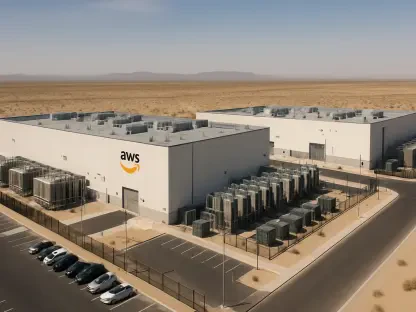
Complementing the system’s predictive intelligence is Zaidi’s expert implementation of modern cloud infrastructure, leveraging the power of leading providers like Amazon Web Services (AWS), Microsoft Azure, and Google Cloud Platform (GCP). He architects highly scalable, cloud-native platforms built on principles of microservices and serverless computing. This architectural approach breaks down monolithic inventory applications into smaller, independent services that can be developed, deployed, and scaled individually. The use of serverless computing further enhances this flexibility by allowing the system to automatically allocate computational resources in response to real-time demand. This ensures that the inventory management platform can seamlessly adapt to fluctuating workloads—whether it’s handling a seasonal surge in orders or a period of lower activity—without requiring manual intervention or incurring the cost of over-provisioned, idle infrastructure.
This robust cloud foundation is instrumental in creating a unified and coherent view of the entire inventory ecosystem, which is often fragmented across multiple locations and systems. It facilitates real-time data synchronization between disparate elements of the supply chain, including warehouses, distribution centers, suppliers, and various sales channels, from e-commerce platforms to brick-and-mortar stores. By centralizing this information, the system provides businesses with a single, consistently accurate source of truth for their inventory data. This holistic visibility eliminates the data silos that have historically plagued supply chain management, ensuring that all stakeholders—from warehouse managers to corporate executives—are working with the same up-to-the-minute information. The result is a more cohesive and efficient operation, where decisions are based on a complete and accurate understanding of the entire inventory landscape.
Pioneering a Future of Connected Commerce
The integration of cloud-hosted analytics dashboards transformed raw data into a strategic asset, delivering actionable insights directly to stakeholders, regardless of their physical location. This accessibility empowered teams to move beyond reactive problem-solving and engage in proactive, data-informed decision-making. The ability to visualize trends, forecast demand with greater accuracy, and monitor key performance indicators in real time enabled organizations to respond to market changes with unprecedented speed and agility. This capability proved essential for optimizing resource allocation and aligning inventory strategy with broader business objectives. The platforms Zaidi engineered did more than just manage stock; they provided a clear, comprehensive view of the supply chain’s health and performance.
Ultimately, Zaidi’s contributions were pivotal in laying the groundwork for a fully connected, AI-enabled supply chain ecosystem that set a new industry standard. His work demonstrated how the thoughtful combination of artificial intelligence and cloud computing could dissolve traditional operational barriers, creating a fluid and transparent flow of information and goods. This technological vision extended beyond mere efficiency gains; it fostered a more resilient and adaptive commercial environment capable of withstanding global disruptions. By architecting systems that learned, predicted, and automated, he redefined the role of inventory management, establishing it as a cornerstone of modern business intelligence and a critical driver of competitive advantage in the digital age.