
The rapid integration of artificial intelligence into software development lifecycles has revealed a stark divide between organizations that merely possess the technology and those capable of yielding its full potential through rigorous operational discipline. While the tech industry frequently discusses generative models as a potential replacement for traditional workflows, the reality observed throughout the current year suggests that these tools function more as an industrial-grade amplifier. For teams with high operational maturity, AI has become a force multiplier that accelerates delivery and enhances precision, whereas firms with fragmented processes find that automation only serves to broadcast their underlying inefficiencies at a greater scale. Recent industry data underscores this discrepancy, showing that approximately 72 percent of high-maturity organizations have successfully embedded AI into their daily production streams. In contrast, only 18 percent of low-maturity firms have managed to achieve similar results, proving that the gap between leaders and laggards is widening.
The Strategic Shift: Transitioning From Execution to Orchestration
Traditional quality assurance roles have undergone a profound transformation as artificial intelligence assumes the burden of routine scripting and repetitive test execution. This shift has facilitated the rise of Quality Engineering, where professionals are no longer tethered to manual verification but are instead focused on system design, orchestration, and complex quality analytics. Current trends indicate that roughly 87 percent of engineering professionals believe that the removal of manual labor allows for a more strategic focus on directing high-level project outcomes. By delegating the creation of boilerplate code and standard regression tests to intelligent agents, these experts are now free to investigate edge cases and architectural vulnerabilities that were previously overlooked due to time constraints. This evolution represents a departure from the narrative that traditional practices are obsolete, illustrating instead that the discipline is becoming more sophisticated as it incorporates cognitive automation into its core tenets.
Beyond the shifting duties of specialized engineers, the democratization of test creation has invited a broader range of participants into the development pipeline. Software developers are increasingly authoring their own tests directly within the integrated development environment, while business analysts have begun to take an active role in defining and validating test scenarios. This move toward cross-functional collaboration ensures that quality is not a final hurdle but a shared responsibility distributed across the entire team. Such a transition requires a robust framework of governance to maintain consistency, yet the benefits are undeniable as projects move from conception to deployment with fewer handoffs. When business requirements are translated into executable tests through the assistance of AI, the alignment between commercial goals and technical output reaches a level of synchronicity that was previously unattainable for most mid-market enterprises. This collaborative environment has redefined the standard for modern delivery.
Navigating the Obstacles: Governance and Resource Sustainability
Confidence in the outputs generated by artificial intelligence has reached a significant milestone, with 77 percent of technical teams reporting a high degree of trust in the accuracy and reliability of these systems. Furthermore, 74 percent of organizations indicate that the technology currently meets or exceeds the performance expectations set at the beginning of the deployment phase. Business value is no longer measured solely by the speed of code generation but through tangible metrics such as customer retention, accelerated delivery cycles, and measurable revenue growth. This maturity in measurement reflects a growing understanding that AI is a long-term investment rather than a quick fix for legacy technical debt. As organizations refine their ability to track the impact of automated decisions on the bottom line, the focus has moved toward optimizing the interaction between human oversight and machine precision to ensure that the gains remain consistent across various product lines.
Despite the prevailing optimism, significant challenges remain regarding the governance and environmental sustainability of large-scale AI implementations. Many organizations still struggle with fragmented compliance oversight and a lack of automated audit trails, which can make the process of measuring impact both expensive and technically inconsistent. Moreover, the hidden costs of cloud computing and the massive energy consumption required to sustain these models have become primary considerations for executive leadership. Approximately 74 percent of firms cited these resource requirements as a major influence on their adoption strategies, with over a third viewing the associated expenses as a limiting factor for future expansion. To overcome these hurdles, forward-thinking enterprises are investing in more efficient infrastructure and standardized reporting mechanisms that provide real-time visibility into both the financial and ecological footprint of their digital transformation efforts.
Building a Resilient Engineering Foundation for Future Growth
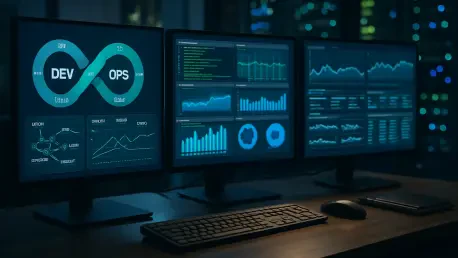
Successful navigation of the current landscape required a fundamental reassessment of how engineering foundations are built and maintained within the enterprise. It became clear that the most resilient teams were those that treated their infrastructure as a living entity, constantly refining the underlying automation scripts and data pipelines that fed their intelligent systems. By prioritizing the health of the DevOps environment over the novelty of individual tools, these organizations created a stable platform where AI could thrive without introducing systemic risk. This approach involved a rigorous commitment to documentation, standardized API usage, and the elimination of silos that previously hindered communication between development and operations. As a result, the integration of new technologies became a seamless extension of existing workflows rather than a disruptive event that required a total overhaul of the cultural mindset or the underlying technical stack.
Ultimately, the leaders of the industry recognized that the path to success was paved with disciplined engineering rather than just the acquisition of sophisticated software. They prioritized the creation of robust governance frameworks that ensured transparency and accountability for every automated action taken within the development pipeline. These organizations transitioned away from experimental silos and toward a unified strategy that blended human ingenuity with machine efficiency. By addressing the bottlenecks in their cloud spend and streamlining their audit processes, they transformed AI from a source of complexity into a primary driver of market competitiveness. The focus remained on fostering a culture of continuous learning, where the workforce was empowered to use new tools to enhance their own strategic capabilities. This commitment to operational maturity ensured that the technology served the business objectives rather than creating new technical liabilities.