
The relentless march of artificial intelligence, promising to reshape industries and redefine human capability, has encountered a formidable and surprisingly conventional obstacle: the aging electrical grid. In a landmark move underscoring this critical challenge, Google’s parent company, Alphabet, has initiated the acquisition of Intersect, a data center and energy firm, in a transformative deal valued at $4.75 billion. This strategic purchase is not merely about expanding data center footprint but about securing the one resource that has become the primary bottleneck for the AI revolution—power. As the computational demands of AI models skyrocket, the public energy infrastructure has struggled to keep pace, forcing tech behemoths to reconsider their fundamental approach to growth. This acquisition signals a pivotal shift in the industry, where securing a private, dedicated power supply is becoming as crucial as designing the next generation of processing chips, moving from a model of consumption to one of direct energy production and control.
The Energy Bottleneck for Artificial Intelligence
The core driver behind this multi-billion-dollar acquisition is the growing adoption of a “bring your own generation” model among technology giants, a direct response to an increasingly strained public power infrastructure. The reality facing the AI industry is that its progress is tethered to one of the slowest-moving sectors in the country. This friction has created scenarios where billions of dollars worth of advanced GPU hardware sits idle in newly constructed data centers, waiting for months or even years for adequate electrical connections. This delay represents a significant loss of potential innovation and revenue, a problem that Intersect CEO Sheldon Kimber has highlighted as a major impediment. Consequently, the most advanced companies in the world are now compelled to vertically integrate their energy supply chains, building dedicated power generation facilities in parallel with their data centers to sidestep the gridlock and ensure their computational ambitions are not throttled by an inability to simply turn the lights on.
The scale of the energy demand from the AI boom is staggering and places the current infrastructure under unprecedented pressure. Industry projections indicate that the power consumption of data centers is on a trajectory to surpass 106 gigawatts within the next decade, an amount equivalent to the entire output of several nations. Google has already experienced this limitation firsthand, having been forced to pause its own data center expansion projects to prevent overloading regional public grids. Despite significant investments in renewable energy to meet its corporate sustainability goals, the company’s absolute greenhouse gas emissions have risen by 48% since 2019, a surge directly attributable to its escalating electricity consumption. This paradoxical situation, where green energy investments are outstripped by raw power needs, highlights the inadequacy of the current system and provides the compelling rationale for a more integrated, self-sufficient energy strategy to power future growth.
A Strategic Acquisition for Self Sufficiency
Under the terms of the agreement, Alphabet is set to acquire Intersect’s formidable $15 billion portfolio of assets, which includes projects currently in operation as well as those under active construction. This acquisition is designed to strategically bolster Google’s infrastructure, with Intersect planning to command an impressive 10.8 gigawatts of power capacity by 2028. While Intersect will continue to operate as a distinct company under its current brand and leadership, the deal fosters a deep, collaborative relationship with Google’s technical infrastructure division. This synergy is already being realized through joint projects, such as a large-scale site currently under development in Texas. Alphabet CEO Sundar Pichai articulated the strategic vision behind this move, emphasizing the goal of expanding capacity more nimbly and efficiently by constructing power generation capabilities in lockstep with the deployment of new data center loads, thereby creating a seamless and predictable growth pathway.
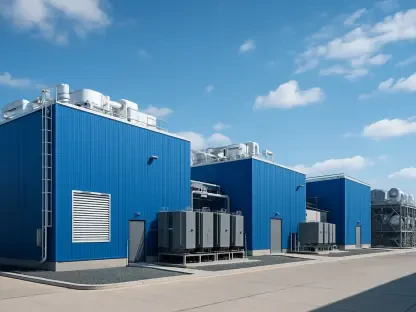
The acquisition specifically targets Intersect’s innovative model of co-locating renewable energy sources, large-scale battery storage, and flexible backup power systems directly alongside data centers. This integrated approach offers a powerful solution to two of the most significant hurdles in data center development: accelerating the “speed to power” and unlocking scarce transmission capacity on the public grid. By generating power on-site, Google can dramatically reduce its dependence on external utilities and their lengthy approval and construction timelines. However, the deal is carefully structured, excluding Intersect’s currently operating assets in Texas and California. These existing facilities will instead be purchased by Intersect’s current investors, allowing Alphabet to focus its investment on the development pipeline and future projects that can be custom-tailored to the specific needs of its expanding AI infrastructure. This surgical approach ensures that the acquisition directly serves Google’s forward-looking energy requirements.
A New Blueprint for Tech Infrastructure
The acquisition of Intersect by Alphabet was more than a major corporate transaction; it established a new paradigm for how global technology leaders would need to approach infrastructure in the AI era. The deal represented a fundamental acknowledgment that the future of computational advancement was inextricably linked to the control of its energy supply. It became clear that relying on a century-old public utility model was no longer a viable strategy for companies operating at the vanguard of innovation. This move signaled a definitive shift, establishing a precedent where the vertical integration of power generation was no longer an optional or sustainable initiative but a core strategic necessity. In doing so, Alphabet not only secured its own growth trajectory but also redrew the boundaries of what it meant to be a technology company, transforming from a consumer of power into a primary producer and manager of its most critical resource.