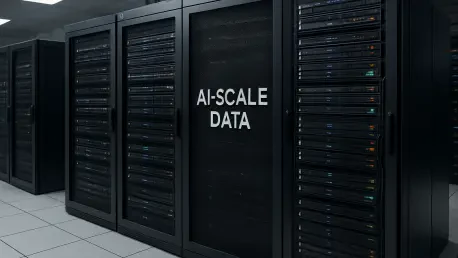

Can next-gen LTO make tape the backbone of AI-scale data?
Every hour AI engines mint new torrents of unstructured data that must be stored, protected, and retrievable when needed, and the contradiction is stark: budgets and power ceilings tighten even as retention mandates harden and cyber risk escalates, pushing enterprises to re-evaluate which media can shoulder growth without collapsing economics or resilience. That tension has revived an old-new workhorse: enterprise tape, now anchored by next‑gen LTO cartridges built on Aramid base film delivering up to 40 TB native in the familiar form factor.
Tape in the current cycle sits squarely in the cold and archive tier, absorbing petabyte-scale ingest, anchoring cyber-resilient recovery, and offloading expensive disk and cloud capacity. What changed is material science and software integration; thinner, smoother Aramid media extends tape length without enlarging the cartridge, while modern software orchestrates placement, indexing, and recall.
Industries with deep retention needs are leaning in. Healthcare, finance, media, research, manufacturing, and public agencies see durable media with offline air-gaps as both control and insurance, blending portability and the lowest at-scale cost per terabyte with verifiable integrity.
The AI data deluge meets an old-new workhorse: where enterprise tape stands now
AI-era storage is a study in extremes: rapid data creation, unpredictable access, and strict governance over risk and spend. Tape absorbs the asymmetry by excelling when data is written once and read occasionally, which describes growing slices of AI training corpora, compliance repositories, and long-lived media assets.
The proof is practical. At 40 TB native per cartridge, LTO with Aramid media raises density without changing handling, libraries, or floor plans, letting operators consolidate archives, harden air-gapped copies, and trim energy profiles in a single move.
Momentum behind the resurgence: forces, signals, and numbers that matter
Trends powering tape’s return in the AI era
Three forces explain the curve: data gravity, economics, and security. AI pipelines continuously mint colder datasets whose strategic value rises with time, not access speed, making tape a natural home for the long tail.
Price and power sharpen the case. Studies peg tape’s 10‑year total cost at roughly 86% below disk and 66% below cloud for archive workloads, while idle energy plummets because cartridges draw no power at rest.
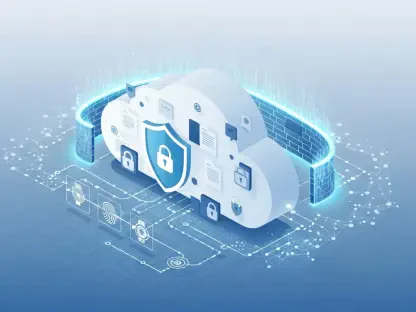
Cyber resilience completes the picture. True offline air-gaps, immutable media, and WORM options turn tape into a last line of defense against ransomware, now coupled with LTFS portability, S3‑to‑tape gateways, and mature library robotics.
Hard data and forward indicators: shipments, utilization, and forecasts
Shipment momentum has been visible, with compressed capacity setting records through 2024 and continuing to expand into 2025 as organizations formalize archive tiers for AI workloads. Libraries scale to exabytes within existing footprints, stretching robotics rather than real estate.
The roadmap is equally telling. LTO Generations 11 through 14 project step-function gains culminating in an expected 913 TB cartridge, and higher cartridge capacities shrink backup and restore windows by reducing mounts and parallel streams required at scale.
Practical realities and pain points: what could slow tape’s ascent—and how to solve them
Perception lags reality. Tape is often labeled slow, yet modern streaming throughput and parallelism rival or beat networked disk for sequential tasks; the key is aligning workloads to tape’s strengths.
Latency remains real for random access, so design matters. Active archives, rich metadata catalogs, and warm caches reduce time-to-first-byte, while object-to-tape gateways and policy automation keep workflows smooth and predictable.
Confidence grows with practice. Routine restore tests, verification at write time, and documented cyber-recovery runbooks turn a passive archive into an operational asset. Skills, media availability, and vendor diversity also warrant attention, along with clear migration paths from LTO‑8/9/10 to the latest cartridges.
Guardrails for growth: compliance, standards, and security that shape tape adoption
Regulation pushes rigor. Retention mandates across healthcare, finance, and public records intersect with privacy and sovereignty rules, making location, audit, and lifecycle control as important as cost.
Security features close the loop. WORM, encryption in flight and at rest, sound key management, and FIPS-validated modules protect data and chain of custody, while LTFS aids portability and evidentiary integrity in investigations and audits.
Interoperability sustains longevity. Alignment to the LTO Ultrium standard, media compatibility policies, and stable file formats reduce lock-in, ensuring archives remain readable and verifiable across generations.
What’s next: materials, automation, and architectures that could make tape foundational for AI
Materials science keeps moving. Aramid’s thinner, smoother base film extends length and boosts reliability; future research aims at even higher areal density without compromising error rates or handling.
Speed at scale comes from smarter systems. Next-gen drives, parallel streams, and library robotics—guided by AI-driven placement and recall—tighten SLAs while keeping energy flat. Hybrid designs pair object storage fronts with policy-driven cloud‑to‑tape workflows for seamless tiering.
Sustainability becomes a strategy, not a slogan. Carbon-aware tiering and energy-delayed storage align cold data movement with grid conditions, while flexible licensing, open APIs, and tape-as-a-service models lower barriers to entry.
The bottom line for CIOs and data leaders: tape as a strategic pillar in an AI-first world
The evidence pointed to a clear outcome: AI-scale growth and cost pressure elevated tape from afterthought to anchor, while Aramid-enabled density kept the form factor current and efficient. The pragmatic path favored tiered architectures that route cold data to tape by policy, quantified TCO and carbon over five to ten years, and prioritized immutable, air‑gapped copies.
Operational excellence had mattered. Teams that rehearsed restores, tracked RTO/RPO against SLAs, mapped LTO migrations from Gen 9/10 to 11 and beyond, and invested in metadata catalogs and object indexing reaped faster discovery and confident recall. With shipment growth sustained and a credible roadmap in place, tape adoption had shown durable momentum for AI‑scale data stewardship.