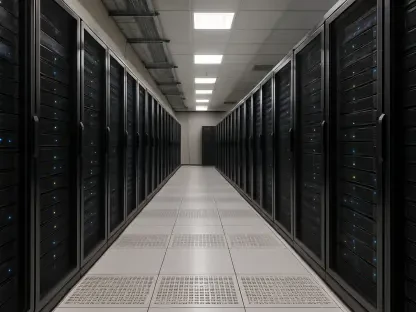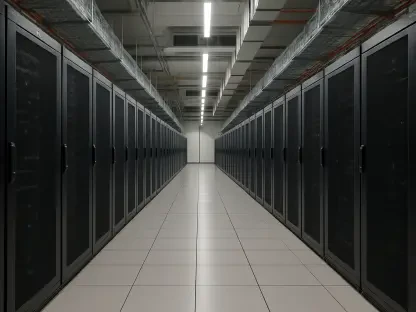

The sheer velocity of modern computation has reached a point where yesterday’s supercomputers now look like relics compared to the specialized engines driving today’s generative breakthroughs. As industries move beyond the experimental phase of artificial intelligence, the collaboration between Dell Technologies and Nvidia has evolved into a foundational blueprint for what is now called the AI Factory. This strategic partnership focuses on providing a unified, vertically integrated stack that bridges the gap between raw data sets and high-level intelligence. The recent expansion of this ecosystem highlights a significant shift toward industrial-scale production, where the focus moves from simple model training to the continuous, high-efficiency generation of insights across global enterprises.
The Evolution of the AI Factory: Bridging Infrastructure and Intelligence
The partnership between Dell and Nvidia has fundamentally redefined how organizations approach the lifecycle of information. By moving away from fragmented hardware silos, the AI Factory concept creates a streamlined environment where compute, storage, and networking function as a single cohesive unit. This integration is no longer a luxury but a necessity for the over 4,000 organizations currently leveraging these tools. Recent advancements indicate that the transition from general-purpose data centers to AI-native factories is accelerating, driven by the need to process massive amounts of information with unprecedented speed and accuracy.
The expansion revealed at the GTC conference addresses the primary challenge of 2026: moving AI from a laboratory novelty to a core industrial utility. Industry analysts observe that the introduction of the Rubin architecture and advanced liquid-cooled systems represents more than just a hardware refresh. It is a fundamental redesign of the data pipeline. By providing a unified data stack, Dell and Nvidia enable enterprises to manage the entire AI lifecycle—from data ingestion and tagging to model inference—within a singular, high-performance ecosystem that reduces the complexity previously associated with exascale computing.
Scaling Intelligence with the Rubin Architecture and High-Density Hardware
The Quantum Leap in Compute: Nvidia Rubin and the PowerEdge XE9812
The transition from the Blackwell series to the Rubin NVL72 architecture marks a decisive turning point in how enterprises calculate the cost of intelligence. With a focus on high-density performance, the new architecture delivers a tenfold reduction in cost-per-token for enterprise inference tasks. This efficiency is critical for organizations running Mixture of Experts models, which require massive memory and bandwidth to function effectively. The PowerEdge XE9812 stands as the centerpiece of this evolution, utilizing the Dell Integrated Rack 9000 to house the immense power of the Rubin chips while maintaining the structural integrity required for massive deployments.
Technical performance within the XE9812 is driven by a staggering GPU-to-GPU bandwidth of 260TB per second, facilitated by NVLink connectivity. This level of throughput effectively eliminates internal communication bottlenecks, allowing clusters of GPUs to act as a single, massive processor. However, such high-density computing brings significant challenges in thermal management. Engineering a system that can handle this much power requires a shift in how racks are integrated into the data center floor, moving toward a model where the infrastructure and the silicon are co-designed for maximum thermal efficiency.
Thermal Engineering and the Shift to 100% Liquid-Cooled Server Families
As power demands per rack unit climb, air cooling has largely reached its physical limit, necessitating a broad transition to liquid-cooled hardware. The introduction of the XE9880L, XE9885L, and XE9882L server families illustrates this shift, providing a 5.5-fold performance gain over previous generations by utilizing direct-to-chip cooling methods. This engineering feat allows for up to 144 GPUs per rack, ensuring that the footprint of the data center remains manageable even as its processing power explodes. Performance per kilowatt has emerged as the primary metric for success, as energy efficiency now dictates the ceiling for institutional scaling.
The versatility of these server families is reflected in their diverse CPU configurations, which cater to the specific architectural preferences of different institutions. Whether an organization relies on the high per-core performance of Intel Xeon, the massive throughput of AMD Venice, or the energy-optimized Rubin Arm-based chips, the underlying infrastructure remains consistent. This flexibility allows enterprises to optimize their workloads for specific mathematical tasks while maintaining the same cooling and power delivery standards. The result is a sustainable path forward where performance increases do not lead to proportional spikes in carbon footprints.
Exascale Storage and the Death of Data Bottlenecks
While compute often takes the spotlight, the reality of frontier AI research is that a processor is only as fast as the storage feeding it. The Dell Lightning File System has been introduced as a Tier 0 solution to solve the persistent problem of GPU starvation. By delivering 150GB per second of throughput per rack unit, this system ensures that the world’s fastest GPUs are never left waiting for data. This is particularly vital in “neocloud” environments and high-frequency trading where microseconds determine the difference between success and failure.
Modern storage must now be as intelligent as the compute layers it supports, leading to the development of the Dell Exascale Storage architecture. This software-defined framework unifies file and object data at a scale exceeding 10 petabytes, allowing researchers to manage massive datasets without the need for constant re-platforming. By integrating different storage “personalities” into a single framework, Dell has challenged the traditional view that storage is a secondary component. Instead, it is now the high-speed backbone that enables the continuous flow of information required for training the next generation of trillion-parameter models.
Decentralizing AI: Trillion-Parameter Models at the Edge
A significant trend in 2026 is the movement of massive compute power away from centralized clouds and toward the edge. The Dell Pro Max workstation, powered by the Grace Blackwell Ultra GB300 Superchip, provides the local memory and FP4 computing power necessary to run trillion-parameter models on a single desk. This shift is driven largely by privacy-conscious industries such as healthcare and finance, which prefer to keep their sensitive data within their own four walls. These local “factories” enable the rise of agentic AI, where autonomous systems can process complex tasks without the latency of cloud communication.
Enterprises are increasingly adopting a strategy of “distillation,” where they take massive foundation models and fine-tune them into specialized Small Language Models using local hardware. This approach allows for the creation of highly efficient, task-specific intelligence that is easier to deploy and cheaper to run than a generalized cloud model. High-performance workstations and mobile units now offer enough processing capability to support this development cycle, ensuring that data scientists can innovate regardless of their physical location. This democratization of high-end compute marks the end of the era where frontier AI was the exclusive playground of hyper-scalers.
Strategic Implementation: Navigating the Modern AI Ecosystem
The transition to an AI-native infrastructure requires a strategic approach that balances the adoption of new silicon with the limitations of existing facilities. Organizations must look toward automated data orchestration to manage the sheer volume of information flowing through these systems. By utilizing low-code tools to automate data pipelines, companies can reduce the manual labor associated with model training, allowing their human talent to focus on creative problem-solving. Success in this era is defined by how effectively an enterprise can integrate high-performance silicon with a streamlined software stack.
Actionable implementation often involves a hybrid approach to hardware deployment. While the move toward 100% liquid-cooled infrastructure is inevitable for the most demanding workloads, many organizations still operate traditional air-cooled environments. Navigating this transition requires a modular strategy where liquid-cooled racks are integrated alongside existing hardware using hybrid cooling solutions. This allows for a gradual upgrade path that protects existing investments while providing the necessary thermal headroom for the Rubin architecture and its successors.
Future Horizons: The Enduring Impact of Integrated AI Stacks
The collaboration between Dell and Nvidia has shifted the focus from selling individual components to providing a vertically integrated service stack that covers every aspect of the AI journey. This holistic approach ensures that hardware, software, and networking are optimized to work in unison, reducing the friction that previously hindered the adoption of advanced intelligence. The Rubin architecture serves as a cornerstone of this effort, democratizing access to exascale levels of computing for the broader enterprise market and allowing companies of all sizes to participate in the AI revolution.
Looking ahead, the widespread availability of these “AI Factories” promised to fundamentally alter the speed at which humans can innovate. The success seen in genomic sequencing, where years of work were condensed into hours, served as a template for what was possible across other fields like materials science and climate modeling. As these integrated stacks became the standard for enterprise IT, the focus moved toward refining the efficiency of the human-AI interface. The legacy of this technological expansion was not just faster chips, but the creation of a global infrastructure that allowed for the rapid, automated transformation of raw data into life-changing discoveries.