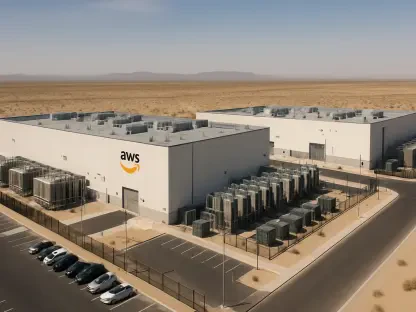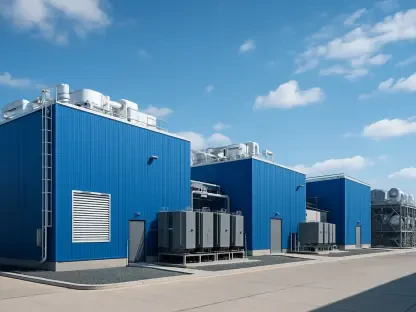

The invisible infrastructure underpinning our digital society is facing a tangible and escalating threat from the physical world, as a recent analysis reveals that the vast majority of global data centers are critically misplaced in climates that undermine their efficiency and threaten their operational stability. This silent crisis highlights a fundamental conflict between the placement of digital infrastructure and the environmental realities of a warming planet. A comprehensive study cross-referencing nearly 9,000 data center locations with global temperature data has exposed a startling vulnerability: approximately 80% of these facilities, the nerve centers of the internet, operate outside the optimal temperature range. While many are situated in colder regions, a significant and growing number are located in climates that are simply too hot, forcing them to wage a constant, energy-intensive battle against their own environment. This geographical miscalculation poses a direct risk to the reliability of digital services worldwide and challenges the industry to fundamentally rethink its approach to design and location.
The Geographical Mismatch
A Global Temperature Imbalance
A detailed investigation into the locations of the world’s 8,808 operational data centers revealed a stark misalignment with established climate guidelines. According to the American Society of Heating, Refrigerating and Air-Conditioning Engineers (ASHRAE), the ideal ambient temperature for these facilities falls within a narrow band of 18-27 degrees Celsius. However, the study found that nearly 7,000 of these critical sites are situated outside this optimal zone. The most alarming discovery is that a problematic 10%, or roughly 600 centers, are located in regions where the average annual temperature consistently surpasses the 27 C upper limit. This issue is particularly severe in 21 countries where every single data center operates in these excessively hot conditions, including major technology hubs like Singapore, Nigeria, and the United Arab Emirates. The trend persists across key emerging markets, with nearly all data centers in Saudi Arabia and Malaysia, almost half in Indonesia, and approximately 30% in India facing the same thermal challenges, creating a precarious foundation for their rapidly growing digital economies.
The Cascading Effect of Excessive Heat
Operating a data center in a climate that is too hot triggers a cascade of negative consequences that impact everything from energy consumption to service reliability. The primary challenge is the immense strain placed on cooling systems, which must work continuously to dissipate the heat generated by servers while also combating high external temperatures. This results in a significant increase in energy overhead, diminishing the facility’s Power Usage Effectiveness (PUE) and driving up operational costs. This inefficiency extends beyond the balance sheet, contributing to a larger carbon footprint as power demands soar. Furthermore, sustained exposure to high heat accelerates the degradation of sensitive electronic components, leading to shorter hardware lifespans and more frequent failures. This not only increases capital expenditures for replacements but also elevates the risk of system outages. In a worst-case scenario, overwhelmed cooling systems can lead to widespread server shutdowns, disrupting the countless digital services that individuals and businesses rely on daily.
Engineering a Cooler Future
The Rise of Advanced Cooling Solutions
In response to these mounting climate pressures, leading technology companies are spearheading a wave of innovation in data center cooling. Google is leveraging its sophisticated DeepMind AI to create predictive models that optimize cooling processes in real time, a strategy that has already yielded significant reductions in the energy consumed by its massive server farms. Microsoft is pursuing a multifaceted approach by designing new data centers that require zero water for cooling—a critical adaptation for arid regions—and by pioneering the use of microfluidics. This advanced direct-to-silicon liquid cooling technology is up to three times more effective at heat transfer than traditional methods. Similarly, Amazon Web Services (AWS) has moved towards direct-to-chip liquid cooling, a more targeted technique that addresses heat at its source. These technological advancements represent a crucial shift away from brute-force air conditioning towards more intelligent and efficient thermal management strategies tailored for a warmer world.
A Blueprint for Resilient Infrastructure
The industry’s response to environmental challenges laid the groundwork for a fundamental reimagining of data center design and energy sourcing. Beyond immediate technological fixes, researchers and engineers explored more radical, long-term solutions that involved integrating facilities directly with their natural surroundings. The concepts of underwater and underground data centers moved from theoretical to practical, with projects demonstrating their ability to use the stable, cool temperatures of the sea and earth for highly efficient, passive cooling. This architectural evolution was complemented by a strategic shift in energy policy, where these next-generation facilities were powered by alternative sources like advanced nuclear reactors and hydrogen fuel cells. This holistic approach not only solved the immediate cooling problem but also addressed the enormous energy appetite of the digital economy. It marked the beginning of an era where digital infrastructure was built not in spite of its environment, but in harmony with it, creating a truly sustainable and resilient foundation for the future.