
The relentless integration of artificial intelligence into modern applications is creating a silent but profound crisis within the very systems designed to build and deploy software, forcing organizations to confront a critical vulnerability they never anticipated. This new frontier of development exposes a deep chasm between traditional software engineering and the nascent discipline of machine learning operations, threatening to derail the very innovation it promises.
The 40 Percent Black Box A New Reality for AI Deployment
For many organizations, the push to deploy AI has led to a startling situation where a significant portion of their production software operates as an unmanaged black box. Recent analyses indicate that nearly 40% of AI components in production lack the same visibility and governance applied to traditional code. This is not a distant hypothetical but a current reality, creating a shadow IT problem where critical business logic is built on models that are poorly understood, versioned, and secured. The implications for reliability, security, and compliance are immense, challenging the foundational principles of modern software delivery.
The Hidden Wall Why Traditional Pipelines Are Failing
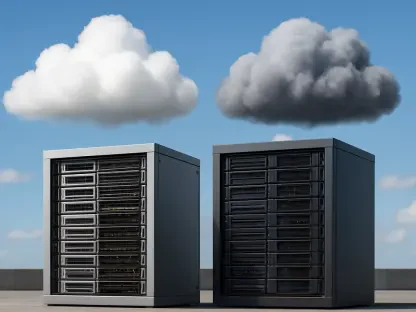
A fundamental disconnect exists between the fast, automated world of DevOps and the complex, data-centric lifecycle of machine learning operations, known as MLOps. DevOps pipelines are engineered for deterministic code, where a given input always produces the same output. In contrast, MLOps must manage the inherent variability of AI models, which are influenced by vast datasets, training experiments, and shifting hyperparameters. This operational divide creates a hidden wall, causing friction that slows innovation and introduces critical business risks.
The consequence of this friction is the emergence of a two-track system where software development and AI development operate in separate, often conflicting, worlds. Data science teams work in isolated environments to build and train models, while engineering teams struggle to integrate these dynamic artifacts into stable, production-ready applications. This separation prevents the seamless flow of value and directly impacts how quickly AI-powered features can reach the market, leaving businesses stuck with parallel processes that are inefficient by design.
Deconstructing the Divide Core Risks of Separate Worlds
This separation manifests as a significant bottleneck where the two pipelines meet. The manual handoff of a trained model from a data scientist to an engineer becomes a primary source of delay and error, stalling the entire development lifecycle. This issue is compounded by the high cost of redundancy. Maintaining parallel toolchains for DevOps and MLOps doubles the complexity, maintenance overhead, and licensing fees. For IT channel providers, managing two distinct infrastructures for a single client not only complicates service delivery but also inflates support costs and dilutes accountability.
Unlike static code binaries, machine learning models are uniquely unpredictable artifacts. Their behavior is not fixed; it evolves with every new dataset or hyperparameter adjustment. This variability means standard software quality gates, such as automated security scanning and standardized testing protocols, are often inconsistently applied or skipped entirely for ML models. Developers are left with a critical gap in their security and reliability posture, as a component that directly influences application logic bypasses the very checks designed to ensure software integrity.
Perhaps the most severe risk is the governance nightmare that results from separated systems. It becomes nearly impossible to maintain a clear and unbroken audit trail linking a specific model version to the exact dataset it was trained on and the software release it is a part of. This lack of traceability complicates troubleshooting when a model behaves unexpectedly in production, makes compliance auditing for regulations like GDPR or AI-specific mandates incredibly cumbersome, and raises serious accountability questions when an AI system makes a flawed decision.
The Path to Cohesion Findings from a Unified Supply Chain
The most effective solution to this division is to handle trained ML models with the same rigor as any other software artifact, such as binaries, libraries, or configuration files. This approach treats AI as a first-class component of the software supply chain. Instead of isolating the unique requirements of machine learning, this philosophy integrates them into a single, robust, and unified framework, ensuring that AI components are subject to the same standards of quality and security as the rest of the application.
Integrating these worlds moves organizations from siloed operations to synergistic workflows, yielding tangible benefits. A primary advantage is achieving unified visibility and complete reproducibility. By versioning models, data, and code together in the same pipeline, teams establish a single source of truth, making it simple to track which model is tied to which software release. This synergy also enables end-to-end automation, eliminating manual handoffs and drastically reducing the time it takes to move a model from an experimental notebook to a live production environment.
Furthermore, a unified system strengthens an organization’s governance and security posture. Subjecting ML models to the same security scanning and compliance checks as all other software closes a critical risk gap. This is especially vital when industry research shows that only 60% of companies have full visibility into the software running in their production environments. A cohesive pipeline ensures that no component, regardless of its origin, is deployed without undergoing the necessary validation, thus fortifying the entire software supply chain against internal and external threats.
The Channel Partner Playbook Seizing a Strategic Opportunity
Many organizations, while eager to deploy AI, lack the specialized in-house skills or robust infrastructure needed to build and manage integrated MLOps pipelines. This creates a significant market need that channel partners are uniquely positioned to fill. By providing the expertise to architect these unified systems, partners can guide clients through the complexities of merging data science and software engineering practices, effectively bridging a critical gap in capability.
By designing and implementing unified software supply chains, partners enable their clients to ship faster, more reliable, and more compliant AI-powered products. This strategic guidance elevates the partner’s role far beyond that of a simple technology reseller. They become indispensable advisors on AI innovation, helping clients not only adopt new tools but also fundamentally transform their development processes to compete in an AI-driven market. This transition from tactical provider to strategic enabler unlocks new revenue streams and builds deeper client relationships.
Ultimately, the path forward empowered customers to confidently migrate models from testing to production at scale. The facilitation of a single software supply chain, where AI was treated as a core, managed component, ensured that quality, security, and governance were built-in from the start. This evolution established a more secure and efficient environment for modern software development, marking a definitive shift away from fragmented processes toward a truly integrated future.