
Establishing the New Foundation of Global AI Infrastructure
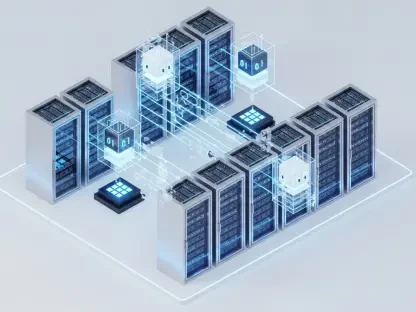
The European technology landscape has witnessed a historic transformation as the London-based AI infrastructure pioneer Nscale recently secured a landmark $2 billion Series C investment. This massive deal stands as the largest funding round in the history of European tech, signaling a decisive shift in how the continent competes on the global stage. As artificial intelligence transitions from experimental software to the primary engine of global industry, the demand for specialized hardware and energy-efficient data centers has reached a fever pitch. Nscale’s massive capital injection addresses this critical need, positioning the firm as a foundational “neocloud” provider. By focusing exclusively on the intensive computational requirements of generative AI and large-scale model training, the company is moving to secure the “engine of superintelligence” for the next generation of digital development.
A Chronological Journey Toward AI Industrialization
September 2025: The Billion-Dollar Prelude
Just months prior to its historic Series C, Nscale signaled its aggressive growth trajectory by closing a $1.1 billion funding round. This initial surge of capital was designed to establish the company’s foothold in the increasingly competitive GPU-as-a-service market. It laid the groundwork for rapid scaling, allowing the firm to begin procuring the high-end hardware necessary to challenge established cloud giants. This period was defined by the transition from a high-growth startup to a serious contender in the specialized infrastructure space, setting the stage for the massive expansion that would follow shortly after.
Late 2025: The Record-Breaking $2 Billion Series C
The funding landscape reached a new apex when Nscale secured $2 billion in a round led by Aker ASA and 8090 Industries. What distinguished this event was not just the capital, but the coalition of strategic partners involved, including Nvidia, Nokia, Dell, and Lenovo. This investment boosted Nscale’s valuation to approximately $14.6 billion. The primary objective of this round was to facilitate the deployment of production-grade AI systems, enabling the company to expand its physical footprint and significantly bolster its engineering and operational capabilities to meet the soaring demands of enterprise AI clients.
Late 2025: Leadership Transformation and Corporate Governance
Concurrent with its financial expansion, Nscale underwent a radical transformation of its board of directors. To manage its new status as a major global player, the firm recruited high-profile industry veterans, including former Meta COO Sheryl Sandberg and Meta’s President for Global Affairs, Nick Clegg. Alongside Raftr CEO Susan Decker, these appointments introduced a level of sophisticated corporate oversight rarely seen in the startup world. This shift ensured that Nscale possessed the regulatory and operational expertise to navigate the complex geopolitical and ethical landscape of international AI infrastructure.
2026 and Beyond: The Stargate Norway Project and UK Expansion
Looking toward the immediate future, Nscale is integrating its “Stargate Norway” project—a partnership with OpenAI and Aker ASA—into its core operations. This initiative aims to establish Europe’s first “AI Gigafactory,” powered by 10,000 Nvidia Blackwell GPUs. Simultaneously, the firm has become a central figure in the UK government’s AI Opportunities Action Plan. With a commitment to invest £2 billion into domestic data center development by 2028, Nscale is aligning its corporate growth with national industrial strategies, ensuring that the United Kingdom and Europe remain competitive in the “fourth industrial revolution.”
Turning Points in the Shift to Specialized Neoclouds
The most significant turning point in this timeline was the emergence of the “neocloud” model as a viable alternative to general-purpose cloud providers like AWS or Azure. Nscale’s success highlighted a shift in industry standards where AI-specific requirements—such as advanced networking, specialized GPU compute, and sophisticated data orchestration—took precedence over traditional cloud services. The patterns revealed here suggested that as AI training requirements scaled, the control of physical hardware and energy resources became the ultimate economic moat. Furthermore, the integration of private investment with national technology strategies marked a new era where digital infrastructure was viewed with the same strategic importance as energy or transportation networks.
Strategic Implications and the Future of Superintelligence
Beyond the headlines of the funding round, Nscale’s rise reflected deeper nuances in the global competitive landscape. While Silicon Valley traditionally dominated the AI space, the involvement of European industrial giants like Aker ASA suggested a regional resurgence driven by specialized industrial applications. Experts indicated that Nscale’s success resulted from “sovereign AI” trends, where nations sought to host their own computing power rather than relying on foreign entities. A common misconception was that AI was purely a software challenge; however, Nscale’s trajectory proved that the future of the industry remained firmly rooted in the physical reality of silicon, steel, and massive energy grids. As the company moved toward its goal of fueling superintelligence, its ability to manage these physical assets became the true measure of its long-term impact. Future stakeholders should monitor how these localized “Gigafactories” influence global latency standards and data sovereignty regulations in the coming decade.