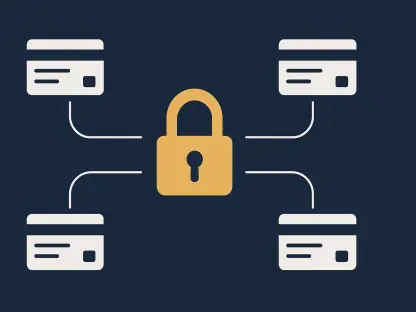

AI gateways function as central control points that aggregate significant permissions and access to proprietary models, effectively creating a single point of failure within modern enterprise infrastructure. As organizations in 2026 continue to standardize their generative AI operations, these gateways have transitioned from experimental tools to core components of the production environment. They are designed to streamline the complex orchestration of multiple foundation models, handling everything from request routing to cost management and policy enforcement. However, this centralization of authority introduces a concentrated risk profile that traditional security models are often ill-equipped to manage. A single misconfiguration or a compromised credential at the gateway level can grant an adversary unrestricted access to an organization’s entire AI ecosystem, bypassing the granular controls that might exist on individual applications or data silos. The strategic importance of these gateways necessitates a shift in how infrastructure security is perceived, moving away from isolated model protection toward a comprehensive defense of the orchestration layer that governs modern intelligence.
Understanding the Vulnerability of Centralized AI Orchestration
Structural Risks: Gateway Intermediaries
The primary function of an AI gateway like LiteLLM is to provide a unified interface for various large language models, but this convenience comes with substantial architectural trade-offs. By acting as the sole intermediary between internal applications and external model providers, the gateway becomes a repository for sensitive API keys and broad Identity and Access Management permissions. In 2026, where enterprise workflows are deeply integrated with models like those hosted on Amazon Bedrock or OpenAI, the gateway effectively holds the cryptographic keys to a corporation’s automated decision-making processes. If this middle-man layer is compromised, the attacker does not need to crack the individual models; they simply leverage the existing authenticated tunnel to issue unauthorized queries, intercept sensitive proprietary prompts, or extract data that was supposed to remain within the corporate boundary. The blast radius of such an event is nearly total for the AI-driven aspects of the business, as the gateway provides a level of horizontal access that traditional software tiers rarely consolidate.
Furthermore, the complexity of managing these gateways often leads to oversight in the underlying cloud infrastructure security. Because developers frequently prioritize the speed of AI integration, the virtual machines or containers hosting the gateway may be deployed with default configurations that are vulnerable to exploitation. This creates a situation where the most sophisticated technology in the company—generative AI—is guarded by a management layer that might be exposed via an unsecured port or an outdated operating system. The concentration of power within the gateway means that a simple infrastructure error, such as a poorly scoped security group or a weak administrator password, can lead to the subversion of high-value AI assets. Organizations must recognize that the gateway is not just a routing utility but a high-priority target that requires the same level of scrutiny as a financial database or a primary identity provider. Security teams should treat these systems as the most sensitive part of the AI stack, ensuring that the convenience of central management does not inadvertently become an invitation for malicious actors.
Anatomy of an Infrastructure Breach: Initial Vectors
The initial entry point for many infrastructure breaches in 2026 remains remarkably mundane, often involving the exploitation of legacy services like Secure Shell on port 22. In several documented security incidents, attackers have utilized automated brute-force scripts to target externally exposed AI gateway instances that lacked multi-factor authentication or IP whitelisting. Once an adversary gains access to the underlying virtual machine, they quickly move to establish a foothold that allows for the deployment of specialized malware. In many cases, the immediate goal is not the AI model itself but the hijacking of raw compute resources. For instance, the deployment of XMRig, a common cryptomining software, allows attackers to monetize the high-performance hardware often allocated to AI workloads. This type of resource theft is frequently the first sign of a larger compromise, serving as a noisy precursor to more sophisticated lateral movement within the cloud environment.
To avoid detection by traditional security monitoring tools, modern attackers have refined their evasion techniques by masking malicious traffic as legitimate encrypted web communication. By routing the outbound data from a cryptominer through port 443, they blend in with the standard HTTPS traffic generated by the AI gateway when it communicates with model APIs. This tactic effectively bypasses signature-based firewalls that are looking for known malicious ports or unencrypted patterns. Detecting such a breach requires a move toward behavioral analytics that can identify subtle shifts in a server’s profile, such as a sudden increase in CPU utilization or a connection to a previously unknown mining pool. The overlap between standard infrastructure exploitation and specialized AI management tools highlights a critical gap in many defense strategies: the tendency to monitor the AI application logic while ignoring the fundamental health and integrity of the server that hosts it. Protecting the gateway requires a unified view that connects hardware performance to network activity.
Strategic Defense Frameworks for AI Management
Integrating AI Infrastructure: The Tier 0 Approach
Recognizing the critical role of AI gateways, security architects in 2026 are increasingly classifying these systems as Tier 0 assets, a designation typically reserved for identity servers like Active Directory. This classification dictates that the gateway must reside within a strictly controlled private Virtual Private Cloud where it is not reachable from the public internet. Access should be mediated through private endpoints and managed by a Zero Trust network architecture that validates every request regardless of its origin. By eliminating public-facing ports like SSH and forcing all management traffic through a secure bastion host or a virtual private network, organizations can significantly reduce the surface area available for brute-force attacks. This isolation is a fundamental prerequisite for securing the AI orchestration layer, as it ensures that the infrastructure supporting the models is as resilient as the security policies governing the model usage themselves.
Building on this isolation, the application of the principle of least privilege to Identity and Access Management roles is essential for limiting the damage of a potential breach. An AI gateway should never be assigned a broad administrator role; instead, its permissions must be narrowed to the specific actions and resources it requires to function. For example, if a gateway only needs to invoke a specific model on Amazon Bedrock, its associated IAM policy should strictly allow the “InvokeModel” action for that specific resource and nothing more. This prevents an attacker who has compromised the gateway from performing resource enumeration, creating new unauthorized users, or moving laterally into other sensitive cloud services like storage buckets or database clusters. By meticulously scoping these permissions, organizations ensure that even if the gateway server is breached, the attacker’s ability to manipulate the broader cloud environment is severely curtailed, effectively containing the threat to a single, isolated node.
Enhancing Resilience: Behavioral Analytics and Future Steps
The evolution of threats against AI infrastructure has demonstrated that static security measures are no longer sufficient to protect dynamic orchestration layers. Modern defense strategies were updated to include a synthesis of workload telemetry and control-plane logging to provide a holistic view of the AI environment. By correlating the internal behavior of the gateway—such as memory usage and process execution—with the external identity behaviors recorded in cloud audit logs, security teams were able to identify anomalies that would otherwise go unnoticed. For instance, an unauthorized attempt to list all available foundation models shortly after a spike in server CPU usage would trigger an immediate automated response, such as revoking the gateway’s credentials or isolating the network segment. This integrated approach allowed organizations to move from reactive patching to proactive threat hunting, ensuring that the security of the AI gateway remained robust even as attackers developed more sophisticated methods for bypassing traditional perimeter defenses.
In the final analysis, the security of the AI gateway proved to be the primary determinant of an organization’s overall resilience in the face of emerging cyber threats. Security teams learned that the most effective way to protect their automated intelligence was to treat it as a core part of the infrastructure rather than a separate application tier. Moving forward, the focus shifted toward the automation of security policy generation, where AI was used to monitor and adjust its own gateway protections in real-time. By implementing granular firewall rules, private networking, and rigorous behavioral monitoring, businesses successfully mitigated the risks of model hijacking and resource exploitation. The lessons learned from early breaches underscored the necessity of a defense-in-depth strategy that addressed both the traditional infrastructure vulnerabilities and the unique challenges posed by centralized AI orchestration. Ultimately, the ability to secure the gateway ensured that the transformative power of generative artificial intelligence could be leveraged without compromising the integrity of the underlying enterprise data and systems.