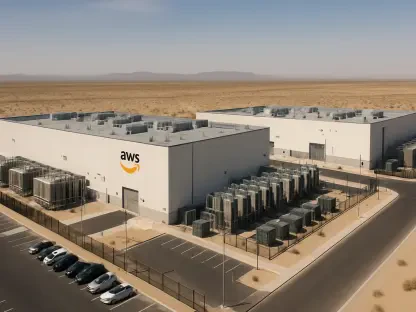

The ongoing reliance on massive American hyperscalers has prompted a growing number of European founders to re-evaluate their digital infrastructure strategies in favor of regional autonomy. This shift is exemplified by the recent migration of the startup hank.parts, which moved its entire operation from United States-based platforms like Amazon Web Services to a localized European stack. The motivation behind this transition was primarily driven by the desire to maintain strict data privacy within the European Union, avoid the long-standing dominance of American tech giants, and protect the company against unpredictable pricing spikes or sudden corporate acquisitions. By choosing a sovereign path, the startup aimed to ensure that its data and services remained under European jurisdiction, effectively insulating the business from the extraterritorial reach of foreign regulations. This journey revealed that while the dream of a fully independent tech ecosystem is technically achievable, it requires a significant departure from the convenience that modern developers have come to expect.
Constructing a Fragmented European Infrastructure Stack
Building a viable alternative to integrated giants required the assembly of a specialized “Made in EU” stack using several distinct regional providers. For raw compute power, the architecture leveraged Hetzner, while Scaleway provided the necessary container registries and transactional email services required for daily operations. High-performance edge services were routed through Bunny.net, and specialized AI requirements, particularly GPU-heavy tasks, were handled by Nebius to maintain local processing standards. To manage this distributed environment, the startup utilized Gitea for version control and a complex suite of self-hosted tools orchestrated through Kubernetes and Rancher. This modular approach demonstrated that European providers have reached a level of technical maturity capable of hosting sophisticated, modern applications. However, the lack of a single, unified interface meant that the engineering team had to spend considerably more time managing inter-provider connections and ensuring that the various components of the stack communicated effectively.
Evaluating the Practical Challenges of Decoupling
The transition exposed what industry veterans often call the “sovereignty tax,” which refers to the loss of seamless integration and the increase in manual maintenance required when leaving established ecosystems. While the European stack proved to be more cost-effective in terms of monthly billing, it lacked the integrated “magic” that allows American hyperscalers to dominate the market. For instance, while Gitea functioned as a reliable technical replacement for GitHub, it could not replicate the deep social workflows and decades of developer muscle memory associated with the latter. Furthermore, the experiment highlighted the nearly impossible task of achieving total independence from American platforms for specific business functions. Mobile application distribution still requires the use of Apple and Google app stores, and customer acquisition remains heavily dependent on major United States-based advertising networks. This suggests that even the most dedicated pursuit of digital sovereignty must eventually confront the reality of a globally interconnected tech landscape.
Strategic Considerations for Future Digital Independence
The move toward regional cloud autonomy established that startups could indeed function outside the traditional hyperscale environment, provided they were willing to invest in technical labor. This experiment demonstrated that the European cloud scene was fully capable of hosting complex systems, yet it remained a choice for those prioritizing control over speed. Organizations that followed this path found that success required a robust internal DevOps capability to handle the troubleshooting that a unified provider would otherwise automate. Looking ahead, the focus shifted toward building better abstractions that could bridge the gap between diverse regional services and the user-friendly experiences offered by global giants. Developers realized that true sovereignty was not just about where the servers were located, but about maintaining the flexibility to migrate between providers without incurring massive technical debt. The final outcome suggested that while the grip of American giants remained strong, the path to a diversified and resilient digital infrastructure was officially open.